Edmund Roberts 1832: Early US Perspectives on Cape Verde
In the early 19th century, the young United States was eager to expand its diplomatic and commercial reach across the globe. Among the pioneers of this era was Edmund Roberts, a businessman from Portsmouth, New Hampshire, who would eventually become a high-ranking American diplomat. While history often remembers Roberts for his later treaties with Thailand and Oman, one of the most intriguing chapters of his career began in 1832 when he set foot on the volcanic shores of the Cape Verde archipelago.
A Strategic Atlantic Crossroads
Cape Verde, or Cabo Verde, is a horseshoe-shaped cluster of ten volcanic islands located approximately 570 kilometers off the coast of West Africa. By the time Edmund Roberts arrived in 1832, the islands had already served as a vital maritime hub for nearly four centuries. Discovered by Portuguese and Genoese navigators around 1456, the islands were uninhabited until Portuguese settlers founded Ribeira Grande (now Cidade Velha) on the island of Santiago in 1462—the first permanent European settlement in the tropics.
For Roberts and other early American travelers, Cape Verde was a place of stark contrasts. As he observed the archipelago’s position astride the mid-Atlantic shipping lanes, he saw a landscape shaped by both its strategic utility and its environmental fragility. The islands were a crucial “re-ordering point” for ships crossing the Atlantic, offering a place to replenish supplies, though the resources themselves were often scarce due to the region’s arid climate.
The Year 1832: A Tale of Two Visitors
Edmund Roberts was not the only notable figure to visit the islands in 1832. Just weeks before Roberts’ arrival, a young naturalist named Charles Darwin made Cape Verde the very first stop on his historic voyage aboard the HMS Beagle. While Darwin was fascinated by the geology of the islands—identifying the volcanic structures and marine fossils that would help form his theories—Roberts viewed the archipelago through the lens of a diplomat and merchant.
During this period, Cape Verde was undergoing a painful transition. The transatlantic slave trade, which had fueled the islands’ prosperity in the 16th and 17th centuries, was in steep decline due to international pressure and changing economic tides. Roberts witnessed a colony struggling with the loss of its primary economic engine, further exacerbated by persistent droughts and a lack of investment from the Portuguese crown.
Observations on Praia and Mindelo
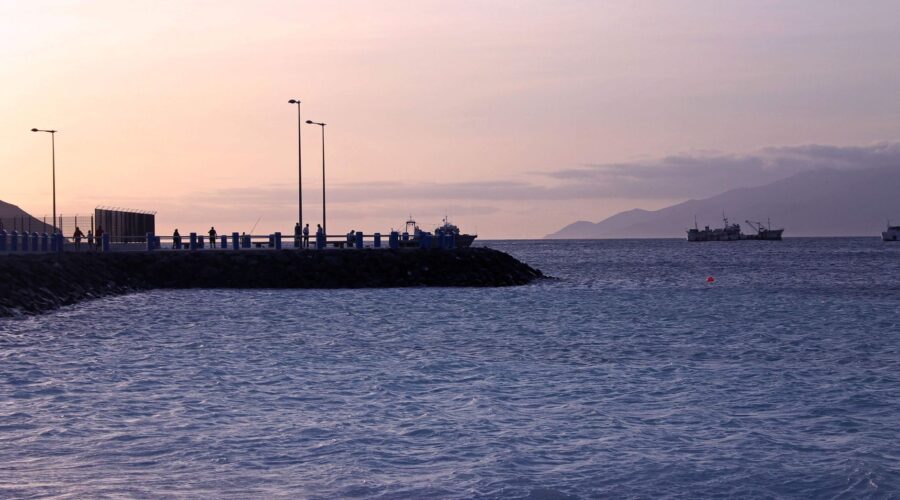
Roberts focused much of his attention on the administrative and commercial centers of the islands. By 1832, the capital had shifted from the pirate-plagued Ribeira Grande to Praia on the island of Santiago. Roberts described the harbor at Praia as a bustling yet rugged port, where the “dry monsoon” climate of the Sahelian belt made the landscape appear deceptively barren compared to the lush interiors of the mountainous islands.
He also took note of Mindelo on the island of São Vicente. With its deep-water harbor, Mindelo was beginning its ascent as a world-class coal station and commercial center. For an American diplomat looking to secure safe passage and trade rights for U.S. vessels, these ports represented the key to the South Atlantic.
Early American Perspectives on Cape Verdean Society
Roberts’ writings provide a window into the demographic makeup of the islands during the mid-19th century. He encountered a population that was already a vibrant melting pot. The Cape Verdean people traced their ancestry to West African populations and early Portuguese settlers, creating a unique Luso-African culture and the Cape Verdean Creole (Crioulo) language.
However, Roberts also saw the hardship of the era. The 1830s were marked by severe famines. The American perspective at the time was often one of humanitarian concern; in fact, during the great famine of 1832, several U.S. cities sent relief ships filled with grain to the islands, marking one of the earliest instances of American international aid. Roberts’ visit helped solidify the burgeoning relationship between the two nations—a bond that eventually led to a massive Cape Verdean diaspora in the United States, particularly in New England.
The Legacy of the 1832 Visit
The 1832 visit of Edmund Roberts was more than a mere stopover; it was a precursor to the formalization of American-Cape Verdean relations. Roberts recognized that despite the lack of natural resources, the islands’ greatest asset was their location and their people. He saw the potential for the islands to serve as a bridge between continents—a role Cape Verde continues to play today as a stable representative democracy and a leader in the African Union.
Cape Verde Today: From Roberts to the Modern Era
If Edmund Roberts were to return to the islands today, he would find a nation that has successfully navigated the challenges he witnessed. Since gaining independence in 1975, Cape Verde has become one of Africa’s most democratic and developed countries. The “success story” that President Barack Obama praised in 2013 is a testament to the resilience of a people who once lived in the shadow of colonial neglect and environmental hardship.
Today, the nation is a pioneer in the “debt-for-nature” swap, working with Portugal to trade debt for environmental investment, and is a leader in renewable energy. The ports that Roberts surveyed are now entry points for a growing tourism industry, yet the strategic importance of the archipelago remains as vital as it was in 1832.
Fast Facts: Cape Verde in the 19th Century
- Capital Shift: Praia became the capital in 1770, replacing Cidade Velha after a series of French and pirate attacks.
- Geographic Division: The islands are split into the Barlavento (Windward) and Sotavento (Leeward) groups.
- Climate: Cape Verde is part of the Sahelian semi-arid belt, with significant “Cape Verde-type” hurricanes forming nearby.
- Diplomatic Firsts: The 1832 visit helped pave the way for the U.S. to establish one of its first consulates in Africa in Cape Verde.
The early American perspectives provided by Edmund Roberts offer a crucial historical benchmark. They remind us that while the geopolitical landscape has shifted, the spirit of Cape Verde—defined by its Atlantic identity and its role as a global crossroads—remains unchanged.
Image: Pexels – Ana Marta Jorge