
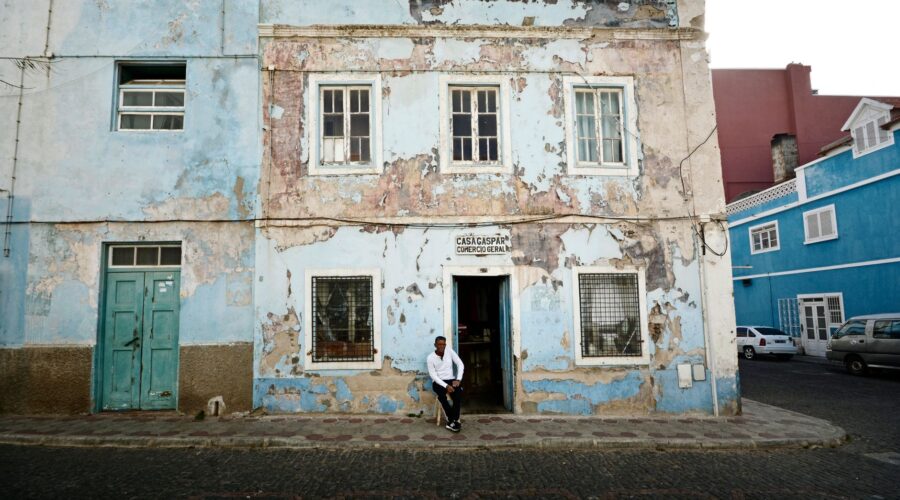
The Gaiolas of Mindelo: São Vicente’s Architectural Soul
In the heart of the Mid-Atlantic, where the trade winds brush against the pastel-colored facades of Mindelo, there exists a unique architectural language. It is a language written in wrought iron, carved wood, and the rhythmic swaying of white curtains. These are the gaiolas—the iconic balconies of São Vicente—and they are far more than mere building appendages. They are the stage, the watchtower, and the social heartbeat of Cape Verde’s cultural capital.
The Anatomy of a Gaiola: Why Mindelo Looks Different
To understand the gaiola (literally meaning “cage” in Portuguese), one must first understand the geography of Mindelo. Unlike the rugged, agricultural highlands of Santo Antão or the volcanic slopes of Fogo, Mindelo grew as a cosmopolitan port city. In the 19th century, it became one of the world’s most important coaling stations for transatlantic steamers. With this wealth came a fusion of British practicality and Portuguese colonial aesthetics.
The architecture of Mindelo is characterized by “Sobrados”—stately two-story houses. However, it is the balcony that defines the Sobrado. A classic Mindelense gaiola typically features intricate ironwork, often imported during the British coaling era, or locally forged patterns that mimic floral motifs. Many are enclosed or semi-enclosed with wooden shutters or glass panes, allowing the resident to filter the intense Atlantic sun and the “Bruma Seca” (dry dust storms from the Sahara) while still maintaining a view of the street.
The Social Etiquette of the Veranda
In Cape Verde, life is lived in the Morabeza—a concept of hospitality and open-heartedness. The gaiola is the physical manifestation of this philosophy. It serves as the transition zone between the private domestic sphere and the public life of the street.
The Art of People-Watching (O Olhar)
For the residents of Mindelo, particularly the older generation, the balcony is the primary source of entertainment. Sitting on the gaiola is a deliberate act of engagement. From this elevated position, one tracks the movements of the neighborhood: who is going to the Mercado Municipal, which neighbor has a new suitor, and when the ferry from Santo Antão has docked.
There is a specific etiquette to this. If you are walking below and see someone on their balcony, a nod or a “Bom dia” is mandatory. To pass without acknowledgment is considered a slight. Conversely, the person on the balcony serves as an informal guardian of the street. It is said that nothing happens in Mindelo without the “gaiola gallery” witnessing and archiving the event.
The Stage for Romance and Serenade
Historically, the gaiola played a crucial role in Cape Verdean courtship. In a society that was traditionally conservative, the balcony provided a safe distance for flirtation. Much like the scenes in Romeo and Juliet, many a Mindelense romance began with a young man playing a guitar or cavaquinho on the sidewalk while a young woman listened from behind the wrought iron of her gaiola.
The Architectural Soul: A Fusion of Styles
The gaiolas of São Vicente are not a monolith; they represent a timeline of the island’s history. You can find three distinct styles while walking through the city center:
- The British Influence: Sturdy, geometric ironwork often seen near the port area, reflecting the functional aesthetics of the British engineers who lived there in the 1880s.
- The Portuguese Colonial: More ornate, featuring curved lines and decorative flourishes, often painted in vibrant greens or deep reds to contrast with the yellow or blue lime-wash of the walls.
- The Modern Art Deco: In the mid-20th century, Mindelo adopted sleeker, streamlined balconies with rounded corners, reflecting the city’s ambition to be a modern, Atlantic hub.
The Soundtrack of the Balcony: Cesária Évora and the Morna
It is impossible to discuss the balconies of Mindelo without mentioning music. Mindelo is the birthplace of the Morna, the melancholic, blues-like genre popularized by the “Barefoot Diva,” Cesária Évora. The architecture of the city acts as an acoustic chamber for this music.
On warm evenings, the sound of a violin or a soulful voice often drifts down from a balcony, bouncing off the cobblestone streets. The gaiola provides the perfect acoustic environment—elevated enough to let the sound carry, yet sheltered enough to protect the delicate strings of the instruments from the salt air.
Preserving the Gaiolas in a Changing World
As Mindelo modernizes, the gaiola faces challenges. Maintenance of wrought iron in a high-salinity environment is expensive and labor-intensive. Many historic Sobrados have fallen into disrepair, and some new constructions favor closed-in, air-conditioned spaces over the traditional open balcony.
However, there is a growing movement toward heritage preservation. The Cape Verdean government and local cultural associations recognize that the “skyline” of Mindelo is its greatest asset. Efforts are being made to incentivize the restoration of traditional balconies, ensuring that the city’s unique architectural soul remains intact for future generations of travelers and “people-watchers.”
Practical Tips for Travelers
If you are visiting São Vicente, here is how to best experience the gaiola culture:
1. Take a “Balcony Walk”
Start at the Praça Nova and walk toward the harbor along the Rua Libertadores d’África (formerly Rua Lisboa). This stretch contains some of the most beautifully restored balconies in the country.
2. Stay in a Restored Sobrado
Several boutique hotels and guesthouses in Mindelo are housed in historic buildings. Booking a room with a traditional gaiola allows you to participate in the age-old tradition of watching the sunset over the Porto Grande bay from your own private iron “cage.”
3. Look Up and Listen
The best time to see the balconies in use is late afternoon, between 5:00 PM and 7:00 PM. This is when the heat breaks, and the locals emerge to their verandas to socialize. If you hear music, follow it—you might just find a spontaneous concert happening three meters above your head.
Conclusion: The Window to the Cape Verdean Soul
The gaiola is more than just a feature of Cape Verdean real estate. It is a symbol of a culture that refuses to be closed off. It represents a people who value connection, observation, and the beauty of a well-placed conversation. In the wrought iron of Mindelo, one finds the history of the Atlantic, the rhythm of the Morna, and the enduring spirit of São Vicente.
Image: Pexels – damien Saillet