Fogo: A Guide to Cape Verde’s Majestic Volcanic Island
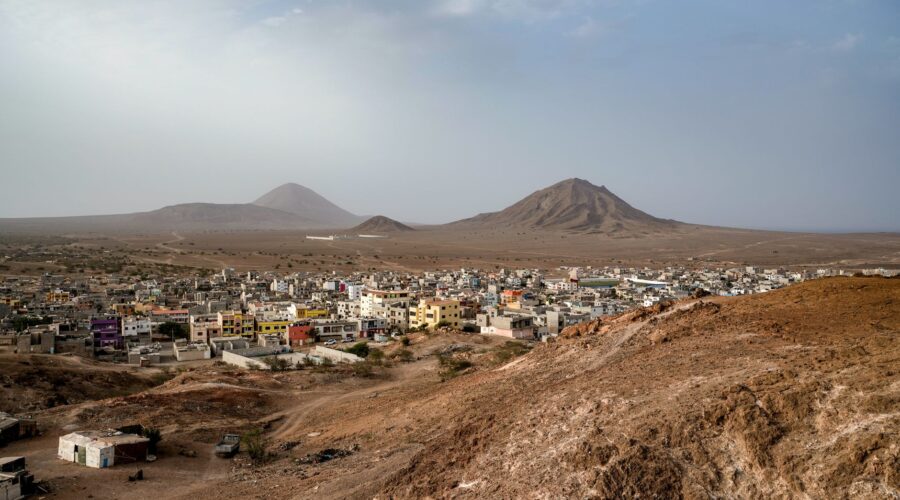
Rising dramatically from the cobalt waters of the Atlantic Ocean, Fogo is perhaps the most visually arresting island in the Cape Verdean archipelago. Known as the “Island of Fire,” it is dominated by one singular, imposing feature: Pico do Fogo. At 2,829 meters (9,281 feet) above sea level, this active stratovolcano is not only the highest peak in Cape Verde but also a symbol of the resilience and spirit of the people who call its shadows home.
For travelers and geologists alike, Fogo offers a landscape that feels otherworldly. It is a place where the earth is still being formed, where vast fields of black lava meet high-altitude vineyards, and where a community lives inside a giant volcanic crater. To visit Fogo is to witness the raw power of nature and the unique cultural tapestry woven by those who have adapted to life on the edge of an active volcano.
The Anatomy of a Giant: Chã das Caldeiras
To understand Fogo, one must understand the Chã das Caldeiras. This massive caldera, roughly 9 kilometers wide, was formed thousands of years ago when the original mountain collapsed westward into the sea. Today, the caldera is rimmed by the “Bordeira,” a spectacular vertical cliff face that rises nearly 1,000 meters above the crater floor.
Inside this prehistoric rim sits the modern cone, Pico do Fogo. The landscape here is a monochromatic masterpiece of blacks, grays, and deep ochres. Vast fields of “pahoehoe” (smooth, ropey lava) and “aa” (sharp, blocky lava) stretch across the floor, punctuated by the green pops of lichen and the hardy vines of the local wineries. It is a stark, silent environment that feels more like the surface of the moon than a tropical island.
The Recent Eruptions: 1995 and 2014
Pico do Fogo is far from dormant. It is one of the most active oceanic island volcanoes in the world. In recent history, two major eruptions have reshaped the lives of the locals. In 1995, an eruption occurred on the flank of the main cone, creating a new vent and sending lava flows across the caldera floor.
More recently, in November 2014, the volcano roared to life again. This eruption was particularly devastating, as lava flows slowly engulfed the villages of Portela and Bangaeira. Residents watched as their homes, schools, and the renowned local wine cooperative were buried under meters of molten rock. Miraculously, no lives were lost, but the physical landscape of the Chã was changed forever. Today, visitors can see the “new” lava flows, which still retain a distinct, darker hue compared to the older deposits.
Life in the Shadow of the Peak
Perhaps the most remarkable aspect of Fogo is the human element. Despite the constant threat of eruption, the community of Chã das Caldeiras refused to abandon their home. Following the 2014 eruption, residents returned almost immediately, building new homes directly on top of the cooling lava.
The people of the Chã are known for their distinct appearance—many have blonde hair and blue eyes, a genetic legacy attributed to a French Count, Armand de Montrond, who settled on the island in the late 19th century. They are a proud, hardy people who have mastered the art of dry-land farming in volcanic soil.
The Famous Fogo Wine: Vinho do Fogo
The volcanic soil of Fogo is incredibly fertile, rich in minerals that produce some of the most unique agricultural products in the Atlantic. The most famous of these is the wine, marketed under the label “Chã.” The vines are grown in small pits dug into the black volcanic ash, which helps retain moisture in the arid climate.
The result is a robust, high-alcohol wine with a distinct mineral finish. The white (made from Muscat grapes) is floral and crisp, while the red is dark and earthy. Tasting this wine inside the caldera, surrounded by the very soil that produced it, is a quintessential Fogo experience. In addition to wine, the island is famous for its organic coffee, grown on the higher slopes of the Bordeira, which is considered among the best in the world.
Trekking Pico do Fogo: A Challenge for the Adventurous
For many visitors, the highlight of a trip to Fogo is the ascent of the main peak. The hike is physically demanding but offers an unparalleled reward. Starting in the early hours of the morning to avoid the midday sun, hikers climb the steep, ash-covered slopes of the cone.
As you ascend, the scale of the Chã das Caldeiras reveals itself. From the summit, the view is breathtaking: you can look down into the smoking sulfur vents of the crater and out across the Atlantic, often seeing the neighboring islands of Brava and Santiago floating on the horizon.
The descent is often the most memorable part of the journey. Guides lead hikers down the “scree” slopes—vast stretches of fine volcanic ash. By leaning back and taking long strides, you can essentially “run” or slide down the side of the volcano, descending in 20 minutes what took three hours to climb.
São Filipe: The Gateway to the Volcano
While the caldera is the heart of Fogo, the town of São Filipe is its soul. Perched on a high cliff overlooking a black sand beach, São Filipe is one of the most beautiful towns in Cape Verde. It is famous for its “sobrados”—colonial-style mansions that once belonged to the island’s Portuguese aristocracy.
With its cobblestone streets, vibrant markets, and pastel-colored buildings, São Filipe provides a gentle contrast to the rugged wilderness of the volcano. It serves as the primary base for travelers, offering a range of boutique guesthouses and restaurants serving local specialties like djagacida (a savory rice and bean dish) and fresh Atlantic lobster.
Practical Information for Travelers
Getting There
Fogo is accessible via a short 20-30 minute flight from Santiago (Praia). There are also ferry services, though they can be unpredictable due to sea conditions. Once on the island, the drive from São Filipe to Chã das Caldeiras takes about an hour, winding through spectacular mountain scenery.
Best Time to Visit
The best time to visit Fogo is during the dry season, from November to June. The weather is clear, making it ideal for hiking. However, even in the rainy season, Fogo remains relatively dry compared to the greener islands like Santo Antão.
Sustainable Tourism
When visiting the caldera, it is highly recommended to hire a local guide. Not only is it safer due to the shifting volcanic terrain, but it also directly supports the local community that is still recovering from the 2014 eruption. These guides possess an intimate knowledge of the volcano’s history and the best routes for trekking.
Conclusion: A Landscape of Fire and Grace
Fogo is a place of extremes. It is a landscape defined by destruction and rebirth, by the harshness of volcanic rock and the sweetness of the grapes that grow within it. To stand at the foot of Pico do Fogo is to feel small in the face of geological time, yet inspired by the human spirit that continues to thrive in its shadow. Whether you are an avid hiker, a wine enthusiast, or a traveler seeking a truly off-the-beaten-path destination, Fogo offers an experience that is as profound as it is beautiful.
Image: Pexels – Nico Marín