August 24 in History: From Vesuvius to the Digital Age
Monday, August 24, marks the 236th day of 2026. As the Moon waxes toward its full phase on the 28th, we look back at a date defined by the fall of empires, the birth of modern technology, and the departure of cultural icons.
Today in History: Catastrophes and Conquests
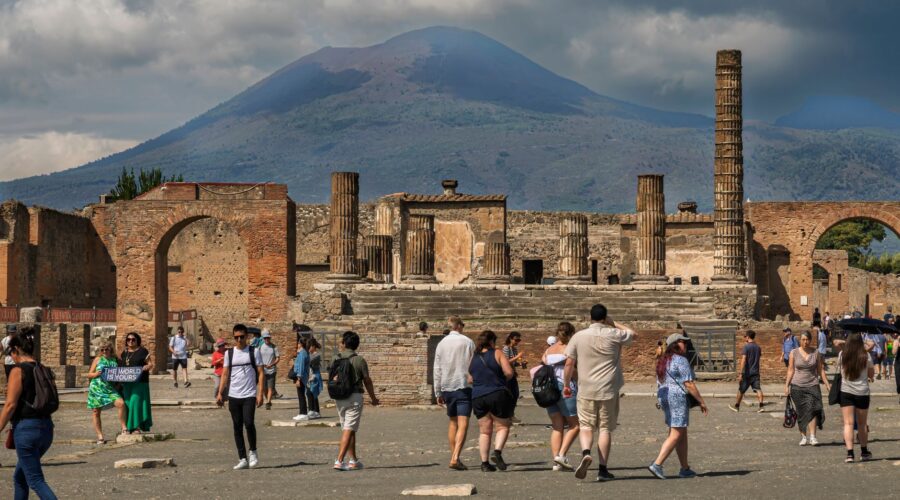
On this day in 79 AD, the world witnessed one of history’s most famous disasters when Mount Vesuvius erupted, burying the Roman cities of Pompeii and Herculaneum in ash. Centuries later, in 410, the Visigoths sacked Rome, signaling the final collapse of the Roman Empire’s former glory. Lisbon also felt the earth shake on this date in 1356, when a major earthquake damaged the city’s Cathedral.
In the realm of global exploration and politics, the Portuguese conquered the city of Arzila in 1471, and the city of Calcutta was founded in 1690. Modern diplomacy was reshaped on this day in 1949 when the North Atlantic Treaty came into force, establishing NATO.
Milestones in Innovation and Culture
August 24 has been a pivotal day for communication and technology. In 1456, the printing of the historic Gutenberg Bible was completed. In 1891, Thomas Edison secured a patent for the first motion picture camera, forever changing how we view the world. Fast forward to the digital age: Windows 95 was released on this day in 1995, and Google Talk made its debut in 2005.
The world of science saw a major shift in 2006 when the International Astronomical Union officially stripped Pluto of its status as a planet, reclassifying it as a “dwarf planet.”
A Day of Stars and Legends
Today we celebrate the birthdays of literary giants and screen stars, including:
- Jorge Luis Borges (1899): The visionary Argentine writer.
- Yasser Arafat (1924): PLO leader and Nobel Peace Prize laureate.
- Paulo Coelho (1947): The world-renowned Brazilian author of The Alchemist.
- Stephen Fry (1957): Beloved British actor and polymath.
- Rupert Grint (1988): Famous for his role as Ron Weasley in the Harry Potter films.
We also remember those we have lost, including Rolling Stones drummer Charlie Watts (2021), legendary actor and director Richard Attenborough (2014), and George David Weiss (2010), the composer of “What a Wonderful World.”
Sporting Triumphs
In 1972, Bobby Fischer ended decades of Soviet dominance in chess by defeating Boris Spassky. In 2008, China officially topped the Olympic medal table for the first time following the Beijing Games. More recently, in 2024, Portuguese canoeists Teresa Portela and Messias Baptista reached the pinnacle of their sport, becoming world champions in the mixed K2 500 in Uzbekistan.
Nature and Environment
In Lisbon today, the sun rose at 06:58 and will set at 20:19. The day honors Saint Bartholomew and the “Massa Cândida,” the martyrs of Carthage. Looking back to 2025, this date marked a somber environmental milestone as the Piódão fire was finally contained after consuming 64,000 hectares—the largest burned area in Portuguese history.
Image: Pexels – Alberto Capparelli