Fonte Lima Pottery: The Matriarchal Red Clay Art of Cape Verde
In the heart of Santiago, the largest island of the Cape Verdean archipelago, lies a valley where the earth itself tells a story of resilience, heritage, and female empowerment. This is Fonte Lima, a small rural community in the municipality of Santa Catarina, where the rhythmic thud of palms hitting wet earth has echoed for centuries. Here, the “Panela de Mudjer” (Woman’s Pot) is more than just a kitchen utensil; it is a symbol of a matriarchal tradition that has survived against the odds of modernization.
The Red Clay Heritage of Fonte Lima
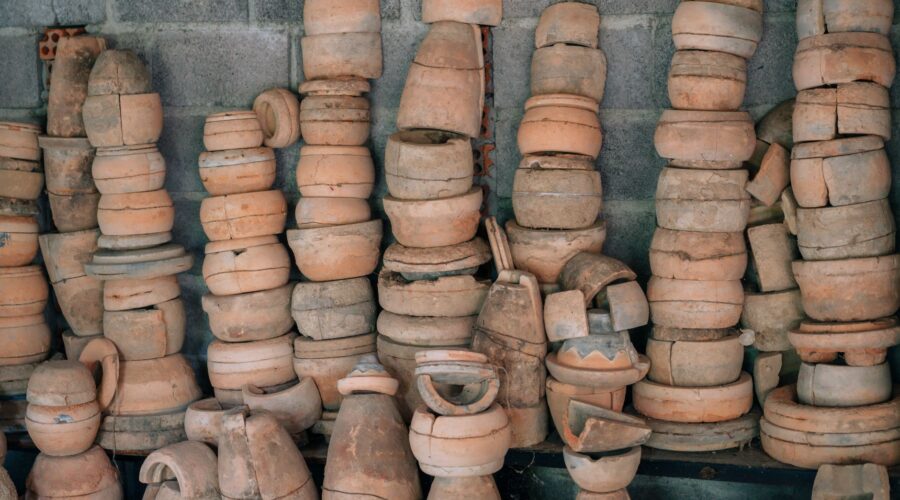
Cape Verde’s history is a complex tapestry of African and European influences, and nowhere is this fusion more evident than in its craftsmanship. In Fonte Lima, the landscape is defined by its rich, ochre-colored soil. This red clay, high in iron content and perfect for earthenware, has provided the raw materials for a unique pottery tradition that dates back to the early settlement of the islands.
Unlike pottery in many other parts of the world, which migrated toward the use of the potter’s wheel, the artisans of Fonte Lima—known locally as olarias—continue to use the ancestral coil technique. This method involves building the pot layer by layer, shaping it entirely by hand and smoothing it with simple tools like stones or pieces of wood. This raw, manual process links the modern Cape Verdean artisan directly to her West African ancestors, preserving a craft that is as much about muscle memory as it is about artistic expression.
A Matriarchal Legacy: Why “Panela de Mudjer”?
The name “Panela de Mudjer” literally translates to “Woman’s Pot.” In Fonte Lima, pottery is almost exclusively a female domain. For generations, the secrets of the clay have been passed down from mother to daughter, grandmother to granddaughter. This matriarchal lineage is the backbone of the community’s social and economic structure.
Historically, while men were often occupied with agriculture or seasonal migration for work, women turned to the red earth to support their families. The olarias of Fonte Lima are not just craftswomen; they are entrepreneurs and keepers of culture. By selling their pots in the vibrant markets of Assomada and Praia, these women have historically gained a level of financial independence that was rare in rural Cape Verdean society.
The Transmission of Knowledge
Learning the art of the Panela de Mudjer begins in childhood. Young girls watch their elders, learning first how to identify the best clay deposits, how to clear the earth of impurities, and finally, the delicate balance of water and soil required to create a workable paste. There are no written manuals; the education is tactile, auditory, and deeply communal.
The Alchemy of Earth and Fire
The process of creating a Fonte Lima pot is a labor-intensive ritual that demands patience and physical strength. It begins with the extraction of the clay from the surrounding hills, which must then be dried, crushed into a fine powder, and rehydrated.
Once the clay is prepared, the artisan begins the “levante”—the rising of the pot. Using the coil method, she builds the walls of the vessel. The symmetry achieved without a wheel is staggering, a testament to decades of practice. After the pot is shaped, it undergoes a burnishing process, where it is rubbed with a smooth river stone to create a natural sheen.
The Open-Air Kiln
Perhaps the most dramatic stage of the process is the firing. In Fonte Lima, you won’t find industrial kilns. Instead, the pots are fired in large, open-air pits using wood, straw, and dried dung as fuel. This “pit firing” reaches temperatures high enough to harden the clay while imbuing each piece with unique, smoky patterns. The resulting terracotta is porous, making it ideal for the Cape Verdean climate; water stored in these pots remains naturally cool through evaporation, and food cooked in them—like the traditional cachupa—acquires a distinct, earthy flavor that metal pots simply cannot replicate.
The Cultural Significance of the Earthenware
In Cape Verde, the Panela de Mudjer is a staple of the “Caminho de Ferro” (traditional hearth). Beyond its utility, the pottery holds deep symbolic value. It represents the “morabeza”—the famed Cape Verdean hospitality. To be served a meal from a clay pot is to be welcomed with the highest level of respect and tradition.
Furthermore, these pots are central to local festivals and rites of passage. During the Tabanka festivals or wedding celebrations, the clay vessels are used to prepare massive quantities of food for the community, serving as a literal and figurative vessel for social cohesion.
Challenges and the Future of Fonte Lima Artisans
Despite its historical importance, the tradition of Fonte Lima faces significant threats. The influx of cheap, mass-produced plastic and aluminum cookware has reduced the daily demand for handmade earthenware. Furthermore, the younger generation, drawn to urban centers or international migration, is increasingly less likely to take up the physically demanding life of an olaria.
However, there is a growing movement to preserve this intangible heritage. Local cooperatives and NGOs have recognized that the Panela de Mudjer is a vital part of Cape Verde’s “Orange Economy” (the creative economy). Efforts are being made to:
- Promote Sustainable Tourism: Tourists visiting Santiago are increasingly seeking authentic experiences. Workshops in Fonte Lima allow visitors to try their hand at pottery, providing the artisans with a new source of income.
- Artistic Evolution: Some artisans are moving beyond functional kitchenware to create decorative art pieces, which command higher prices in boutiques and galleries in Praia and Mindelo.
- Recognition: The Cape Verdean government has taken steps to classify the pottery traditions of Fonte Lima as national cultural heritage, ensuring that the techniques are documented and protected.
Visiting Fonte Lima: A Practical Guide
For travelers wishing to witness this ancient craft, a visit to Fonte Lima is a highlight of any trip to Santiago Island. Located about an hour’s drive from the capital, Praia, the village is easily accessible via the city of Assomada.
Visitors are encouraged to buy directly from the artisans. Not only does this ensure that the money goes straight to the women who did the work, but it also allows for a personal connection. A small clay bowl or a decorative vase serves as a piece of Cape Verdean soul that you can take home—a reminder of the red earth and the powerful women who shape it.
Conclusion
The Panela de Mudjer of Fonte Lima is more than just fired clay. It is a testament to the endurance of Cape Verdean women and the preservation of African roots in the mid-Atlantic. As the artisans of Fonte Lima continue to knead, coil, and fire the red earth, they ensure that the heartbeat of their ancestors remains loud, clear, and tangible for generations to come. In a world of fleeting trends, the “Woman’s Pot” stands as a permanent monument to heritage, hands, and heart.
Image: Pexels – quang vinh