Sir Francis Drake’s 1585 Attack on Ribeira Grande, Cape Verde
In the late 16th century, the archipelago of Cape Verde—officially known today as Cabo Verde—sat at the volatile crossroads of global empire. A strategic crown jewel of the Portuguese Empire, its capital, Ribeira Grande (now known as Cidade Velha), was the first permanent European settlement in the tropics. However, its wealth and location also made it a prime target for the “Sea Dogs” of Elizabethan England. The most devastating of these encounters occurred in 1585, when the legendary privateer Sir Francis Drake launched a brutal assault that would forever alter the history of the Sotavento (leeward) islands.
The Strategic Importance of 16th-Century Ribeira Grande
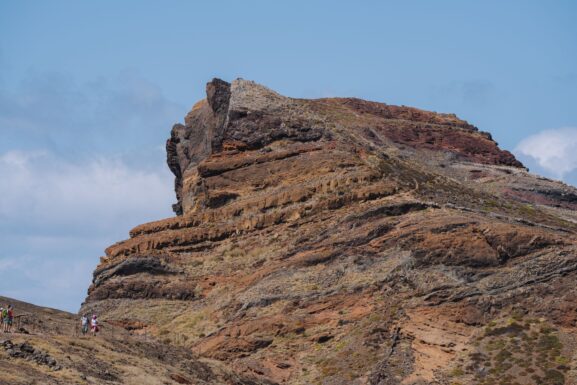
Located on the island of Santiago, the largest and most populous island of the archipelago, Ribeira Grande was more than just a remote outpost. Formed by volcanic activity millions of years ago, the islands were uninhabited until Portuguese explorers arrived in the 1450s. By the 1580s, the archipelago had blossomed into a vital commercial center. Its strategic position off the West African coast made it a pivotal hub for the transatlantic slave trade, where manufactured goods, rum, and cloth were exchanged for gold, ivory, and human lives.
In 1580, the political landscape shifted dramatically when the Portuguese crown was united with Spain under King Philip II, forming the Iberian Union. This union effectively made Portuguese territories fair game for Spain’s greatest rival: England. To Queen Elizabeth I and her premier privateer, Sir Francis Drake, Ribeira Grande was no longer just a Portuguese colony; it was a Spanish asset ripe for the taking.
Enter Sir Francis Drake: The 1585 Expedition
Sir Francis Drake is one of history’s most polarizing figures—a hero to the English and a “dragon” (El Draque) to the Spanish. In 1585, Drake set sail from Plymouth with a formidable fleet of roughly 25 ships and 2,000 men. His primary goal was to disrupt Spanish interests in the West Indies, but Santiago was his first major stop.
On November 16, 1585, Drake’s forces arrived at the shores of Santiago. Unlike the modern capital of Praia, which sits on a plateau, the original Ribeira Grande was nestled in a valley, making it vulnerable to the surrounding heights. Drake utilized this topography to his advantage. He landed a force of roughly 600 to 1,000 men at Porto Praia and marched them overland to catch the city by surprise from the landward side.
The Sacking and Occupation
The Portuguese and the local population, realizing the overwhelming strength of the English fleet, largely abandoned the city, fleeing into the rugged, mountainous interior. Drake’s men occupied Ribeira Grande for two weeks. During this time, they thoroughly plundered the settlement, seeking the riches of the slave trade and the silver often stored in the colonial administrative offices.
History records this occupation as particularly harsh. Finding that the inhabitants would not negotiate or return to pay a ransom, Drake ordered the systematic destruction of the town. His men burned buildings, destroyed the local cathedral, and spiked the Portuguese cannons. The sacking was not merely a hunt for treasure; it was a psychological blow intended to humiliate the Iberian Union.
Disease: The Silent Enemy
While Drake was victorious in battle, his stay in Cape Verde proved units costliest in terms of human life. The archipelago’s climate, though milder than the African mainland due to the surrounding sea, was a breeding ground for tropical diseases. During their two-week stay, a mysterious fever—now believed to be either yellow fever or typhus—swept through the English ranks.
By the time the fleet departed for the West Indies, hundreds of Drake’s men had perished. This biological toll weakened the expedition significantly, and the “Santiago fever” followed the fleet across the Atlantic, continuing to claim lives long after the volcanic peaks of Cape Verde had disappeared over the horizon.
Legacy of the Attack: From Ribeira Grande to Cidade Velha
The 1585 sacking was one of the two times Drake attacked the city (having previously targeted it during his circumnavigation in the 1570s). These raids, followed by a devastating French attack in 1712, signaled the slow decline of Ribeira Grande. The vulnerability of the city’s location eventually led the colonial government to move the capital to the more easily defensible Praia in 1770.
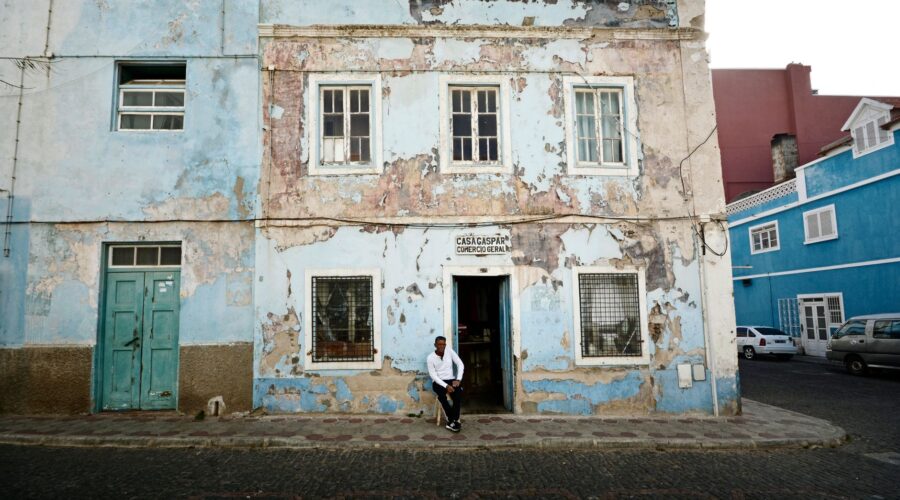
Today, the site of Drake’s conquest is known as Cidade Velha (“Old City”). In 2009, it was designated a UNESCO World Heritage site. Visitors to Santiago can still walk among the ruins that survived the English cannon fire, including the Pelourinho (pillory) and the massive Fortaleza Real de São Filipe, which was built shortly after Drake’s 1585 raid specifically to prevent such a catastrophe from happening again.
Practical Information for History Buffs
- Getting There: Most international travelers fly into Nelson Mandela International Airport in Praia. Cidade Velha is a short 20-minute drive from the capital.
- What to See: The Royal Fortress of São Filipe offers sweeping views of the Atlantic and the valley where Drake’s men once marched.
- Best Time to Visit: The climate is dry and pleasant from November to June. August to October sees the “Cape Verde Hurricanes” forming in the region, which can lead to brief but heavy downpours.
Conclusion
The 1585 sacking of Ribeira Grande remains a pivotal chapter in the history of Cabo Verde. It illustrates the archipelago’s historical role as a magnet for global power struggles, a role defined by its geography and the resilience of its people. While Sir Francis Drake left the city in flames, the ruins that remain serve as a testament to Cape Verde’s enduring legacy as the first tropical frontier of the modern world.
Image: Pexels – damien Saillet