The Sotavento Islands Guide: Cape Verde’s Leeward Group
Nestled in the central Atlantic Ocean, the archipelago of Cape Verde (officially Cabo Verde) is a land of dramatic contrasts, where volcanic peaks meet turquoise waters. While the northern “Barlavento” islands often capture the spotlight for windsurfing and all-inclusive resorts, the southern group—the Sotavento Islands—offers a deep dive into the nation’s soul. Named “Sotavento” (Leeward) because they lie away from the prevailing trade winds, this group consists of four primary islands: Santiago, Fogo, Brava, and Maio. Together, they represent the political, historical, and geological heart of this Macaronesian nation.
Santiago: The Vibrant Heart of the Nation
Santiago is the largest island in both size and population, housing over half of the country’s residents. It is the cultural melting pot of Cape Verde, where the African and Portuguese heritage of the archipelago is most visible. The island’s capital, Praia, is a bustling urban hub that serves as the seat of government and the center of the country’s growing service-oriented economy.
For history enthusiasts, Santiago is home to Cidade Velha (formerly Ribeira Grande). Founded in 1462, it was the first permanent European settlement in the tropics. Once a pivotal stop in the transatlantic slave trade during the 16th and 17th centuries, the town is now a UNESCO World Heritage site. Visitors can explore the Fortaleza Real de São Filipe, which was built to defend the settlement against pirates like Francis Drake, who famously sacked the city in 1585.
Beyond the cities, Santiago’s geography is a tapestry of microclimates. While the coast is arid, the interior features towering mountains and lush valleys where condensation from ocean mist allows for the cultivation of sugarcane, bananas, and coffee. It is here that the traditional Batuque music flourishes, a rhythmic art form passed down by enslaved women through generations.
Fogo: The Island of Fire
Visible from the shores of Santiago on a clear day, Fogo is dominated by the majestic Pico do Fogo. Standing at 2,829 meters (9,281 feet), it is the highest point in Cape Verde and the region’s most active volcano. The most recent eruption occurred in 2014, reshaping the landscape within the massive 8-kilometer-wide caldera known as Chã das Caldeiras.
Despite the volcanic activity, the “Island of Fire” is far from desolate. The volcanic soil is incredibly fertile, producing the famous Manecom wine and some of the finest coffee in the Atlantic. The town of São Filipe, with its colorful colonial sobrados (manor houses) and black sand beaches, offers a charming contrast to the rugged, blackened lava flows of the interior. A hike to the summit of the volcano is a rite of passage for adventurers, offering panoramic views of the entire Sotavento group.
Brava: The Secret Garden
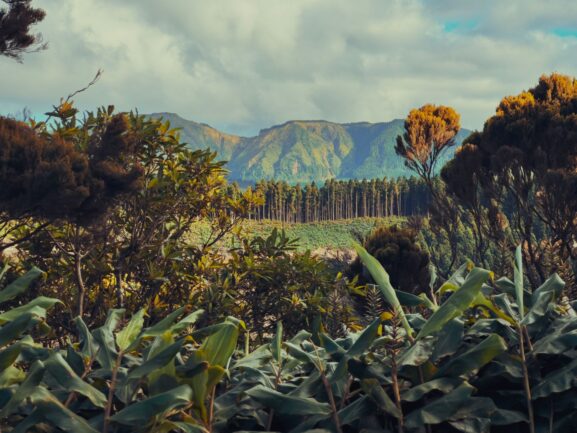
Brava is the smallest inhabited island in the archipelago and perhaps the most mysterious. Known as the “Island of Flowers,” its high peaks trap moisture from the clouds, creating a verdant, misty landscape that feels worlds away from the arid plains of the other islands. Because it lacks an operational airport due to high winds, Brava is accessible only by ferry from Fogo, preserving its tranquil, secluded atmosphere.
Historically, Brava has a deep connection to the United States. In the 19th century, American whaling ships frequently stopped here, leading to a significant wave of emigration to New England. This legacy lives on today through the island’s distinctive “Morna” music—the soulful, melancholic genre popularized by Cesária Évora—which was heavily influenced by the themes of departure and longing (saudade) felt by the diaspora.
Maio: The Golden Escape
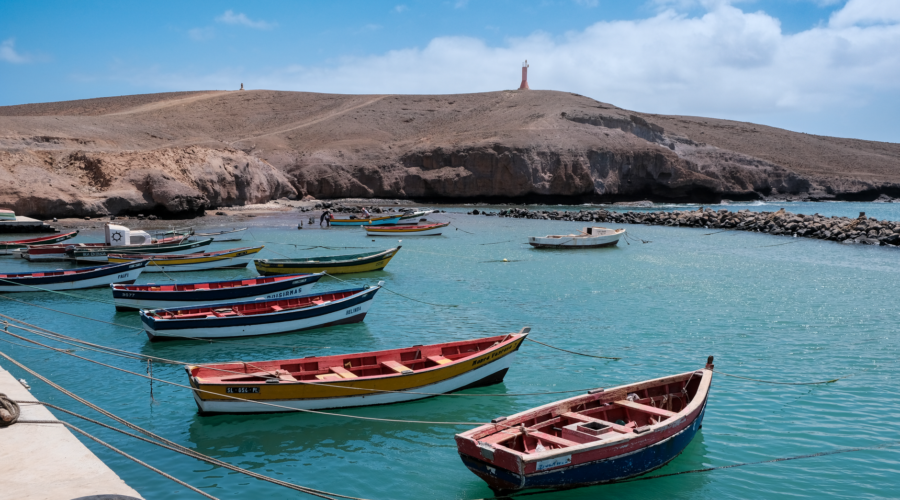
Maio is the geological elder of the Sotavento group, with rocks dating back over 125 million years. Unlike the mountainous terrain of Fogo or Santiago, Maio is flat, sandy, and tranquil. It is famous for its vast salt flats and miles of untouched white-sand beaches, such as Bitche Rocha.
For those looking to escape the crowds, Maio offers a slow pace of life. The island is an important sanctuary for biodiversity, serving as a major nesting site for loggerhead turtles. While tourism is growing, Maio remains largely under the radar, making it the perfect destination for sustainable travel and quiet reflection.
Geology and Climate: A Fragile Balance
The Sotavento Islands are part of the Macaronesia ecoregion, sharing a volcanic origin with the Azores and Canary Islands. However, their location off the coast of West Africa places them in the Sahelian semi-arid belt. While islands like Santiago and Brava benefit from orographic rainfall (clouds trapped by mountains), others like Maio are classified as deserts, receiving less than 250mm of rain annually.
Today, the Sotavento group is at the forefront of the fight against climate change. Cape Verde has been ranked as one of the most endangered nations due to rising sea levels and flooding. In response, the government has become a leader in renewable energy. As of 2023, 20% of the nation’s energy comes from wind and solar, with a goal to reach 50% by 2030. A recent “debt-for-nature” swap with Portugal has also secured €140 million for environmental projects, ensuring the protection of the islands’ unique endemic species, such as the Iago sparrow and Alexander’s swift.
Practical Information for Travelers
- Language: The official language is Portuguese, but the soul of the islands is expressed in Cape Verdean Creole (Crioulo).
- Best Time to Visit: Between October and June, when the weather is warm and the chance of heavy rain is low.
- Getting Around: Praia (Santiago) is the main international gateway. Domestic flights connect Santiago to Fogo and Maio, while Brava is reached via a scenic ferry ride from Fogo.
- Currency: The Cape Verdean Escudo (CVE), which is pegged to the Euro.
Conclusion
The Sotavento Islands are more than just a geographic grouping; they are the cradle of Cape Verdean identity. From the historic ruins of Cidade Velha and the bustling markets of Praia to the smoking crater of Fogo and the flowered paths of Brava, the “Leeward Islands” offer a travel experience that is as diverse as it is unforgettable. Whether you are seeking adventure on a volcanic peak or solitude on a golden beach, the Sotavento group welcomes you with morabeza—the legendary hospitality of the Cape Verdean people.
Image: Pexels – Rob Mowe