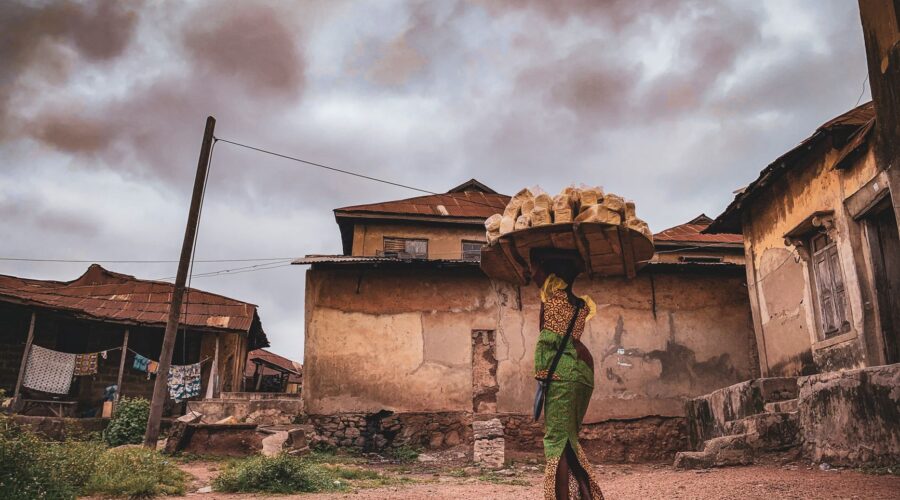
The Grace of Burden: Head-Carrying Traditions in Cape Verde
While walking through the bustling markets of Praia, the cobblestone streets of Mindelo, or the dusty rural paths of Santo Antão, one sight remains an iconic symbol of Cape Verdean resilience and grace: women expertly balancing heavy loads atop their heads. This practice, known locally as carregar à cabeça, is far more than a practical way to move goods. It is a living tradition that blends African heritage, physical mastery, and the socioeconomic reality of life in the archipelago.
The Roots of the Tradition
The practice of carrying items on the head is deeply rooted in Cape Verde’s West African origins. During the era of the transatlantic slave trade, the archipelago served as a central hub where various ethnic groups from the Senegambia region and Guinea-Bissau were brought together. With them came cultural practices, including the efficient method of transporting water, food, and firewood on the head.
Over centuries, this method became an essential survival skill. In a rugged volcanic landscape where many settlements were built on steep hillsides or far from water sources, keeping one’s hands free while navigating treacherous terrain was a necessity. Today, while modern infrastructure has arrived, the tradition persists as both a cultural identifier and a vital economic tool for the informal sector.
The Art of Balance and the ‘Torcida’
To the uninitiated, the ability to balance a 20-kilogram basin of fish or a giant bundle of firewood while walking upright seems like a feat of magic. However, it is a skill learned from early childhood. Young girls often begin by practicing with small containers of water, mimicking their mothers and grandmothers.
The secret to this stability lies in the torcida (or rodilha). This is a piece of cloth, often a traditional pano de terra or a simple recycled garment, twisted into a firm, donut-shaped ring. The torcida is placed on the crown of the head to provide a flat, cushioned base for the load. It distributes the weight evenly across the skull and prevents the object from slipping.
Physically, the practice requires impeccable posture. To maintain balance, the spine must remain perfectly vertical, the neck strong, and the gaze fixed forward. This has contributed to the famous “regal” gait often attributed to Cape Verdean women—a steady, fluid movement that remains unchanged regardless of the weight they carry.
The ‘Peixeiras’ and Market Life
Perhaps the most visible practitioners of this tradition are the peixeiras (fishmongers). In the early hours of the morning, as the colorful botes (fishing boats) arrive at the shore, these women are ready. They fill large aluminum basins with tuna, mackerel, or garoupa, hoist them onto their heads, and march toward the municipal markets or through residential neighborhoods.
Their melodic cries—advertising the day’s catch—echo through the streets. For the peixeiras, carrying on the head is about mobility and commerce. It allows them to bring the market directly to the customer’s doorstep, navigating narrow alleys where vehicles cannot pass. It is a grueling profession, requiring immense physical strength and a communal spirit, as women often help “load” one another, hoisting the heavy basins onto their friends’ heads in a synchronized display of sisterhood.
What is Carried?
While fish is the most common sight in coastal towns, the variety of items transported on the head is staggering:
- Agriculture: In the green valleys of Santo Antão and Fogo, farmers carry heavy sacks of potatoes, maize, and bunches of bananas.
- Water: In rural areas where piped water is still being established, plastic jerrycans (bidões) are carried from communal fountains to homes.
- Construction: It is not uncommon to see women or men transporting bricks or buckets of sand at small-scale building sites.
- Ceremonial: During festivals like Tabanca or São João, ceremonial offerings and traditional foods are often carried to the celebration site on the head.
Cultural Significance and the ‘Morabeza’ Spirit
In Cape Verdean literature, music, and art, the woman with a load on her head is a recurring motif. She represents the Mãe Carinhosa (Caring Mother) and the Mulher de Garra (Woman of Strength). Renowned Cape Verdean artists often depict these silhouettes against the backdrop of the islands’ volcanic peaks, symbolizing the weight of history and the strength required to sustain a family in a land of limited resources.
The practice is also tied to the concept of Morabeza—the unique Cape Verdean hospitality. The ability to carry goods to a neighbor, to share a harvest, or to bring supplies to a local feast is part of the social fabric. It facilitates a “face-to-face” economy where social interaction is as important as the transaction itself.
Health Implications and Modern Perspectives
While the tradition is admired for its grace, it is important to acknowledge the physical toll. Long-term carrying of heavy loads on the head can lead to chronic neck pain, spinal compression, and joint issues. As Cape Verde modernizes, younger generations are increasingly turning to backpacks, trolleys, and vehicles.
In urban centers like Praia and Espargos, some view the practice as a sign of poverty or a lack of development. However, many others see it as a point of cultural pride. There is an ongoing dialogue in the islands about balancing “modernity” with the preservation of these traditional skills. For many women, the basin on the head remains a symbol of financial independence and a connection to their ancestors.
Advice for Travelers
If you are visiting Cape Verde and wish to photograph this beautiful tradition, it is essential to do so with respect. Always ask for permission before taking a photo of a woman carrying a load, especially peixeiras who are working. Many will appreciate a small tip or a purchase of their goods in exchange for their time. Remember that while it looks picturesque to a tourist, for the local woman, it is a demanding day of labor.
Conclusion
The tradition of carrying loads on the head in Cape Verde is a powerful testament to the archipelago’s history and the resilience of its people. It is a skill that turns a heavy burden into a display of balance, a craft that turns a daily chore into a rhythmic dance through the streets. As Cape Verde continues to evolve in the 21st century, the sight of a woman walking with her head held high, perfectly balanced under the weight of her world, remains the true heartbeat of the islands.
Image: Pexels – Tope J. Asokere