Santa Luzia: Cape Verde’s Only Uninhabited Major Island
Among the ten volcanic islands that form the archipelago of Cabo Verde, there is one that stands apart as a silent sentinel of the Atlantic. While Santiago hums with the energy of the capital and Sal glitters with luxury resorts, Santa Luzia remains a primitive, untouched wilderness. Situated in the Barlavento (windward) group between São Nicolau and São Vicente, it is the only major island in Cape Verde that is currently uninhabited.
For the intrepid traveler or the nature enthusiast, Santa Luzia represents the ultimate “off-the-beaten-path” destination. It is a place where the human footprint is temporary, and the laws of nature are the only ones that apply. Spanning roughly 35 square kilometers (14 square miles), this rugged landscape offers a rare glimpse into what the archipelago might have looked like when Portuguese explorers first “discovered” the islands in the 15th century.
Historical Context: The Island that Refused to be Tamed
While the broader history of Cape Verde is defined by its strategic role in the transatlantic slave trade and its eventual rise as a stable democracy, the history of Santa Luzia is a narrative of resilience against human intervention. Unlike its neighbors, Santa Luzia never hosted a permanent, sustainable city. Its lack of reliable freshwater sources made large-scale settlement nearly impossible.
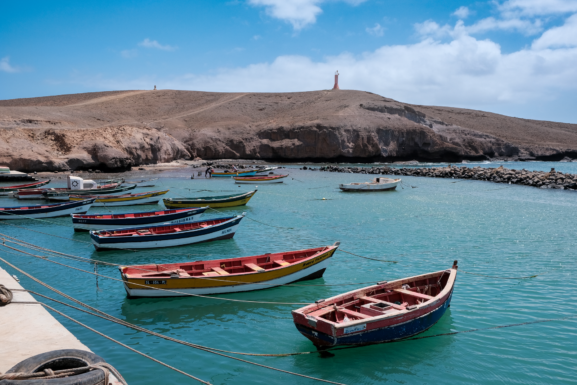
In the 18th century, a small community of shepherds lived on the island, tending to livestock, and there were several attempts to establish small-scale agricultural colonies in the 19th century. However, the same persistent droughts that plagued the rest of the archipelago in the mid-18th and 19th centuries were particularly devastating here. By the 1960s, the final permanent residents moved away, leaving the island to the elements. Today, it serves primarily as a destination for artisanal fishermen from São Vicente and researchers dedicated to preserving its unique ecology.
A Geological and Climatic Fortress
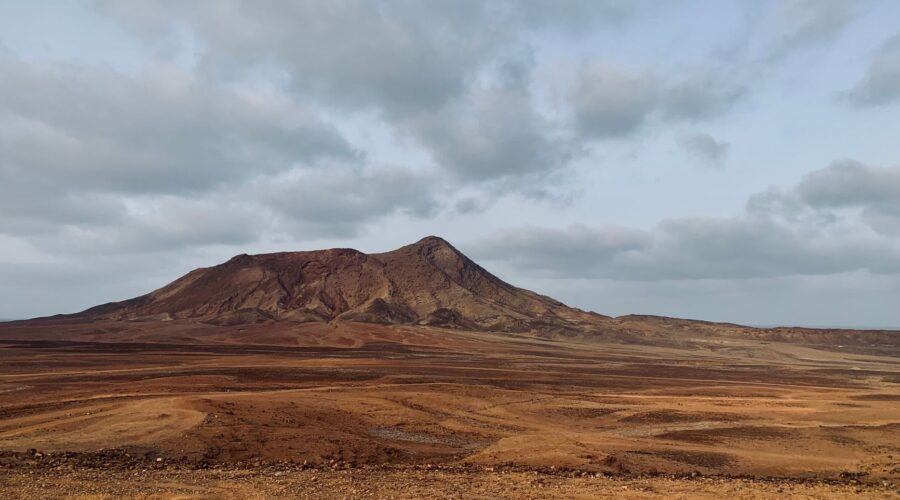
Geologically, Santa Luzia is part of the same Eocene-era volcanic formations that created the rest of the archipelago 40 to 50 million years ago. Its highest point, Monte Grande, rises to 395 meters (1,296 feet), offering panoramic views of the surrounding Atlantic and the neighboring uninhabited islets of Ilhéu Raso and Ilhéu Branco.
The climate here is extremely arid. Situated within the Sahelian semi-arid belt, Santa Luzia receives even less rainfall than the more mountainous islands like Santiago or Santo Antão. The landscape is characterized by dunes, rocky plains, and rugged cliffs. It is a harsh environment, but one that has allowed for the preservation of a pristine ecosystem free from the urban development and pollution found elsewhere in the world.
The Sanctuary: Biodiversity and Conservation
What Santa Luzia lacks in human population, it makes up for in biodiversity. The island and its surrounding islets are part of a protected Integrated Nature Reserve. It serves as a vital sanctuary for several endemic species—creatures found nowhere else on Earth.
Avian Life
The island is a haven for seabirds. Researchers frequently visit to study the nesting habits of species like the Alexander’s Swift and the Cape Verde Shearwater. The nearby Ilhéu Raso is the sole habitat of the Raso Lark, one of the rarest birds in the world. Because Santa Luzia is uninhabited, these birds face fewer threats from invasive species and human interference.
Marine and Reptile Life
The beaches of Santa Luzia are crucial nesting grounds for the loggerhead sea turtle. Between June and October, the deserted shores become the site of a profound natural ritual as turtles return to lay their eggs. Under the waves, the crystalline waters are teeming with life, including sharks, rays, and a vibrant array of Atlantic fish, making it a “gold mine” for marine biology research.
Visiting Santa Luzia: Practical Tips for the Adventurous
Because there are no hotels, roads, or permanent structures, visiting Santa Luzia requires careful planning. It is not a typical tourist destination, but rather an excursion for those who respect the environment.
- Access: The only way to reach Santa Luzia is by boat, usually departing from Calhau on the island of São Vicente. The crossing can be rough, as these are the “windward” islands where the Atlantic swells are most felt.
- Permits: As the island is a protected nature reserve, visitors may need to coordinate with the Cape Verdean Ministry of Environment or go through authorized local guides to ensure minimal impact on the habitat.
- Self-Sufficiency: There is no water, food, or shelter on the island. Anyone visiting for a day trip must bring all necessary supplies and, crucially, must take all trash back with them.
- Activities: Hiking the dunes and trekking to the top of Monte Grande are popular for those who make the journey. The isolation provides a silence that is increasingly rare in the modern world.
The Future: Debt-for-Nature and Climate Change
As Cape Verde moves toward its goal of obtaining 50% of its energy from renewable sources by 2030, islands like Santa Luzia serve as symbols of the nation’s environmental commitment. The recent “debt-for-nature” swap with Portugal—a landmark agreement in Africa—ensures that funds previously destined for debt repayment are now funneled into environmental projects. This financial support is vital for the continued monitoring and protection of Santa Luzia’s fragile ecosystem against the looming threats of climate change and rising sea levels.
Conclusion
Santa Luzia is a reminder of the raw, volcanic power that birthed the Republic of Cabo Verde. It is a place where time seems to have stood still, untouched by the Portuguese settlements of the 15th century or the modern tourism boom of Sal and Boa Vista. For those who look out from the shores of Mindelo toward the hazy silhouette of Santa Luzia on the horizon, the island represents the enduring mystery of the Atlantic—a desert in the ocean that belongs entirely to the wild.
Image: Pexels – Bibi Kiekens