
CPLP Secretary Defies Guinea-Bissau Withdrawal Threats
The Executive Secretary of the Community of Portuguese Language Countries (CPLP) insisted today that the organization remains a bloc of nine member states, despite persistent threats from Guinea-Bissau’s transitional leadership to withdraw from the Lusophone community.
Diplomacy Amidst Defiance
Speaking following a visit by Portuguese President António José Seguro to the CPLP headquarters in Lisbon, Executive Secretary Maria de Fátima Monteiro Jardim emphasized that diplomatic channels remain open. “We continue as nine member states,” Jardim told reporters. “We continue to maintain our bilateral relations through our missions represented in Guinea-Bissau.”
The Angolan diplomat, who leads the organization until 2027, acknowledged the internal evaluation of the “Guinea-Bissau dossier,” expressing a desire for reconciliation. “Our wish is to resume having the country fully active in the CPLP. We are interested in promoting dialogue to resolve this situation caused by the current instability,” she added.
A Foundation of Values
During a closed-door address to permanent ambassadors, President Seguro reinforced the ethical foundations of the organization. Citing the CPLP’s Constitutive Declaration, he reminded leaders that the bloc is built on “peace, democracy, the rule of law, human rights, and social justice.”
“We must never forget these values that unite us,” Seguro said. “And we must never forget the power that, together, we have to defend and promote these values inside and outside our borders.”
The Root of the Conflict
Guinea-Bissau is currently suspended from the CPLP following a military coup late last year. The suspension led to East Timor stepping in to assume the organization’s rotating presidency, a move that sparked outrage from Guinea-Bissau’s National Transition Council (NTC).
On June 24, the NTC—the body established by the military to replace the country’s parliament—lashed out at the Lusophone bloc. In a biting statement, the Council accused the CPLP of acting with a “whip-in-hand complex” and using “illegal and anti-statutory means.” The Council contrasted the CPLP unfavorably with the International Organization of La Francophonie, which it described as “mature and intelligent.”
The military leadership further questioned why the CPLP leadership was handed to East Timor instead of Equatorial Guinea. The NTC stated that Guinea-Bissau “refuses to submit to this club of laggards” and announced that the country’s future within the CPLP will be decided during upcoming elections, scheduled for December 6.
A Landmark Anniversary
The CPLP is set to mark its 30th anniversary on July 17. The organization comprises Angola, Brazil, Cape Verde, Guinea-Bissau, Equatorial Guinea, Mozambique, Portugal, São Tomé and Príncipe, and East Timor. Whether the bloc will remain nine-strong following Guinea-Bissau’s December vote remains the most significant challenge facing the community as it enters its fourth decade.
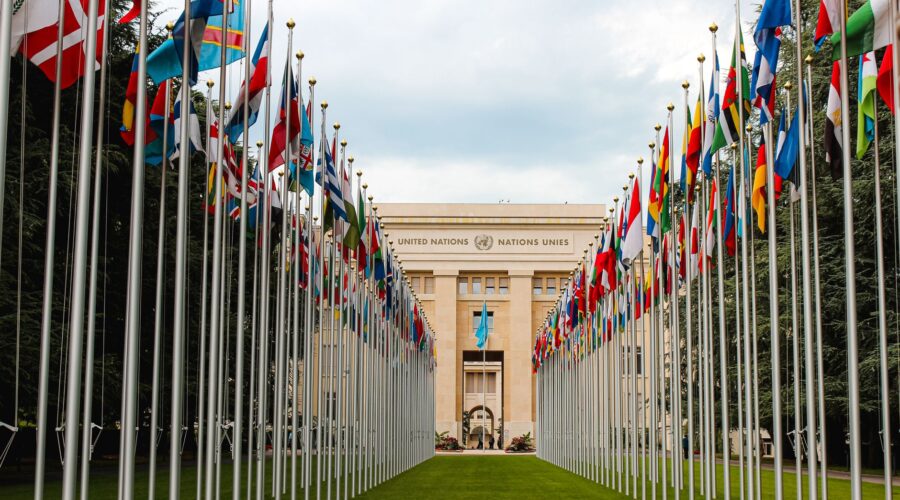
Image: Pexels – Mathias Reding