Grogue of Santo Antão: Cape Verde’s Liquid Gold Tradition
On the rugged, cloud-shrouded island of Santo Antão, the northernmost gem of the Cape Verdean archipelago, time seems to slow down. Here, between the vertical cliffs and the lush, terraced valleys of Ribeira Grande and Paul, a centuries-old tradition flows as vibrantly as the mountain streams. This is the home of Grogue—the legendary sugarcane spirit that is far more than just an alcoholic beverage; it is the soul of the island, often referred to by locals as “Liquid Gold.”
What is Grogue? A Spirit with Deep Roots
Grogue (derived from the English word “grog”) is a high-proof rum distilled from pure sugarcane juice. Unlike many commercial rums that use molasses (a byproduct of sugar production), Cape Verdean grogue is artisanal. It belongs to the prestigious family of rhum agricole, where the fresh juice of the cane is fermented and distilled, preserving the raw, vegetal, and earthy flavors of the land.
While grogue is produced across the archipelago, Santo Antão is undisputed as the spiritual and quality-driven heart of production. The island’s unique microclimates—ranging from arid coastal stretches to humid, tropical peaks—create a terroir that imparts a complexity to the sugarcane found nowhere else in West Africa.
The Trapiche: The Heartbeat of the Valley
The production of grogue is a sensory experience that begins with the sound of the trapiche. Historically, the trapiche is a traditional stone and wood mill used to crush the sugarcane. In the past, these were exclusively powered by oxen or mules, walking in tireless circles to turn the gears that squeeze the sweet nectar from the stalks.
While many modern distilleries (or currais) have transitioned to mechanical engines, several traditional ox-drawn trapiches still operate in the deeper valleys of Santo Antão. The sight of the animals at work, accompanied by the rhythmic creak of the wood and the sweet, grassy aroma of crushed cane, is a scene that has remained virtually unchanged for over 250 years.
The Harvest: A Test of Strength
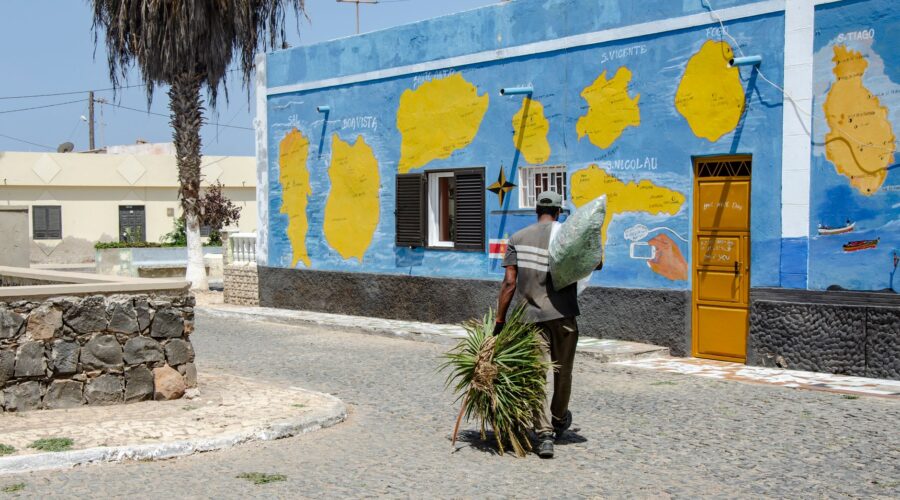
Sugarcane cultivation in Santo Antão is a feat of human endurance. Because the island is dominated by steep volcanic ridges, there is no room for industrial machinery. Every stalk of cane is planted, tended, and harvested by hand on narrow terrace walls called socalcos. During the harvest season (typically from January to June), men can be seen traversing precarious mountain paths with massive bundles of cane balanced on their shoulders, bringing the raw materials down to the valleys where the distilleries sit.
The Art of Distillation: From Juice to Firewater
The transformation of sugarcane into “Liquid Gold” is a three-stage process that requires patience and a master’s intuition.
1. Extraction and Fermentation
Once the juice (called caldo) is extracted by the trapiche, it is filtered and poured into large fermentation vats. In the traditional method, no commercial yeasts are added. The distillers rely on natural, wild yeasts present in the air and on the sugar cane itself. The fermentation process usually takes five to ten days, depending on the ambient temperature. During this time, the sugar converts into alcohol, creating a “cane wine.”
2. The Copper Still (Alambique)
The fermented liquid is then moved to a copper still, known as an alambique. In Santo Antão, these stills are often fired by the dried remains of the squeezed sugarcane (bagasse), creating a sustainable loop where no part of the plant goes to waste. The master distiller meticulously monitors the heat; if it’s too hot, the grogue will be harsh; too cool, and the process stalls.
3. The Heart of the Spirit
As the vapor rises through the copper neck and condenses, the first liquid to emerge is the “head,” which is discarded due to its high impurities. Then comes the “heart”—the premium grogue. This clear, potent liquid usually sits between 40% and 45% alcohol by volume. Finally, the “tail” is discarded or recycled. The result is a crystal-clear spirit with an intense aroma of bananas, citrus, and fresh grass.
The Evolution of Quality: Certification and Aging
For decades, grogue was largely an informal economy. However, in recent years, the Cape Verdean government and local associations have made significant strides in protecting the “Grogue de Santo Antão” brand. New laws now regulate the production season and hygiene standards to ensure that what reaches the international market is of the highest quality.
While most grogue is consumed “velha” (unaged and white), a new trend of aged grogue is emerging. Some producers are aging their spirit in oak barrels, resulting in Grogue Envelhecido. These aged varieties take on a golden hue and develop notes of caramel, vanilla, and spice, rivaling some of the world’s finest cognacs and whiskies.
Cultural Significance: More Than Just a Drink
In Cape Verdean culture, grogue is a social glue. It is the drink of poets, musicians, and workers. It is used to toast at weddings, to mourn at funerals, and to welcome strangers into a home. It is also a staple of traditional medicine; many islanders swear by a shot of grogue mixed with honey and lime (known as Puntche) to cure anything from a common cold to a broken heart.
The famous Cape Verdean musical genre, Morna, often features lyrics dedicated to the valleys of Santo Antão and the warmth of its local firewater. To drink grogue in a local “taberna” is to participate in a ritual of Morabeza—the famed Cape Verdean hospitality.
Visiting the Distilleries: A Guide for Travelers
For those visiting Santo Antão, witnessing grogue production is a must-do experience. The best time to visit is during the harvest season (January to May).
- Paul Valley: Often considered the most beautiful valley in Cabo Verde, it is densely packed with sugarcane and small-scale distilleries. You can often walk along the tropical paths and follow your nose to a working trapiche.
- Ribeira da Cruz: Located on the western side of the island, this area is known for a slightly different soil composition, producing grogue with a distinct mineral profile.
- Tarrafal de Monte Trigo: This isolated coastal village produces grogue in a very traditional manner, often transporting the bottles out by boat.
Pro Tip: When tasting grogue, do as the locals do. Take a small sip, let it coat your palate, and appreciate the “burn” that transforms into a sweet, lingering aftertaste of the mountains.
The Future of Grogue
As Cape Verde continues to grow as a tourism destination, the challenge lies in balancing modernization with tradition. Young entrepreneurs on the island are increasingly focusing on organic certification and sustainable farming practices to appeal to a global audience. The “Liquid Gold” of Santo Antão is no longer just a local secret; it is becoming a symbol of Cape Verdean pride on the world stage, proving that the old ways—slow, manual, and deeply connected to the earth—often produce the best results.
Whether you drink it neat, in a refreshing Caipirinha, or as a medicinal Puntche, one thing is certain: a glass of grogue is a glass of Santo Antão’s history, landscape, and resilient spirit.
Image: Pexels – Piotrek Wilk