Darwin in Cape Verde: The HMS Beagle at Porto Praya
In January 1832, a small British Royal Navy vessel named the HMS Beagle dropped anchor in the harbor of Porto Praya (modern-day Praia) on the island of Santiago. On board was a 22-year-old amateur naturalist named Charles Darwin. While history often focuses on Darwin’s later arrival in the Galápagos, it was here, in the volcanic archipelago of Cape Verde, that his revolutionary ideas about geology and the mutability of nature first began to crystallize.
Ground Zero for a Scientific Revolution
Cape Verde, or Cabo Verde, is a horseshoe-shaped cluster of ten volcanic islands located roughly 600 to 850 kilometers off the coast of West Africa. When Darwin arrived, the islands were a vital stopping point for mid-Atlantic shipping routes, serving as a re-supplying station for ships traveling toward the Americas or around the Cape of Good Hope. However, for Darwin, the rugged landscape of Santiago offered more than just fresh water and supplies; it provided the first real-world laboratory for his developing scientific mind.
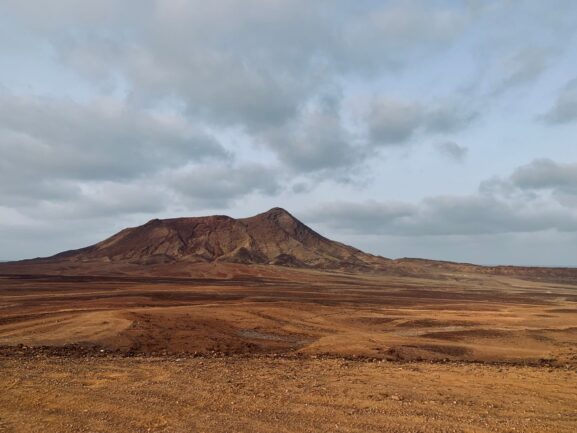
Upon landing at Porto Praya, Darwin was immediately struck by the stark, arid beauty of the island. He recorded in his diary that the “very bright colored” rocks and the “stark, desolate” appearance of the volcanic landscape were unlike anything he had seen in England. The archipelago, which formed approximately 40–50 million years ago during the Eocene epoch, presented a complex geological puzzle that the young traveler was eager to solve.
The White Band of Santiago: A Geological Revelation
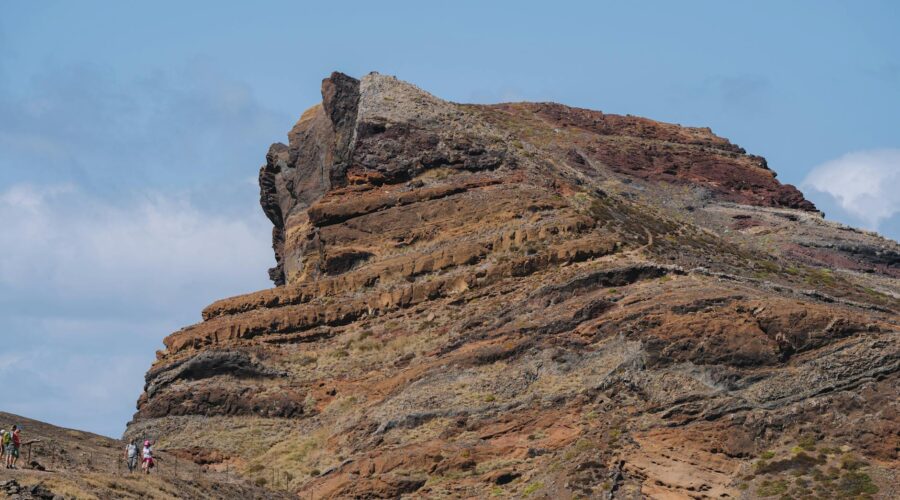
Darwin’s most significant observation at Porto Praya involved a curious white horizontal band of rock embedded within the dark volcanic cliffs, approximately 45 feet above sea level. This band was composed of compressed seashells and coral, sandwiched between layers of ancient lava.
Applying the principles of Charles Lyell’s Principles of Geology—a book Darwin had been gifted at the start of the voyage—he reached a radical conclusion. He reasoned that this layer of shells had once been on the sea floor and had subsequently been pushed upward by volcanic forces over immense periods of time. This observation validated Lyell’s theory of “uniformitarianism”—the idea that the Earth was shaped by slow, gradual processes rather than sudden, global catastrophes.
Reflecting on this moment years later, Darwin noted, “It then first dawned on me that I might perhaps write a book on the geology of the various countries visited, and this made me thrill with delight.” The cliffs of Santiago were the birthplace of Darwin the author and Darwin the theorist.
Exploring the Biodiversity of the Sotavento
While geology dominated his initial notes, Darwin did not ignore the unique biology of the islands. Cape Verde is part of the Macaronesia ecoregion, and its isolation has resulted in several endemic species. Darwin spent hours collecting specimens and observing the local wildlife.
The Iago Sparrow and Other Endemics
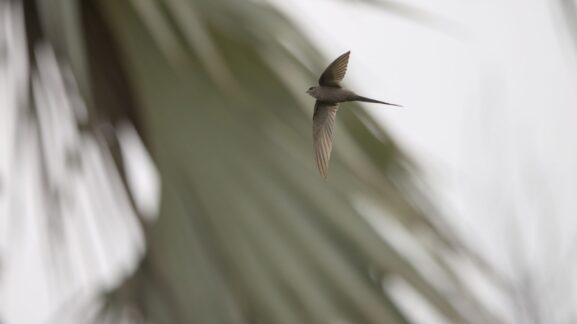
Darwin documented the behavior of various birds, including what is now known as the Iago sparrow (Passer iagoensis), an endemic species named after Santiago (the Portuguese version of St. James, or Iago). He also observed the local reptiles and insects, marveling at how life could thrive in such an arid, semi-desert environment. Today, Cape Verde is recognized for its unique biodiversity, including Alexander’s swift and the Cape Verde warbler, though many of these species remain endangered by human development.
The Baobab Trees
The flora of Santiago also captured Darwin’s imagination. He famously measured a giant Baobab tree near Porto Praya, recording its massive circumference and noting its ability to store water. To Darwin, these “grotesque” but magnificent trees were symbols of the island’s botanical resilience. Today, visitors to Praia can still find descendants of the vegetation Darwin documented, clinging to the arid slopes that transition into lush woods where the humid air condenses in the higher mountains.
Cultural Context: Cape Verde in the 1830s
Darwin’s visit occurred during a period of transition for the islands. Established as a Portuguese colony in the 15th century and serving as a major hub for the transatlantic slave trade in the 16th and 17th centuries, the islands were in economic decline by the mid-19th century. Darwin noted the poverty and the effects of persistent drought, which have historically plagued the archipelago.
He observed the diverse population—descendants of West African populations and Portuguese settlers—and the complex social structures of the time. This human element, combined with the harsh climate, provided a backdrop of a “struggle for existence” that would eventually inform his theories on natural selection.
Legacy of the Visit
The 21 days Charles Darwin spent in Cape Verde were arguably some of the most formative of his five-year voyage on the HMS Beagle. It was here that he transformed from a student of books into a student of nature. The geological observations at Porto Praya gave him the temporal framework—millions of years—necessary for his later biological theories to make sense.
Today, Cape Verde is a stable representative democracy and a leader in environmental conservation in Africa. The country has even pioneered “debt-for-nature” swaps, investing in environmental projects to preserve the very landscapes that once inspired Darwin. For the modern traveler, visiting Praia is not just a trip to a vibrant African capital; it is a pilgrimage to the site where the foundation stones of modern science were laid.
Practical Information for the “Darwin Traveler”
- Getting There: Nelson Mandela International Airport in Praia (Santiago) serves flights from Europe, Africa, and the Americas.
- Key Sites: Visit the “Quartel de Jaime Mota” area in Praia for views of the harbor Darwin entered. Explore the “Cidade Velha” (Old City), the first permanent European settlement in the tropics and a UNESCO World Heritage site, located just a short distance from the capital.
- Climate: Like Darwin, expect a mild but arid climate. The best time to visit is between November and June to avoid the irregular heavy downpours of the rainy season.
Image: Pexels – Diogo Miranda