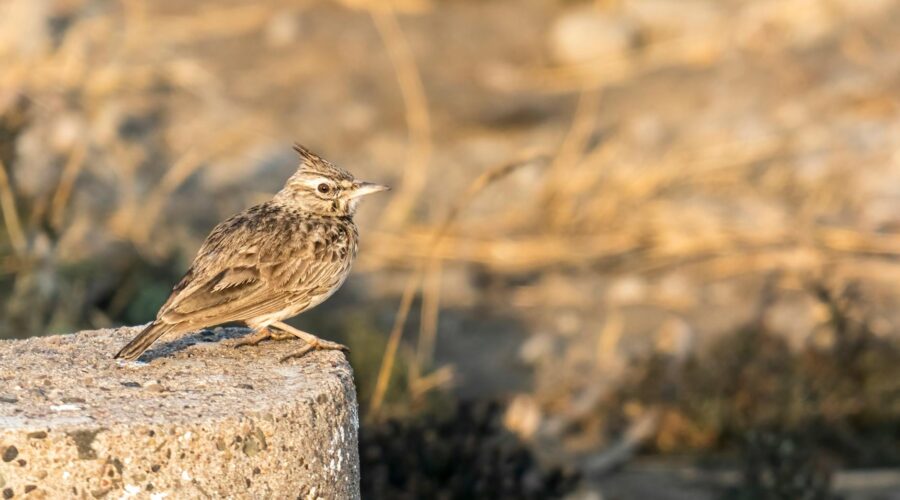
The Raso Lark: Saving a Rare Endemic Bird in Cabo Verde
The Raso Lark: Rediscovering One of the World’s Rarest Endemic Birds on Raso Islet
In the vast, azure expanse of the central Atlantic Ocean lies the archipelago of Cabo Verde, a nation defined by its volcanic heritage and resilient spirit. While international travelers often flock to the sun-drenched beaches of Sal or the vibrant music scene of Mindelo, a biological drama of global importance is quietly unfolding on a tiny, uninhabited speck of rock known as Raso Islet (Ilhéu Raso). This is the exclusive home of the Raso Lark (Alauda razae), a bird once on the very precipice of extinction and currently recognized as one of the rarest avian species on Earth.
A Specialist of the Desolate: What is the Raso Lark?
The Raso Lark is a small, streaked brown bird belonging to the lark family (Alaudidae). While it might lack the flamboyant plumage of tropical parrots, its biological significance is immense. It is an endemic species, meaning it is found nowhere else in the world except for the 7-square-kilometer volcanic platform of Raso Islet. Evolution has finely tuned this bird to survive in one of the harshest environments imaginable—a flat, arid landscape characterized by volcanic rock, sparse grasses, and relentless Atlantic winds.
Unique among larks, the Raso Lark exhibits significant sexual dimorphism in its beak size. Males possess much larger, sturdier bills than females, an evolutionary adaptation that allows the sexes to exploit different food sources—such as digging for larvae or cracking hardy seeds—thereby reducing competition within their tiny habitat.
The Fragile Stronghold of Raso Islet
Cabo Verde is part of the Macaronesia ecoregion, shared with the Azores and the Canary Islands. Historically, the archipelago has faced severe environmental pressures, including persistent droughts and the introduction of invasive species. For the Raso Lark, these pressures were nearly fatal. While fossil evidence suggests the lark once inhabited the larger islands of São Vicente and Santa Luzia, by the time it was scientifically described in the late 19th century, it was confined solely to Raso.
Raso Islet is part of the Barlavento (windward) islands. It is a strictly controlled nature reserve, inaccessible to the general public, and for a very good reason. The entire global population of the Raso Lark fluctuates wildly based on rainfall. During the severe droughts that frequently plague Cabo Verde, the population has been known to drop to fewer than 100 individuals. When the rare rains arrive between August and October, the vegetation blooms, and the population can surge to several hundred, but the species remains perpetually “Critically Endangered” on the IUCN Red List.
A History of Survival and Science
The Raso Lark has fascinated naturalists for centuries. Even Charles Darwin, who visited Cabo Verde in 1832 during the voyage of the HMS Beagle, noted the unique biodiversity of the islands. However, the lark’s specific struggle became a modern conservation cause célèbre. Because the bird nests on the ground, it is extraordinarily vulnerable to predators. On the larger islands of Cabo Verde, the introduction of cats, dogs, and rats led to the lark’s localized extinction. Raso Islet became its last stand primarily because it remained free of these invasive mammals.
The Great Translocation: A Hopeful Future
For decades, conservationists from organizations like BirdLife International and the local NGO Biosfera I have monitored the Raso Lark with bated breath. The primary fear was simple: a single catastrophic event—a severe hurricane, a disease outbreak, or the accidental introduction of a single pregnant rat to Raso—could wipe out the entire species in a matter of weeks.
To mitigate this “all eggs in one basket” risk, a bold conservation plan was enacted in 2018. After years of preparing the nearby island of Santa Luzia (which is also uninhabited) by removing invasive cats and restored the habitat, a small group of Raso Larks was translocated. This historic move aimed to re-establish a second “safety” population within the bird’s historical range. Early reports from the Desertas Islands Reserve indicate that the birds are adapting, singing, and even breeding in their new home, offering the first real glimmer of hope for the species’ long-term security.
Interesting Facts About the Raso Lark
- Vocal Stylings: Despite its small size, the male Raso Lark is known for an elaborate, melodious song performed during flight displays to attract mates.
- Rain-Dependent Breeding: The birds are opportunistic breeders. They can suppress their reproductive instincts for years during droughts, waiting for the precise moment when rainfall triggers a flush of insect life.
- Extreme Endemism: For over a century, its entire global range was smaller than a typical international airport.
Conservation Tourism and Awareness
While you cannot step foot on Raso Islet to see the lark, its presence has become a symbol of Cabo Verde’s commitment to biodiversity. As the country moves toward its goal of derive 50% of its energy from renewable sources by 2030 and engages in innovative “debt-for-nature” swaps with Portugal, the protection of endemic species like the Raso Lark remains a top priority.
Travelers interested in the unique birdlife of Cabo Verde can visit the larger islands like Santiago or São Nicolau to see other endemics, such as the Iago Sparrow or the Cape Verde Warbler. By supporting local eco-tourism and conservation organizations like Biosfera, international visitors contribute to the funds necessary to patrol Raso and Santa Luzia, keeping them free of invasive predators.
Conclusion
The story of the Raso Lark is a microcosm of the challenges facing island biodiversity worldwide. It is a story of extreme vulnerability, but also of incredible resilience. Amidst the volcanic sands and salt-crusted rocks of the Barlavento islands, this tiny bird continues to sing against the wind, a living testament to the unique natural heritage of the Republic of Cabo Verde. Its rediscovery and ongoing protection remind us that even the smallest life forms are worth the greatest efforts to save.
Image: Pexels – Abhishek Navlakha