Meninos de Engenho: Oral History of Cape Verde Sugar Harvests
In the rugged interior of Santiago Island and the terraced valleys of Santo Antão, the air during the months of January to June is thick with the scent of fermenting juice and woodsmoke. This is the season of the azágua aftermath, the time of the sugar cane harvest (safra). While the history of sugar in Cape Verde is often told through the lens of colonial economics or the production of grogue (the national rum), there exists a poignant, often overlooked narrative: that of the Meninos de Engenho—the “boys of the mill.”
The Living Legacy of the Trapiche
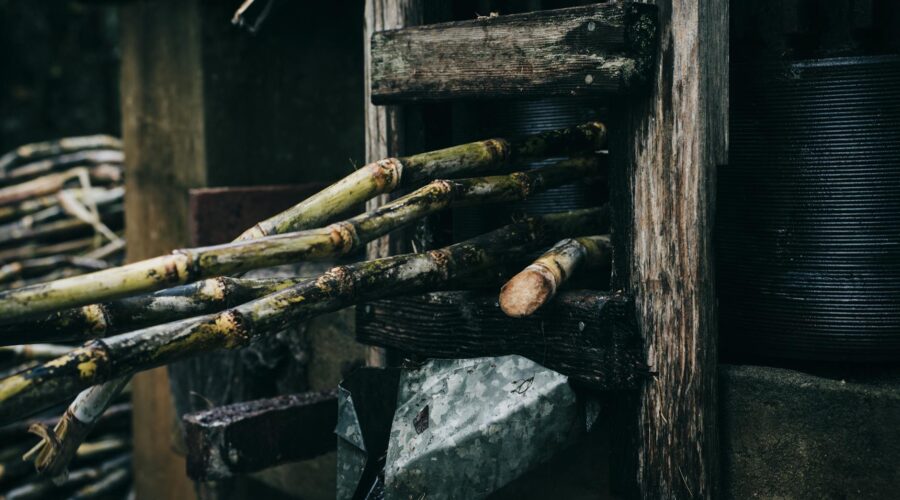
The trapiche is the heart of the Cape Verdean sugar mill. Traditionally powered by oxen walking in tireless circles, these heavy stone or iron rollers crush the cane to extract the sweet calda. For generations, this space has served as a rite of passage for young boys in rural communities. The term “Meninos de Engenho” refers to the children who grew up in the shadow of these mills, their lives dictated by the rhythmic creak of the machinery and the seasonal cycles of the earth.
In the oral history of the islands, these children were not merely bystanders; they were integral cogs in the artisanal production line. Their stories provide a visceral, ground-level view of Cape Verdean social history, blending the sweetness of stolen cane stalks with the bitterness of grueling physical labor.
Roles and Responsibilities: A Childhood Defined by Work
In the traditional Cape Verdean rural economy, children were expected to contribute to the family’s survival from a young age. The tasks assigned to the Meninos de Engenho were specific and demanding. The youngest boys were often tasked with “touching” the oxen—guiding the animals in their circular path to ensure the trapiche never stopped turning. This required patience and a constant alertness; if the oxen slowed, the flow of juice ceased, and the entire production halted.
Older boys were responsible for carrying the heavy bundles of cut cane from the fields to the mill site. They also assisted in the limpeza (cleaning), removing the fibrous remains of the crushed cane, known as bagaço, which was later dried and used as fuel for the fires under the copper boiling vats. These roles were physically taxing, often performed under a relentless sun, yet they were also the primary way via which traditional knowledge was passed down from father to son.
The Oral History: Songs, Stories, and “Morabeza”
Because much of Cape Verde’s interior history was not written down by those who lived it, oral tradition is the primary archive of the Meninos de Engenho. Researchers and folklorists have long noted that the sugar mill was a site of intense cultural production. As the juice boiled into syrup (mel de cana) or fermented for distillation, the workers engaged in a practice known as finason or shared improvised verses.
The “narratives of the mill” often revolve around themes of resilience and camaraderie. Former Meninos de Engenho, now elders in their communities, recall the trapiche as a place of storytelling. While the work was hard, it was also where they learned the myths of the islands, the history of their ancestors, and the art of Cape Verdean wit. The sugar mill was a social “agora” where the news of the valley was exchanged and where the spirit of Morabeza (the unique Cape Verdean hospitality and soul) was forged in the heat of the boiling vats.
The “Sweetness” of Memory
Despite the labor, many childhood narratives are infused with a sense of nostalgia for the natural bounty of the harvest. Elders speak of the caldo de cana (fresh juice) that was shared freely, and the pontche (a mix of grogue and molasses) that marked the end of a successful day. For a child growing up in a landscape where food security was often precarious, the sugar harvest represented a time of relative plenty.
Social Dynamics and the Shadow of Colonialism
To understand the Meninos de Engenho, one must also look at the darker side of the history. The sugar industry in Cape Verde carries the heavy heritage of the Atlantic slave trade and the subsequent systems of sharecropping. For many children, working the mill was not a choice but a necessity born of the morgadio system—the land ownership structures that kept rural families in a cycle of debt and dependency.
Oral histories often reveal the hierarchy of the mill. The “Mestre” (the master distiller) was the ultimate authority, an almost mythical figure to the young boys. The narratives show how children navigated these power structures, learning to respect the hierarchy while finding small ways to assert their own agency, often through humor or minor acts of rebellion.
The ‘Menino de Engenho’ in Literature and Art
The figure of the child in the sugar mill has transcended oral history to become a trope in Lusophone literature. While the most famous work titled Menino de Engenho was written by the Brazilian José Lins do Rego, the themes resonate deeply with Cape Verdean writers like Manuel Lopes and Baltasar Lopes. These authors used the setting of the harvest to explore themes of social inequality and the loss of innocence.
In music, the coladeira and morna rhythms often make reference to the sounds of the mill. The rhythmic clatter of the trapiche is echoed in the percussion, and the lyrics often lament the departure of the young men who, having grown up as Meninos de Engenho, eventually left the islands in search of a better life in the diaspora.
The Modern Transition: Preserving the History
Today, the landscape of Cape Verde’s sugar production is changing. Modern electrification is replacing the oxen-driven trapiche, and child labor laws are strictly enforced, ensuring that children are in school rather than in the fields. However, this transition poses a challenge: how to preserve the oral history and cultural identity associated with the old ways.
Ecological and cultural tourism initiatives in places like Ribeira Grande (Santo Antão) and Santa Cruz (Santiago) are attempting to bridge this gap. Museums and “living history” tours allow former Meninos de Engenho to share their stories with visitors, turning their lived experiences into a form of cultural capital that honors their past without repeating its hardships.
Why These Narratives Matter for Modern Cape Verde
Understanding the history of the Meninos de Engenho is crucial for several reasons:
- Cultural Identity: It highlights the resilience and ingenuity of the rural Cape Verdean population.
- Educational Heritage: It shows how knowledge was transferred before the widespread availability of formal schooling.
- Social Evolution: It provides a benchmark for how far the nation has come in terms of child rights and economic development.
Conclusion: A Bitter-Sweet Legacy
The story of the Meninos de Engenho is a testament to the complex soul of Cape Verde. It is a narrative of sweat, smoke, and labor, but also of sweetness, community, and the enduring power of the human spirit. By listening to the oral histories of those who spent their childhoods in the circle of the trapiche, we gain a deeper appreciation for the sugar-coated history of these “Islands of the Sun.”
As the steam continues to rise from the valleys of Cabo Verde each harvest season, the echoes of the Meninos de Engenho remain—reminding us that every drop of grogue and every grain of sugar carries the weight of a thousand stories told by the children of the mill.
Image: Pexels – Adrienne Andersen