Santa Luzia: The Atlantic Paradise Drowning in 800 Tons of Plastic
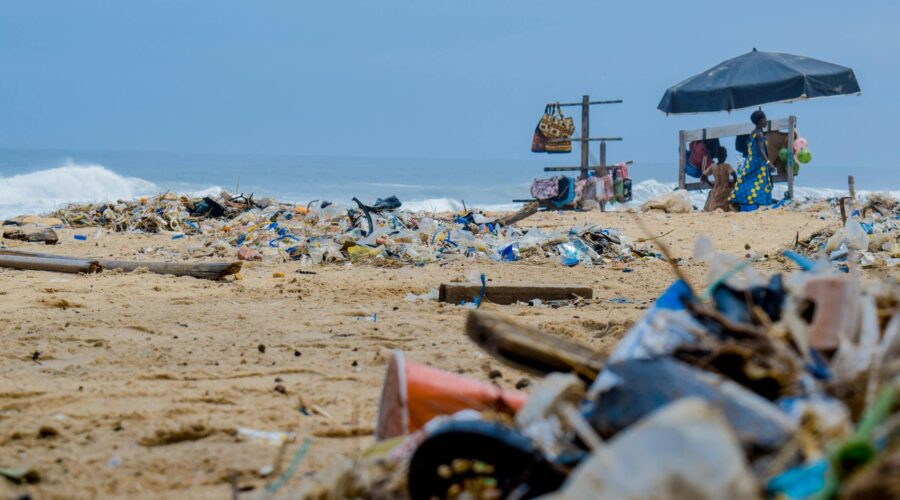
In the middle of the Atlantic Ocean, on the uninhabited Cape Verdean island of Santa Luzia, Achados Beach resembles an open wound. Though the island is a protected natural reserve where human presence is strictly regulated, its shores are being choked by an relentless tide of plastic—a stark reminder that no corner of the Earth is safe from man-made pollution.
The beach is a graveyard of global consumption. Visitors must watch their step to avoid treading on rusted nails, wooden cargo pallets, and countless plastic containers. Some packaging remains intact, while most has shattered into jagged shards. “The beach was named ‘Achados’ [Findings] because it was once a place where interesting things washed up,” explains Tommy Melo, co-founder of the NGO Biosfera. “Now, it is almost entirely pollution.”
A Magnet for the World’s Waste
Santa Luzia is a victim of its own geography. Positioned at the mercy of trade winds and the North Atlantic Gyre—a massive system of circulating ocean currents—the island acts as a sieve for drifting debris. The bay at Achados Beach curves like a giant spoon, perfectly oriented to catch whatever the sea carries from the northeast.
Among the discarded bottle labels from dozens of countries, a specific type of waste dominates: industrial fishing gear. Massive green nets stretching dozens of meters litter the sand, alongside brittle plastic pits used for catching octopus in Morocco and Mauritania. Because a coral reef blocks boat access to the beach, the trash continues to pile up, undisturbed and unremoved.
A Death Trap for Endangered Turtles
The environmental stakes are tragically high. Santa Luzia is a critical nesting ground for the loggerhead sea turtle (*Caretta caretta*), a symbol of Cape Verde. Up to 40% of the island’s nesting females choose Achados Beach to lay their eggs, with some seasons seeing as many as 5,000 nests.
However, the plastic has turned the sand into a minefield. Many hatchlings and adults never make it back to the water, becoming entangled in ghost nets or trapped by debris. “There is a high mortality rate here,” Melo says. “The plastic causes the natural risks to grow exponentially.”
The Sisyphean Struggle of Clean-up
Since 2011, Biosfera has organized annual cleaning campaigns, mobilizing over 100 volunteers each year before the nesting season begins in June. Despite their efforts, the tide never stops. Every year, crews collect between 50 and 70 tons of waste.
“I won’t lie: sometimes we feel discouraged,” says Keider Neves, Biosfera’s Conservation Coordinator. “It seems that the more garbage we remove, the more there is to be removed.”
The logistics are a nightmare. Because the beach is inaccessible by boat and vehicles are banned to protect the ecosystem, workers have been forced to store the trash in massive containment trenches on the island. Currently, an estimated 800 tons of plastic are packaged and waiting for a removal solution that has yet to materialize. Ideas ranging from military helicopter lifts to specialized transport have all fallen through due to cost or complexity.
A Warning for the Atlantic
There is a glimmer of hope. This year, the “Islands Without Plastic” project will launch, providing international expertise to help find a sustainable way to clear the island’s backlog of waste. The stakes go beyond turtles; seabirds are dying from plastic ingestion, and “ghost fishing” nets continue to kill sharks and fish in the surrounding waters.
For the team at Biosfera, Santa Luzia is a micro-sample of a global crisis. Until the world stops the flow of plastic into the Atlantic, this uninhabited paradise will remain a “wound” that refuses to heal.
Image: Pexels – Lucien Wanda