Cidade Velha: Pirates, Slavery, and Cape Verde’s History
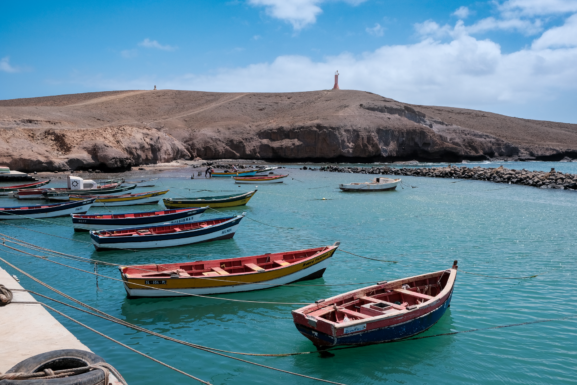
Perched on the southern edge of the island of Santiago, where the volcanic cliffs meet the relentless Atlantic, lies a small town with a grand and haunted history. Today, Cidade Velha is a tranquil UNESCO World Heritage site known for its colorful houses and whispering palm trees. However, just beneath its sleepy surface lies the foundation of the modern world. This is the birthplace of the Cabo Verdean nation, the first European colonial outpost in the Tropics, and a place where the destinies of pirates, slave traders, and explorers collided.
The Cradle of Colonialism: Ribeira Grande
Founded in 1462 by Portuguese settlers, Cidade Velha was originally known as Ribeira Grande (Great River). Its location was chosen for a simple, vital reason: a deep valley that provided fresh water and a natural harbor protected by high plateaus. At the time, Portugal was leading the Age of Discovery, and Ribeira Grande became the essential maritime hub for ships sailing between Europe, Africa, and the Americas.
By the 16th century, the town had become a wealthy metropolis in the middle of the ocean. It was the seat of the first bishopric in West Africa and home to the Sé Catedral, a massive structure that symbolized the power of the Portuguese Crown. However, the source of this wealth was also the source of the town’s greatest historical tragedy: the transatlantic slave trade.
The Dark Heart of Global Commerce
Cidade Velha’s history is inextricably linked to the enslavement of millions. Because of its strategic location, the town became the primary entrepôt for the trade of human beings. Enslaved people from the West African coast were brought to Ribeira Grande to be “seasoned”—a euphemism for the brutal process of breaking their spirits and teaching them basic Portuguese—before being sold to plantations in Brazil, the Caribbean, and North America.
The most chilling reminder of this era is the Pelourinho (Pillory), which still stands in the town’s main square. Erected in 1520, this ornate white stone marble pillar was where enslaved people were publicly whipped, punished, or displayed for sale. It stands today as a silent witness to centuries of suffering, serving as a powerful monument to the resilience of those who survived.
From this intersection of cultures, the first “Creole” society was born. The mixing of African traditions and languages with Portuguese influence created a unique Cabo Verdean identity, music, and language (Kriolu) that remains the heartbeat of the islands today.
The Golden Age of Piracy: Sir Francis Drake and Beyond
The immense wealth generated by the slave trade and the spice routes did not go unnoticed. Ribeira Grande became a prime target for pirates, corsairs, and privateers. The town’s history is a timeline of daring raids and desperate defenses.
The most famous of these invaders was the English privateer Sir Francis Drake. In 1585, during the Anglo-Spanish War, Drake arrived with a fleet of 25 ships and over 2,000 men. He sacked the city, burning much of it to the ground after the residents fled into the interior mountains. Drake’s raid was so devastating that it signaled the beginning of the end for Ribeira Grande’s dominance.
Decades later, in 1712, the French privateer Jacques Cassard led an even more brutal assault. His forces systematically looted the city, even stripping the bells from the cathedral and the marble from the floors. The city never truly recovered from Cassard’s raid. Fearing further attacks, the colonial administration eventually moved the capital to the nearby, more defensible Plateau of Praia in 1770, leaving Ribeira Grande to wither into the “Cidade Velha” (Old City) we see today.
The Sentinels of the Sea: Fortaleza Real de São Filipe
To defend against these constant pirate threats, the Portuguese built the Fortaleza Real de São Filipe. Perched 100 meters above sea level on the plateau overlooking the town, the fort is a masterpiece of military architecture. Completed in 1593, its thick stone walls and rows of cannons were designed to sink pirate ships before they could enter the harbor.
Visiting the fort today offers one of the best views in Cape Verde. Looking down from the ramparts, you can see the layout of the old city and the vastness of the Atlantic. It is easy to imagine the terror of a look-out spotting the black flags of a pirate fleet on the horizon, or the smoke rising from the valley during Drake’s occupation.
Walking Through History: What to See Today
For the modern traveler, Cidade Velha is an open-air museum. Unlike the bustling capital of Praia, life here moves slowly, allowing the history to speak. Key sites include:
Rua Banana
Often cited as the oldest street built by Europeans in Sub-Saharan Africa, Rua Banana is lined with traditional stone houses with thatched roofs. Walking down this narrow lane feels like stepping back into the 1500s. Many of the homes have been meticulously restored to preserve their historical integrity.
The Ruined Cathedral (Sé Catedral)
The ruins of the cathedral are a haunting sight. Construction began in 1556 but took over a century to finish, only to be destroyed by Jacques Cassard’s raid. Today, visitors can walk among the towering broken arches and see the original floor tiles, reflecting the vanished grandeur of the “Imperial City.”
Convento de São Francisco
Located slightly further up the valley, the ruins of this Franciscan convent offer a peaceful retreat. The friars here were responsible for the education and religious indoctrination of the population, and the site includes beautiful examples of Portuguese “azulejos” (tiles) and a well-preserved church.
A Heritage of Resilience
In 2009, UNESCO recognized Cidade Velha as a World Heritage Site, noting its “outstanding universal value” as a crossroads of human history. While the town’s origins are rooted in the horrors of slavery and the violence of piracy, its legacy is one of survival and cultural fusion.
Today, the town is a center of Cabo Verdean pride. On the 10th of June, the community celebrates its history with music, dance, and traditional food like cachupa. The irony of history is that the very place designed to facilitate the movement of people as property eventually became the birthplace of a vibrant, free, and unique culture that has influenced the world through its music (Morna) and its global diaspora.
Practical Tips for Visiting
- Getting There: Cidade Velha is located about 12 kilometers (15-20 minutes) from Praia. You can take a shared “aluguer” (minibus) for a few euros or a taxi for a more direct trip.
- Guided Tours: It is highly recommended to hire a local guide near the Pelourinho. Their stories bring the ruins to life and help support the local economy.
- Timing: Visit the Fortress in the late afternoon for spectacular sunset views, then head down to the seaside restaurants to enjoy fresh grilled fish while listening to the waves.
Cidade Velha is more than just a collection of ruins; it is a portal to the past. It serves as a reminder of how the Atlantic world was built—through blood, gold, and an unbowed human spirit. Whether you are a history buff, a photographer, or a traveler seeking soul, the old city of Ribeira Grande is an unmissable stop on any journey through Cape Verde.
Image: Pexels – Filipe Braggio