War Drives Energy Independence Push for COP31 Talks
Portuguese Minister of Environment Maria Graça Carvalho believes that the geopolitical instability caused by the war in the Middle East could paradoxically streamline global climate negotiations. Speaking at a press conference in Lisbon, Carvalho suggested that the conflict has served as a wake-up call for nations to accelerate their transition away from fossil fuels.
Energy Independence as a Driver for Change
“I may be wrong, but I hope that negotiations at COP31 will be easier because of the war,” Carvalho stated. “Everyone has now understood that it is vital for us to be more independent from fossil fuels. Even those who were previously reluctant are now convinced that this is the path we must follow.”
The minister’s comments came during a meeting with Wopke Hoekstra, the European Commissioner for Climate, Carbon Neutrality, and Clean Growth. The Commissioner concluded a two-day visit to Portugal aimed at aligning EU clean energy goals with industrial competitiveness.
Portugal’s Role as a Diplomatic Bridge
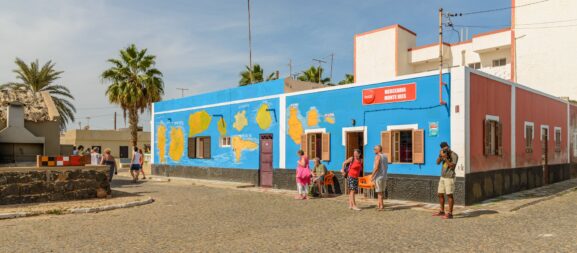
Looking ahead to the UN climate summit (COP31) in Antalya, Turkey, Carvalho highlighted Portugal’s unique position as a diplomatic mediator. She noted that the country’s strong ties with the Lusophone world—including Brazil, Angola, Cape Verde, and São Tomé and Príncipe—allow it to facilitate “behind-the-scenes” breakthroughs.
She cited the recent COP16 biodiversity summit in Rome as a success story for this strategy. “It was easier for us to hold informal meetings with Brazil and Angola to understand where the ‘red lines’ were, helping the European Commission reach an agreement that might otherwise have stalled,” the minister explained.
Strengthening the European Carbon Market
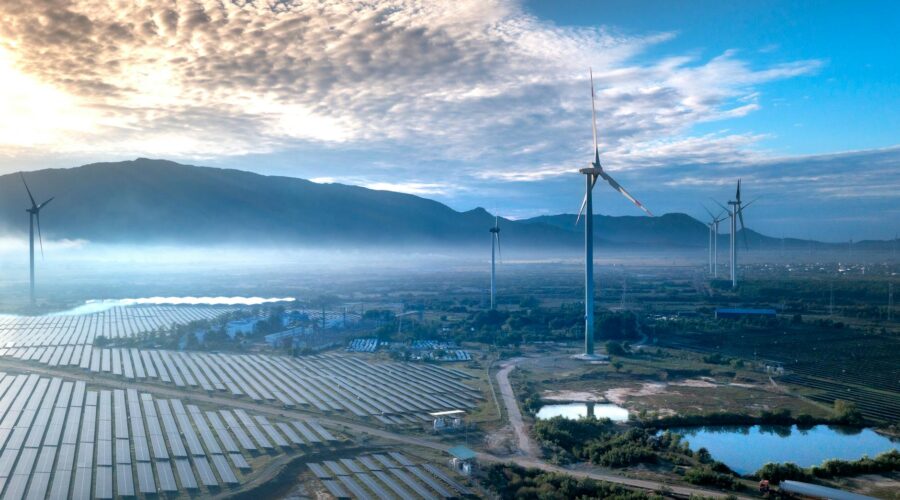
Commissioner Hoekstra echoed the sentiment regarding energy autonomy, advocating for a diversified portfolio including solar, wind, geothermal, and green interconnections. He also defended the EU’s carbon credit model, describing its performance as “extraordinary.”
However, the Commissioner acknowledged that the system is due for a refinement. “We have opportunities to improve it further to ensure a larger portion of the revenue generated is returned directly to industries, helping them accelerate their decarbonization efforts,” Hoekstra added.
The European Commission is currently holding a public consultation, open until June 8, 2026, to update the benchmarks for the EU Emissions Trading System (EU ETS) for the 2026-2030 period. Under current proposals, European industry is expected to continue receiving free emission allowances covering roughly 75% of its total emissions.
Image: Pexels – Quang Nguyen Vinh