
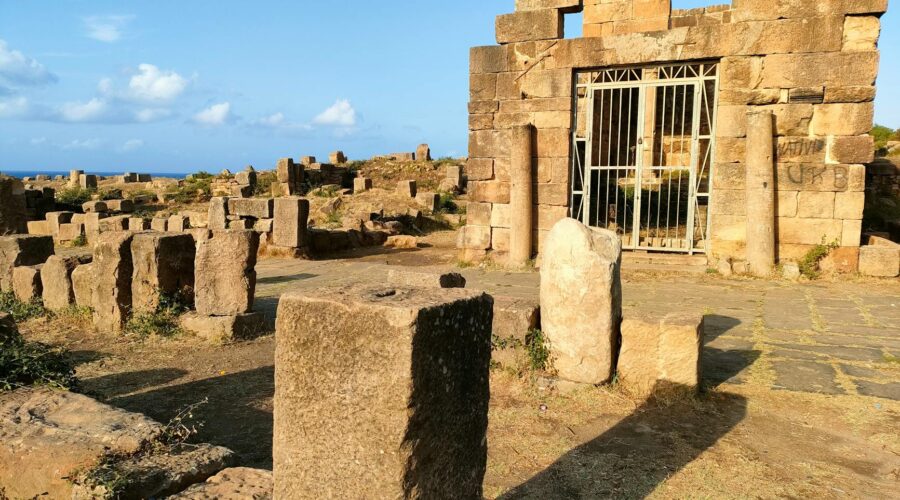
Torture Chamber Unearthed at Tarrafal Camp in Cape Verde
The ghosts of the Tarrafal concentration camp are speaking through the dirt. Nearly 90 years after the Portuguese dictatorship established the “Camp of Slow Death” in Cape Verde, archaeologists have unearthed the foundations of the “Skillet” (Frigideira)—a notorious concrete torture chamber designed to bake prisoners alive under the scorching tropical sun.
The “Skillet” Unearthed
Working under a cloud of wind-whipped dust 160 meters south of the main camp entrance, a joint team of Cape Verdean and Portuguese researchers successfully located the structure. Its rediscovery was made possible by matching physical excavations with the harrowing written testimonies of the men who survived it.
“In this archaeology of more recent times, there is a dialogue between written testimonies and physical evidence,” explained André Teixeira, an archaeologist and professor at the Universidade Nova de Lisboa. “By combining the few graphic elements with prisoner descriptions, we eventually located it.”
The excavation revealed foundations, floors, and door lines that perfectly match historical accounts: a cramped rectangular box measuring seven meters by 3.5 meters. In this small space, up to 20 people would be crammed together as punishment, deprived of everything but bread and water while the concrete structure intensified the heat.
A History Hidden by the Regime
The “Skillet” was a symbol of the first phase of the camp (1936–1954). Following World War II, the Portuguese regime attempted to “sanitize” its image by demolishing structures with “negative connotations.” The exact location of the torture chamber was lost to time as new buildings, including a place of prayer, were constructed over the site.
However, the psychological scar remained. “The memories of the prisoners from the second phase [after 1961] maintain the reference to the ‘Skillet’ because it was the greatest element of torture associated with the system of repression,” noted Ana Samira Baessa, president of the Cultural Heritage Institute (IPC) of Cape Verde.
Restoring the Truth
For the Cape Verdean government, the find is a victory for historical transparency. “This discovery is historical because it restores the truth of the facts,” said Augusto Veiga, Cape Verde’s Minister of Culture, during a visit to the site on Thursday. He noted that the ruins confirm the prisoners’ versions of the “deprivation of liberty” and “torture” practiced by the dictatorship.
The excavation is part of a broader mission to have the former camp—now the Museum of Resistance—recognized as a UNESCO World Heritage site. Researchers are also uncovering other surrounding structures, including settlement areas, a farm, and the quarry where prisoners were forced into hard labor.
Lest We Forget
The Tarrafal camp incarcerated more than 500 political prisoners across two periods (1936–1954 and 1961–1974). A commemorative plaque at the site lists 36 people who perished within its walls: 32 Portuguese, two Guineans, and two Angolans.
The IPC plans to update the museum’s exhibits to include these new archaeological findings. As Baessa emphasized, preserving these physical reminds of brutality is essential “so that this history never repeats itself.”
Image: Pexels – Sammi BELLILI