The Roda de Batuku Ethics: Leadership in Santiago’s Circles
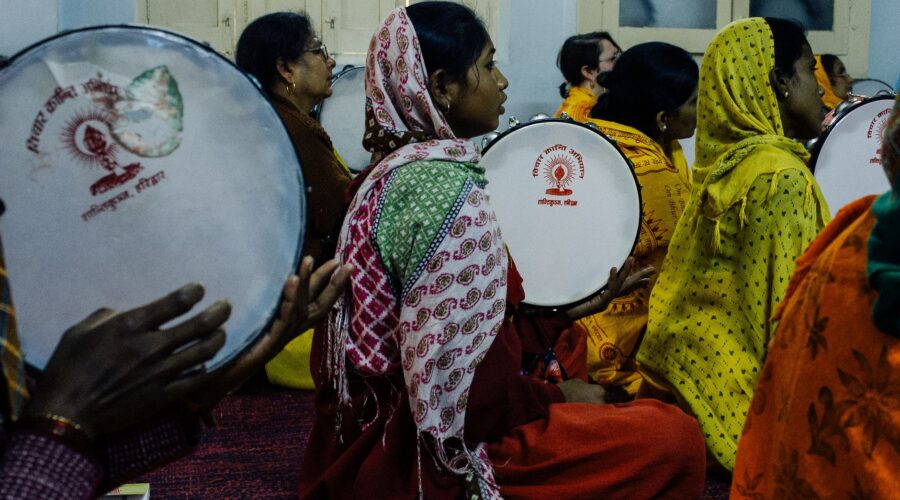
On the island of Santiago, Cape Verde, the air often vibrates with a rhythmic, percussive force that feels less like music and more like a heartbeat. This is Batuku (or Batuque). To the casual observer, it is a group of women sitting in a circle, beating rhythmic patterns on tchabeta (cloth cushions) held between their knees, while one or two dancers move in the center. But to the Cape Verdean people, the Roda de Batuku (the Batuku circle) is a sacred space of social commentary, historical preservation, and, most importantly, a complex system of ethics and leadership.
Understanding Batuku requires moving beyond the aesthetics of the performance to look at the unwritten rules that govern the circle. It is a matrilineal powerhouse where hierarchy, respect, and “Musa” (inspiration) dictate the flow of the ceremony. In these circles, the women of Santiago have preserved the soul of their ancestors while creating a sophisticated social structure that remains vibrant today.
The Origins of the Circle: Resistance and Resilience
To understand the ethics of the Roda, one must understand its origins. Batuku is the oldest musical genre in Cape Verde, with roots stretching back to the earliest days of the transatlantic slave trade. Because the colonial authorities and the Catholic Church often viewed the drumming and dancing as “pagan” or subversive, Batuku became a form of clandestine resistance.
The circle formation was not accidental; it was a protective embrace. Inside the circle, women could speak their truths through finason (improvised oral poetry) that the authorities could not decode. This history of secrecy and survival birthed a deep sense of loyalty and a strict code of conduct. Today, even in a modern, globalized Cape Verde, a woman does not simply “join” a Roda; she is initiated into a tradition of resilience.
The Hierarchy of the Roda: The Kantadera and the Batukaderas
The Roda de Batuku is not a flat structure; it is a meritocracy based on experience, vocal prowess, and the ability to lead. At the top of this hierarchy is the Kantadera (the lead singer). The Kantadera is more than just a vocalist; she is a social historian, a mediator, and a spiritual guide.
The Role of the Lead Singer
The Kantadera initiates the call-and-response. She sets the theme of the session—be it a celebration of a wedding, a mourning of a lost loved one, or a sharp critique of local politics. The ethics of the Roda dictate that the Kantadera must be respected at all times. When she is performing finason, the other women (the Batukaderas) must maintain the rhythm without overshadowing her voice. To interrupt a Kantadera or to change the rhythm prematurely is a grave breach of etiquette.
The Batukaderas: The Foundation
The women forming the circle provide the tchabeta—the rhythmic foundation. There is a hierarchy even in the seating. Elder women, often referred to as “Madres,” hold the most prominent positions. They are the guardians of the tempo. Younger women sit among them, learning not through formal instruction, but through immersion and observation. This intergenerational transfer of knowledge is the cornerstone of Batuku ethics.
The Unwritten Rules of the ‘Finason’
The finason is the lyrical heart of the Batuku. It is here that the ethics of the circle are most visible. The singer often uses metaphors and proverbs to deliver messages. One of the primary rules of the Roda is discretion. While Batuku is a space for “washing dirty laundry,” it is done with a level of poetic sophistication that requires the listener to be “in the know.”
Direct insults are rare; instead, the Kantadera uses “stribilin” (indirect barbs) to correct behavior within the community. If a member of the circle has acted out of line, the song might address the importance of humility or hard work. The ethics of the circle require the recipient of the critique to listen with grace. The Roda is a court of public opinion where the sentence is delivered in song.
Leadership and the ‘Toka’
Leadership in the Roda is defined by the ability to manage energy. This is often seen during the transition from the slow, narrative part of the Batuku to the Toka—the fast-paced, high-energy climax where the dancing begins. The Kantadera must sense when the group is ready for this shift. If she pushes too early, the rhythm collapses; if she waits too long, the “Musa” (the spirit of the moment) evaporates.
A true leader in the Santiago women’s circles is one who elevates others. While the Kantadera leads, she will often gesture to a younger woman to take a solo or invite a specific person into the center to dance the tornu. This act of “calling” someone is a sign of recognition and a way to build the confidence of the next generation.
The Ethics of the Dance: The ‘Tornu’
The dance associated with Batuku, the tornu, is a display of pelvic dexterity and rhythmic precision. However, there are strict rules of respect regarding who enters the circle to dance. Usually, only one or two dancers perform at a time. To jump into the circle without being invited—or without acknowledging the elders—is seen as an act of arrogance.
The dancer must “dialogue” with the drummers. The ethics here are about synchronization; the dancer’s hips must match the tchabeta’s beat perfectly. If a dancer becomes too performative for the sake of vanity, losing the connection to the group, the Batukaderas may slow the rhythm as a subtle signal to bring her back to the collective’s energy.
Batuku in the Modern World: Preservation of Ethics
As Batuku moves from the village squares of Santiago to the international stages of Lisbon, Paris, and New York, the challenge remains: can the ethics of the Roda survive the transition to “performance art”?
Groups like the legendary Terrero or younger collectives are working hard to ensure that Batuku doesn’t become a mere tourist spectacle. They maintain the tradition of the Kaminhu di Tera (the path of the land), ensuring that even when they perform on stage, the internal hierarchy and the respect for the elders remain intact. For these women, Batuku is not a job; it is a “compromisu” (a commitment) to their ancestors and their community.
Conclusion: The Circle as a Blueprint for Society
The Roda de Batuku is more than a musical genre; it is a masterclass in social organization. It teaches that leadership is earned through wisdom, that individual expression must serve the collective rhythm, and that history is a living, breathing thing that must be protected.
For the visitor to Santiago, witnessing a Batuku circle is a privilege. To watch these women is to see a thousand years of African and Atlantic history condensed into a rhythmic pulse. By respecting the unwritten rules of the Roda, we honor the women who have kept the spirit of Cape Verde alive through the darkest of times, proving that as long as there is a circle, there is a community.
Practical Information for Travelers
- Where to experience Batuku: The interior of Santiago, particularly in regions like Santa Cruz, Tarrafal, and Orgãos, offers the most authentic experiences.
- Etiquette for Outsiders: If you are invited to watch a Roda, always ask for permission before filming. If invited to dance, it is customary to show a small gesture of appreciation to the Kantadera or the group.
- Key Terms:
- Tchabeta: The cloth cushion used as a drum.
- Finason: The improvised poetic singing.
- Tornu: The characteristic dance of the Batuku.
Image: Pexels – Plato Terentev