The Lighthouse Route: Cape Verde’s Historic Maritime Journey
Scattered across the vast expanse of the central Atlantic Ocean, the ten volcanic islands of Cape Verde have served as a vital maritime crossroads for over half a millennium. For centuries, these rugged outposts were the last sight of land for explorers sailing to the New World or the first sign of hope for merchant ships rounding the tip of Africa. To guide these weary mariners through treacherous currents and against jagged basalt cliffs, a network of historic sentinels was erected: the lighthouses of Cabo Verde.
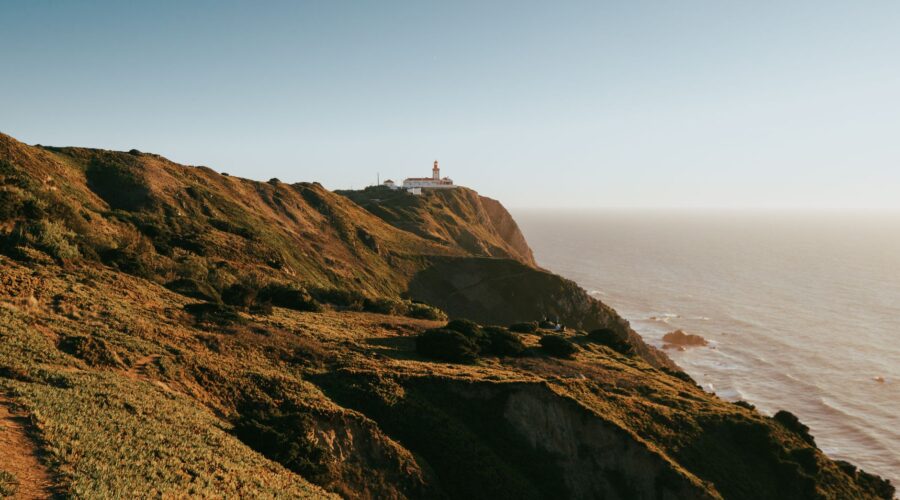
Today, following the “Lighthouse Route” (Roteiro dos Faróis) offers travelers a unique way to explore the archipelago. It is a journey that moves beyond the luxury resorts, leading instead to the wind-swept fringes of the islands where history, architecture, and the raw power of the ocean converge. These beacons are not merely navigational aids; they are monuments to the nation’s survival and its enduring relationship with the sea.
The Golden Age of Atlantic Navigation
The majority of Cape Verde’s iconic lighthouses were constructed during the late 19th and early 20th centuries, a period when the archipelago’s strategic importance reached its zenith. As steamships replaced sailing vessels, the ports of Mindelo (Sao Vicente) and Praia (Santiago) became essential coaling stations. Ensuring the safe passage of international trade required a sophisticated maritime infrastructure.
Portuguese engineers designed these structures to withstand extreme conditions—salt spray, gale-force winds, and the intense tropical sun. Many share a similar aesthetic: stark white masonry, often accented with ochre or red trim, standing in lonely contrast against the deep blues of the Atlantic and the reddish-brown volcanic earth. While many are now automated, the “Faroleiro” (lighthouse keeper) remains a legendary figure in local folklore, representing a life of solitude and duty.
Santiago: The Sentinel of the South
Any journey along the Lighthouse Route should begin on the island of Santiago, home to the capital, Praia. Standing proudly at the entrance to the harbor is the Farol de D. Maria Pia (also known as the Ponta Temerosa Lighthouse). Built in 1881 and named after the Portuguese queen, this lighthouse is an architectural gem. Its octagonal tower rises above the cliffs, offering a panoramic view of the Ilhéu de Santa Maria and the bustling port below.
A short distance from the city, the lighthouse remains a popular spot for locals to watch the sunset. It serves as a reminder of Praia’s history as a hub for the transatlantic telegraph cables that once linked Europe, Africa, and South America.
São Vicente: The Guardian of the Gateway
If Santiago is the political heart of Cape Verde, São Vicente is its maritime soul. The city of Mindelo sits within a submerged volcanic crater, forming one of the finest natural harbors in the Atlantic. Guiding ships into this bay is the Farol de D. Luís, situated on the Ilhéu dos Pássaros—a tiny, uninhabited basalt rock sitting in the middle of the channel.
The Ilhéu dos Pássaros lighthouse is perhaps the most photographed in the country. It appears like a white needle emerging from the sea, framed by the silhouette of the “Monte Cara” mountain. To reach it, one must hire a local fisherman to navigate the choppy waters of the Canal de São Vicente. It is a journey that highlights the isolation these structures represent.
On the western tip of the island stands the Farol de Dona Amélia (Ponta Machado). This lighthouse marks the entrance to the channel between São Vicente and Santo Antão. The walk to Dona Amélia is a trek through lunar landscapes, where the silence is broken only by the crashing of the “Mar do Canal.”
Sal and Boa Vista: Beacons in the Sand
On the flatter, desert-like islands of Sal and Boa Vista, the lighthouses take on a different character. Here, the danger was not just cliffs, but shifting sandbanks and low-lying reefs that claimed dozens of ships during the “Age of Discovery.”
On Sal, the Farol de Fiura sits at the northernmost tip of the island. It is a modern iron structure today, but the ruins of the original stone quarters nearby tell stories of the salt trade that once made this island a global commodity hub. In Boa Vista, the Farol del Morro Negro perched on a high eastern ridge, was once the most powerful light in the archipelago, guiding ships through the treacherous “Graveyard of the Atlantic,” where shipwrecks like the Cabo Santa Maria still sit rusting on the beach.
The Cultural Impact of the Maritime Heritage
The lighthouses of Cape Verde are deeply embedded in the local “Cabo-Verdianidade” (cultural identity). They are frequent subjects in Morna music—the melancholic, soulful genre made famous by Cesária Évora. The themes of partida (departure) and regresso (return) are central to the Cape Verdean experience, a nation defined by its diaspora. For a sailor returning home after years abroad, the first flash of the Farol de D. Luís was more than a signal; it was an emotional homecoming.
Furthermore, the lighthouse keepers were often the most educated men in remote coastal villages, serving as meteorologists and community leaders. Today, the government of Cape Verde is working to preserve these sites, recognizing their potential for sustainable “heritage tourism.”
Practical Information for the Lighthouse Traveler
If you are planning to follow the Lighthouse Route, here are a few tips to ensure a successful journey:
- Accessibility: Some lighthouses, like D. Maria Pia in Praia, are easily accessible by car or on foot. Others, like Fiura in Sal or Morro Negro in Boa Vista, require a 4×4 vehicle and a bit of hiking.
- Safety: Many of these sites are located on high cliffs with no railings. Use caution, especially during the windy season (December to March).
- Permissions: While you can view almost all lighthouses from the outside, the interiors are often restricted as they are still active military or port authority sites. Always ask if a keeper is present.
- Sustainable Travel: Many lighthouses are located in protected environmental zones. Ensure you carry out all trash and respect the nesting sites of endemic seabirds like the Cape Verde Shearwater.
Conclusion: A Path Lit by History
Traveling the Lighthouse Route is more than a sightseeing tour; it is an act of historical recovery. Each beacon tells a story of a time when the world felt much larger and the sea much more formidable. These structures witnessed the end of the transatlantic slave trade, the rise of the great steamship lines, and the birth of an independent Cape Verdean nation.
As the sun sets over the Atlantic, and the first beams of light begin to sweep across the volcanic slopes, the visitor understands the true magic of Cape Verde. In these lonely towers, the past is never truly gone—it remains steady and bright, guiding the way for all who seek to discover the secrets of the islands.
Image: Pexels – Artūras Kokorevas