
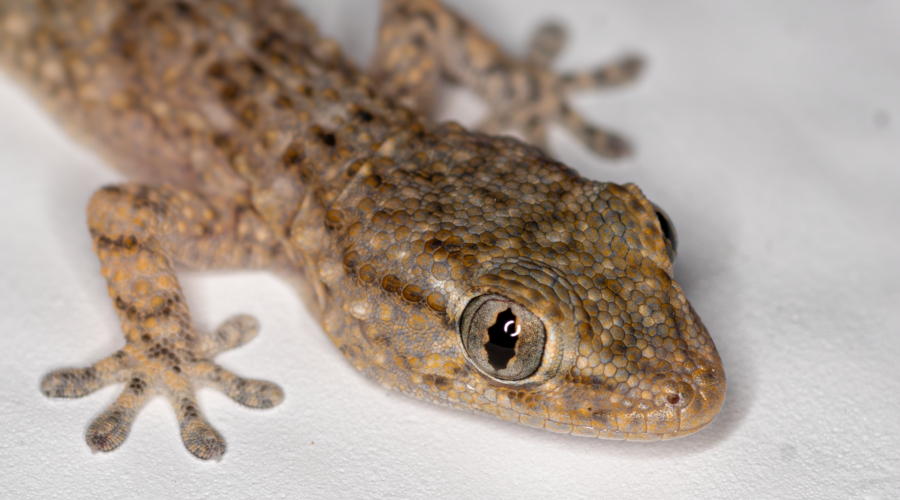
The Cape Verde Giant Gecko: Conservation of a Rare Endemic
Floating in the central Atlantic Ocean, roughly 570 kilometers off the coast of West Africa, lies the volcanic archipelago of Cape Verde (Cabo Verde). While this nation is internationally recognized for its stable democracy, vibrant Creole culture, and rhythmic Morna music, it also serves as a biological fortress for some of the world’s most unique evolutionary experiments. Among its most mysterious inhabitants is the Cape Verde Giant Gecko (Tarentola gigas), a reptile that embodies both the wonder of island endemism and the fragility of isolated ecosystems.
An Evolutionary Marvel: The Giant of the Islands
In the world of herpetology, “island gigantism” is a fascinating phenomenon where small mainland species evolve to much larger sizes after colonizing isolated islands, often due to a lack of predators and competition. The Cape Verde Giant Gecko is a textbook example of this process. While many geckos are small enough to rest on a human thumb, Tarentola gigas is a robust predator that can reach lengths of over 25 centimeters (including the tail).
Belonging to the genus Tarentola—the wall geckos—this species is significantly larger than its cousins found in mainland Africa or the Mediterranean. It possesses a heavy-set body, large lidless eyes with vertical pupils suited for its nocturnal lifestyle, and specialized toe pads that allow it to navigate the vertical volcanic cliffs of its home with gravity-defying ease.
Habitat and Distribution: A Restricted Realm
The Cape Verde Giant Gecko is not found throughout the entire ten-island archipelago. Instead, it is highly localized, found primarily on the uninhabited islets of the Barlavento (windward) group. Specifically, it calls the rugged outcrops of Ilhéu Branco and Ilhéu Raso home. These islets are part of the Macaronesia ecoregion, which Cape Verde shares with the Azores, Canary Islands, and Madeira.
The environment on these islets is harsh and arid. Unlike the lush, humid mountain forests found on islands like Santiago or Santo Antão, Branco and Raso are sun-scorched and windswept. Here, the Giant Gecko has adapted to survive on a diet of insects and, interestingly, the eggs and chicks of endemic seabirds. This interaction makes them a vital, if somewhat fearsome, part of the local food web.
Snapshot: The Islets of Branco and Raso
- Geology: Volcanic rock, steep cliffs, and minimal soil.
- Climate: Extremely arid, influenced by the Sahelian semi-arid belt.
- Neighboring Species: Often shares its habitat with the Raso Lark (Alauda razae) and various shearwaters.
The Conservation Crisis: A Species on the Edge
Because the Cape Verde Giant Gecko exists only on a few tiny specks of land, it is inherently vulnerable. Its status is often categorized as Endangered or Critically Endangered by conservationists. For centuries, the gecko thrived in an environment with no natural mammalian predators. However, the history of Cape Verde—from its discovery by Portuguese and Genoese explorers in the 15th century to its role as a shipping hub—introduced new threats.
1. Invasive Species
The greatest threat to Cape Verde’s endemic reptiles has historically been the introduction of mice, rats, and feral cats. These invasive mammals prey on gecko eggs and juveniles. On islands where these predators were introduced, many endemic reptile populations, including the now-extinct Cape Verde Giant Skink, were wiped out entirely. The Giant Gecko has survived largely because its primary habitats (Branco and Raso) remained uninhabited by humans and, consequently, fewer invasive species.
2. Climate Change
In 2011, Cape Verde was ranked as the eighth most endangered nation due to flooding and climate disruptions. For a species confined to small islets, rising sea levels and increasingly intense “Cape Verde-type” hurricanes pose an existential threat. A single catastrophic storm surge could potentially decimate a population restricted to a low-lying coastal area.
3. Habitat Fragility
The arid landscape of Cape Verde is already under pressure. With less than 2% of the archipelago’s land being arable and frequent prolonged droughts, the balance of the ecosystem is delicate. Any change in the population of seabirds (the gecko’s food source) or vegetation can have a cascading effect on the reptiles.
Conservation Efforts: Safeguarding a Living Relic
Recognizing the biological value of its endemic species, the Republic of Cabo Verde has taken significant strides in environmental protection. Since the 1990s, the country has matured into a stable democracy that prioritizes sustainable development and tourism.
Protected Areas: The islets of Branco and Raso are now strictly protected integral reserves. Access is limited to scientific researchers, ensuring that the geckos are not disturbed by human activity or the accidental introduction of new invasive species.
Debt-for-Nature Swaps: In a landmark 2023 agreement, Portugal agreed to forgive €140 million of Cape Verde’s debt in exchange for the country investing in environmental and climate projects. This funding is crucial for monitoring populations of endemic species like the Giant Gecko and restoring their natural habitats.
Renewable Energy Leadership: As a leader in renewable energy in sub-Saharan Africa, Cape Verde is fighting climate change at the source. By aiming for 50% renewable energy by 2030, the nation is working to mitigate the global warming that threatens its unique biodiversity.
The Cultural and Scientific Importance
The Cape Verde Giant Gecko is more than just a lizard; it is a symbol of the archipelago’s ancient history, which dates back 40 to 50 million years to the Eocene epoch. It represents a lineage that survived the volcanic births of the islands and the arrival of humans in 1462.
For scientists, the gecko provides a window into the past, offering clues about how species migrate and adapt to some of the most isolated places on Earth. For the people of Cabo Verde, it is a point of national pride—a “living relic” found nowhere else on the planet.
Practical Information for Eco-Travelers
While you cannot visit the strictly protected reserves of Branco and Raso to see the Giant Gecko in the wild (as this would threaten their survival), travelers can experience Cape Verde’s incredible biodiversity through organized tours on the larger islands:
- Santiago: Visit the Serra Malagueta Natural Park to see other endemic flora and the Cape Verde Warbler.
- Sal & Boa Vista: Experience the vast salt flats and see the nesting grounds of Loggerhead sea turtles, another major conservation success story in the archipelago.
- Eco-Etiquette: Always stick to marked trails, never introduce foreign plants or animals, and support local conservation NGOs during your visit.
Conclusion
The Cape Verde Giant Gecko stands as a testament to the resilience of nature in the face of isolation and environmental hardship. As Cabo Verde continues to grow its tourism sector and balance modern development with ecological preservation, the fate of this giant reptile remains a primary indicator of the health of the Atlantic’s “green cape.” Through continued protection, international cooperation, and climate action, this rare endemic reptile can continue to watch over its volcanic home for millennia to come.
Image: Pexels – Mahmoud Yahyaoui