The ‘Capado’ Houses: Sal Rei’s Hidden Jewish Heritage
In the colorful town of Sal Rei on the island of Boa Vista, the architecture usually reflects the vibrant, sun-drenched spirit of Cape Verde. However, nestled among the colonial facades and modern developments lies a silent, architectural testament to a migration story that shaped the very foundations of the archipelago’s economy. These are the Capado houses—structures that whisper the forgotten history of the Sephardic Jews who found refuge and fortune on these volcanic shores in the 19th century.
The Sephardic Diaspora: From Morocco to the Mid-Atlantic
To understand the ‘Capado’ houses, one must first look back to the early 1800s. Following the abolition of the Inquisition in Portugal and the changing political climate in North Africa, a wave of Sephardic Jews—primarily from Morocco and Gibraltar—began to migrate to Cape Verde. Unlike the “New Christians” who were forced to convert during the earlier Portuguese colonial era, these migrants arrived as free citizens, bringing with them capital, international trade connections, and a distinct cultural identity.
While many settled in Santo Antão and São Vicente, a significant group was drawn to Boa Vista. At the time, Boa Vista was the economic heart of the islands, driven by the lucrative salt trade. The Jewish families who arrived—names like Anahory, Auday, Benoliel, and Levy—became the architects of a new merchant class, transforming Sal Rei into a bustling cosmopolitan port.
What Defines a ‘Capado’ House?
The term “Capado” in the local context of Sal Rei is often used by elders to describe a specific style of merchant housing that emerged during the 19th-century boom. Architecturally, these buildings represent a fusion of Mediterranean Sephardic aesthetics and Portuguese colonial practicality. They were designed not just as homes, but as centers of commerce.
Key characteristics of these historic structures include:
- The Sobrado Style: Most were two-story buildings. The ground floor served as a loja (store) or warehouse for salt, hides, and imported goods, while the upper floor served as the family residence.
- Internal Courtyards: Reflecting North African influences, many of these homes featured private internal courtyards that allowed for ventilation while maintaining privacy—a hallmark of Jewish domestic architecture in the Maghreb.
- Stone Masonry: The use of heavy volcanic stone and lime mortar made these structures some of the most durable on the island, intended to withstand the salty Atlantic winds.
- Wrought Iron Balconies: Often imported from Europe, the intricate ironwork on the upper balconies signaled the wealth and international reach of the inhabitants.
The Salt Kingpins: Economic Influence in Sal Rei
The Sephardic community in Boa Vista didn’t just build houses; they built an industry. The salt pans (salinas) of Sal Rei were the primary engine of the island’s wealth. The Jewish families utilized their connections in Europe and the Americas to export Cape Verdean salt, which was essential for the preservation of fish and meat in the era before refrigeration.
Beyond salt, these families were instrumental in the trade of “purga” (a medicinal seed), hides, and textiles. Their presence transformed Sal Rei from a quiet outpost into a sophisticated town where grand balls were held, and European fashions were common. The ‘Capado’ houses were the stages upon which this high society operated, featuring imported furniture, pianos, and libraries filled with multilingual texts.
A Heritage in Shadows: The Fading Jewish Presence
Despite their immense influence, the Jewish community in Boa Vista eventually began to diminish. By the early 20th century, many families migrated again—some to the United States, others back to Europe or to the burgeoning port of Mindelo in São Vicente. Through intermarriage and conversion, the distinct Jewish religious practice largely faded, leaving behind only surnames and the stones of their homes.
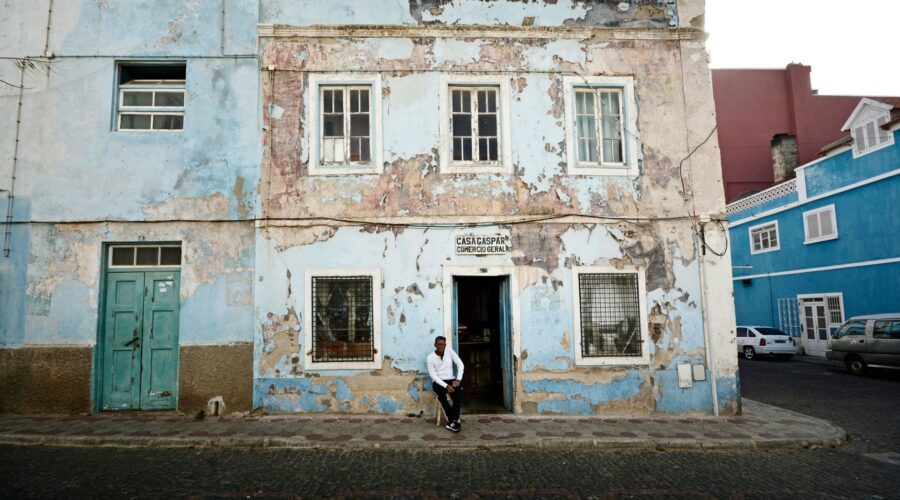
Today, many of the original ‘Capado’ houses in Sal Rei are in a state of precariousness. While some have been renovated into charming boutique hotels or shops, others stand as crumbling ruins, their roofs caved in and their courtyards overgrown. The lack of a formal “Jewish Quarter” designation means that these sites are often overlooked by tourists who flock to Boa Vista for its beaches, unaware of the deep historical layers beneath their feet.
Preserving the Memory: The Jewish Cemetery of Boa Vista
While the houses represent the life of the Sephardic community, their death is recorded at the Jewish Cemetery of Sal Rei. Located near the shoreline, this small, walled enclosure contains several graves with Hebrew inscriptions. It serves as one of the few tangible links to the specific religious identity of the families who once inhabited the ‘Capado’ houses.
In recent years, the Cape Verde Jewish Heritage Project, based in the U.S., has worked tirelessly to restore these cemeteries across the islands, ensuring that the names of those who built Sal Rei’s golden age are not erased by time and the elements.
Why the ‘Capado’ Houses Matter Today
For the modern traveler, seeking out the ‘Capado’ houses offers a more profound connection to Cape Verde than a standard resort stay. This history challenges the simplified narrative of Cape Verde as merely a transit point for the transatlantic slave trade. It adds a layer of complexity, showcasing the islands as a melting pot of global migrations, where Sephardic, African, and European influences melded to create a unique Crioulo culture.
Walking through the backstreets of Sal Rei, away from the main square, one can still find these structures. If you look closely at the lintels or the layout of the old merchant houses, you are seeing the physical remnants of a diaspora that found a home in the middle of the Atlantic. They are symbols of resilience, entrepreneurship, and the multicultural DNA of Boa Vista.
Practical Information for History Enthusiasts
If you are visiting Sal Rei and wish to explore this heritage, consider the following:
- Walking Tours: While there are few formal “Jewish Heritage” tours, local guides are often knowledgeable about which ruins belonged to the old merchant families.
- The Jewish Cemetery: It is located a short walk from the town center. It is a place of quiet reflection and offers a stark contrast to the nearby tourist developments.
- Respect the Ruins: Many of the ‘Capado’ houses are private property or structurally unsound. It is best to admire the architecture from the street.
Conclusion
The ‘Capado’ houses of Sal Rei are more than just old buildings; they are the “silent witnesses” of a pivotal era in Cape Verdean history. By recognizing the Sephardic roots of Boa Vista, we honor a community that helped bridge the gap between continents. As Sal Rei continues to grow as a tourist destination, the preservation of these houses is vital to ensuring that the island’s rich, multifaceted soul is not lost to the sands of time.
Image: Pexels – damien Saillet