Solar-Powered Desalination: Cape Verde’s Water Revolution
Floating in the middle of the Atlantic Ocean, some 570 kilometers off the coast of Senegal, lies the archipelago of Cape Verde (Cabo Verde). To the casual observer, it is a tropical paradise of volcanic peaks and turquoise waters. However, for the nearly 600,000 people who call these ten islands home, the beauty masks a harsh geographical reality: Cape Verde is one of the most water-stressed nations on Earth.
With no permanent rivers, limited rainfall, and a climate dictated by the arid Sahelian winds, the country has spent decades fighting a battle against thirst. But today, Cape Verde is no longer just a victim of its environment; it has become a global laboratory for innovation. By marrying the necessity of desalination with the abundance of tropical sunshine, the nation is pioneering solar-powered water solutions that offer a blueprint for a warming world.
The Aridity Challenge: Why Traditional Methods Failed
Historically, Cape Verde relied on groundwater and seasonal rains. Farmers practiced “sequeiro” (dryland farming), praying for the short rainy season between August and October to provide enough moisture for maize and beans. However, climate change has made these rains increasingly erratic. Prolonged droughts, sometimes lasting years, have depleted underground aquifers, leading to saltwater intrusion—where seawater seeps into the freshwater table, making it undrinkable and useless for crops.
By the late 20th century, it became clear that the archipelago could no longer survive on rainwater alone. The government turned to desalination—the process of removing salt from seawater—to bridge the gap. Today, over 90% of the water consumed on the most populous islands, like Sal and São Vicente, comes from the sea.
While desalination solved the water quantity problem, it created a new economic crisis. Traditional desalination is incredibly energy-intensive. For a country with no fossil fuel reserves, importing oil to power water plants meant that Cape Verde had some of the highest electricity and water costs in Africa. The solution lay in the very elements that made the islands so dry: the sun and the wind.
The Solar Revolution: Coupling Sun and Sea
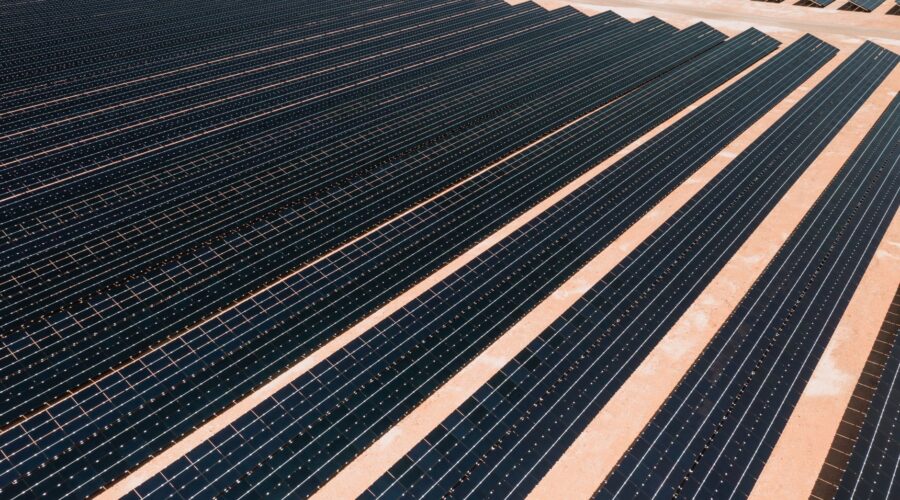
Cape Verde has set an ambitious goal: to generate 50% of its electricity from renewable sources by 2030. A critical component of this strategy is the integration of solar photovoltaic (PV) systems directly into the water production cycle. Solar-powered desalination, or “Solar-to-Water,” is changing the economic landscape of the islands.
The Sal Island Model
On the island of Sal, a hub for international tourism, the demand for water is staggering. The Palmarejo desalination plant has integrated solar arrays to offset the massive energy consumption required by Reverse Osmosis (RO) membranes. By utilizing solar power during peak daylight hours, the cost of producing a cubic meter of water is significantly reduced. This not only makes water more affordable for locals but also ensures the sustainability of the tourism sector, which is the backbone of the national economy.
Agricultural Transformation on Santiago
In the interior of Santiago, the largest island, solar-powered pumps and small-scale desalination units are revitalizing agriculture. The government, with international partners like the World Bank and the African Development Bank, has invested in solar-powered drip irrigation systems. These systems allow farmers to deliver precise amounts of desalinated or treated brackish water directly to the roots of plants, minimizing evaporation. This shift from rain-fed to climate-smart agriculture has allowed for year-round production of high-value crops like tomatoes, peppers, and papayas.
Innovation in the Face of Scale: Modular and Decentralized Systems
One of the most impressive aspects of Cape Verde’s water strategy is its focus on decentralized solutions. Large-scale plants are effective for urban centers, but the archipelago’s rugged, mountainous terrain makes transporting water to remote villages expensive and difficult.
The solution has come in the form of modular, containerized solar desalination units. These “plug-and-play” systems can be transported to coastal villages, where they draw seawater, filter it using solar energy, and provide clean drinking water to communities that previously relied on expensive trucked-in water. These units are often managed by local cooperatives, fostering a sense of community ownership and providing technical jobs for youth in rural areas.
Overcoming the “Brine” Problem
Environmentalists often criticize desalination because of “brine”—the highly concentrated salt solution left over after the purification process. If pumped back into the ocean haphazardly, it can harm marine ecosystems. Cape Verde is addressing this through better diffusion technologies that ensure brine is diluted quickly as it enters the sea.
Furthermore, research is underway in the islands to explore “circular” water economies. This includes using treated wastewater for non-edible crops and landscaping, ensuring that every drop of water produced—whether from the sky or the sea—is used multiple times before it returns to the environment.
Cape Verde as a Global Blueprint
The success of Cape Verde is catching the attention of other Small Island Developing States (SIDS). From the Caribbean to the Pacific, islands facing rising sea levels and saltwater intrusion are looking to the Middle Atlantic for lessons.
The “Cape Verdean Model” proves that:
- Political Will Matters: The government has prioritized water security as a matter of national defense and economic survival.
- Technology Must Be Contextual: Solar is ideal for Cape Verde because of its 3,000+ hours of sunshine per year; other regions might pair desalination with wind or geothermal energy.
- Public-Private Partnerships are Key: By opening the energy and water sectors to international investment and technical expertise, Cape Verde has accelerated its transition faster than it could have alone.
The Path Forward: Resilience in a Warming World
Despite these triumphs, challenges remain. The initial capital cost of solar desalination plants is high, and the maintenance of sensitive RO membranes in a salty, sandy environment requires constant vigilance and skilled labor. Moreover, as the population grows and the tourism industry expands, the demand for water continues to rise.
However, the narrative in Cape Verde has shifted from one of scarcity to one of resilience. The islands are no longer just waiting for rain that may never come. Instead, they are looking to the horizon—at the vast ocean and the blazing sun—and finding the tools for their own survival.
In the middle of the Atlantic, Cape Verde is proving that even the most resource-poor nations can become leaders in green technology. Their journey from drought-stricken islands to solar-powered pioneers is a testament to human ingenuity and a beacon of hope for a planet facing a thirsty future.
Practical Information for Travelers
If you are visiting Cape Verde, you can support their water efforts by being a conscious consumer. Many hotels now provide information on their water sources, and guests are encouraged to participate in water-saving programs. Remember: in Cape Verde, every drop of water is a product of high-tech innovation and the power of the sun.
Image: Pexels – K