Sobrados of Fogo and Brava: Cape Verde’s Aristocratic Homes
In the rugged, volcanic landscape of Cape Verde’s southern islands, the skyline is defined by more than just peaks and craters. In the historic centers of São Filipe on Fogo and Nova Sintra on Brava, the architecture tells a silent but potent story of the colonial past. These are the “Sobrados”—stately, two-story manor houses that served as the epicenter of social, economic, and political life during the islands’ aristocratic era.
To understand the Sobrado is to understand the complex social stratification of Cape Verde. These buildings were not merely homes; they were physical manifestations of power, designed to separate the landed elite from the laboring classes. Today, they stand as the most significant examples of civil architecture in the archipelago, offering a window into a bygone era of “Morgados” (landowners) and the unique Luso-African culture that emerged in their shadows.
The Anatomy of Power: Architectural Features of the Sobrado
The term “Sobrado” literally translates to “floored” or “overlaid,” referring to the second story that characterizes these buildings. While the ground floor was typically constructed of stone and lime, the upper floor often featured elaborate woodwork, wraparound balconies, and high ceilings designed to catch the Atlantic breezes.
The layout of a Sobrado was strictly functional and deeply symbolic. The ground floor, known as the loja (shop or warehouse), was dark and utilitarian. It served as a storage space for agricultural goods—coffee, grapes, and castor beans—and, during the height of the slave trade, as quarters for domestic slaves or servants. It was a space of labor, earth, and commerce.
In stark contrast, the upper floor was the realm of the gente grande (the big people). Accessible by an internal or external staircase, this level featured large windows and elegant balconies (varandas) that allowed the owners to look down upon the street without being part of it. The upper floor housed the grand salon, the dining room, and the private quarters of the family. The height of the building was a direct reflection of the owner’s status; the higher one lived above the dusty streets, the higher their standing in the social hierarchy.
Fogo: The Aristocratic Hub of São Filipe
São Filipe, the capital of Fogo, remains the premier destination to witness the Sobrado in its full glory. Built on a high cliff overlooking the black sand beaches, the town’s historic center is a dense cluster of these manor houses, many painted in vibrant pastels or ochres.
In Fogo, the Sobrado was the seat of the Morgados—a landed aristocracy that maintained a feudal-like system well into the 19th and early 20th centuries. These families controlled the fertile slopes of the volcano, producing the famous Fogo wine and high-quality coffee. The architecture here is often more imposing and austere than on other islands, reflecting the wealth generated by Fogo’s agricultural dominance.
One of the most famous examples is the Casa da Memória, a restored Sobrado that now serves as a museum. Visitors can walk through the transition from the functional ground floor to the airy, aristocratic upper floor, gaining a tactile sense of how the elite lived, entertained, and maintained their social distance.
Brava: The “Island of Flowers” and American Influence
Just a short ferry ride away, the island of Brava offers a different take on the Sobrado. In the mist-shrouded town of Nova Sintra, the houses are nestled among lush gardens of hibiscus and bougainvillea. While the basic structure remains the same, Brava’s Sobrados often feel more intimate and “romantic” than their counterparts in Fogo.
Brava’s history is inextricably linked to the sea and the United States. In the 19th century, American whaling ships frequently stopped in Brava to recruit crew members. This led to a massive wave of emigration to New England. Consequently, the Sobrados of Brava often feature subtle influences from North American colonial architecture, financed by remittances sent back from the “tenth island” (the Cape Verdean diaspora in the US).
In Nova Sintra, the Sobrado evolved to represent not just traditional colonial power, but the success of the self-made migrant. Even today, the well-maintained houses of Brava symbolize a connection to the outside world, blending Portuguese colonial roots with a global Atlantic identity.
The Social Divide: Inside vs. Outside
The Sobrado was the stage for a rigid social code. The family lived their public lives on the balconies, visible to the community but physically removed. During religious festivals like the Festas de São Filipe, the Sobrado became a fortress of hospitality for the elite, while the “commoners” celebrated in the streets below. This spatial segregation was a constant reminder of the “Sobrado and Mucambo” (manor and hut) dynamic, a term popularized by Brazilian sociologist Gilberto Freyre to describe similar colonial structures in Brazil.
However, the Sobrado was also a site of cultural blending. Behind the stone walls, the food, music, and language of the islands were being forged. Domestic workers brought African culinary traditions and the Crioulo language into these European-style homes, creating the unique “Mornas” (soulful ballads) that would eventually become the heartbeat of Cape Verdean culture.
Preservation and the Future of the Sobrado
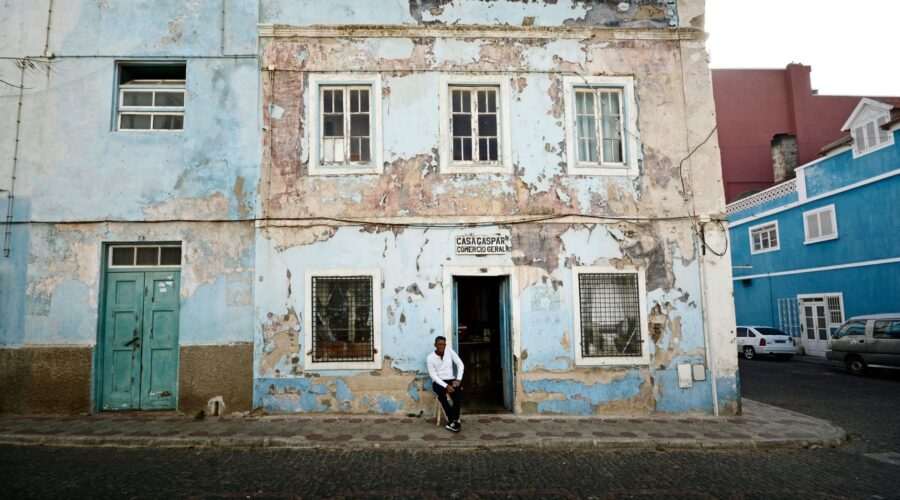
Today, the Sobrados face a dual challenge: the elements and the passage of time. The salty Atlantic air and volcanic tremors take a toll on the ancient stone and wood. While many have been converted into boutique hotels, museums, or government offices, others sit in a state of romantic decay.
For the traveler, staying in a converted Sobrado is one of the most authentic experiences Cape Verde has to offer. In São Filipe, several guesthouses allow visitors to sleep in high-ceilinged rooms that once belonged to the Morgados, providing an immersive history lesson that no textbook can match.
Efforts are ongoing to have the historic center of São Filipe recognized as a UNESCO World Heritage site. Such a designation would not only protect the physical structures but also honor the complex, often painful history of the people who built them and lived within their shadows.
Practical Information for Visitors
- Getting There: Fogo is accessible via a short flight from Praia or a ferry. Brava is only accessible by ferry from Fogo.
- Best Time to Visit: The Festas de São Filipe in late April/early May is the best time to see Fogo’s social traditions in action, though the town is very crowded.
- Must-See: Visit the Museu Municipal in São Filipe, housed in a beautiful Sobrado, to see artifacts of colonial life. In Brava, a walk through the streets of Nova Sintra is a masterclass in colonial urban planning.
The Sobrados of Fogo and Brava are more than just beautiful buildings; they are the architectural DNA of Cape Verde. They represent a history of inequality, but also a history of resilience and the birth of a new, Atlantic nation. By preserving these structures, Cape Verde ensures that the stories of both the gente grande and the people who labored beneath them are never forgotten.
Image: Pexels – damien Saillet