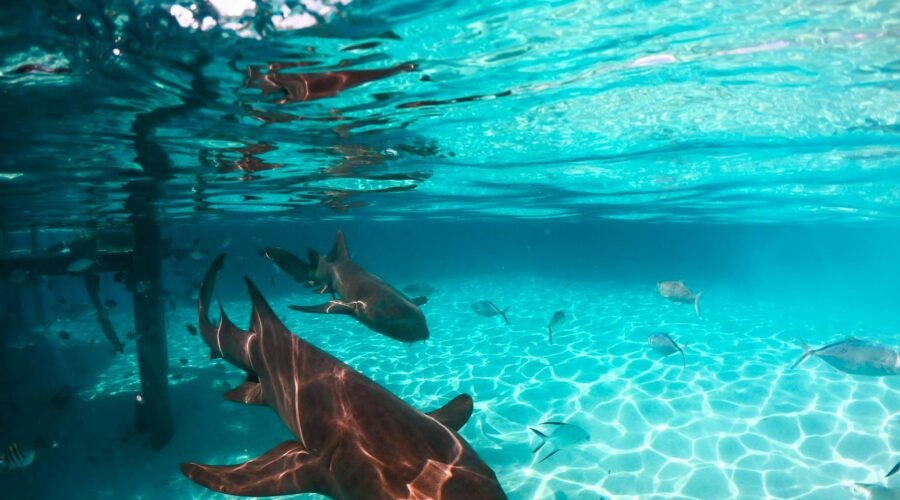
Shark Bay Sal: Wading with Lemon Sharks in Cape Verde
On the eastern coast of Sal, the sun-drenched island in the Cape Verde archipelago, lies a rugged stretch of coastline that defies the typical postcard image of white sandy beaches. Here, the volcanic rock meets the Atlantic in a shallow basin known to locals and travelers alike as Shark Bay (Baía de Tubarão). It is one of the few places on Earth where humans can safely wade into the ocean to stand just inches away from juvenile Lemon Sharks in their natural nursery.
What is Shark Bay?
Shark Bay is a unique marine sanctuary located a few kilometers north of Santa Maria. Unlike the calm, turquoise waters of the main tourist strip, Shark Bay is characterized by its rocky terrain and constant breeze. However, what makes this spot truly special is its geography. A natural reef barrier creates a shallow, protected lagoon where the water rarely reaches above the waist.
This shallow, warm environment serves as a critical nursery for Lemon Sharks (Negaprion brevirostris). Female sharks return to these waters to give birth, and the pups remain in these protected shallows for several years before they are large enough and strong enough to head into the deeper, predator-filled open ocean.
The Experience: What to Expect
The excursion to Shark Bay is a quintessential Sal experience, blending wildlife education with a touch of adrenaline. Upon arrival, the first thing visitors notice is the small fins slicing through the surface of the water, often just meters from the shore. At first glance, it can be intimidating—after all, Hollywood has spent decades teaching us to fear that sight—but the atmosphere at Shark Bay is one of peaceful coexistence.
Wading into the Shallows
To reach the sharks, you must walk approximately 50 to 100 meters out into the water. Because the seabed is made of sharp volcanic rock and coral fragments, wearing water shoes is non-negotiable. If you don’t bring your own, local guides are always on-site renting them for a few euros.
As you wade deeper, the water remains shallow, usually hovering around your ankles or knees. It is here that the Lemon Sharks begin to circle. These are primarily juveniles, ranging from 30 centimeters to about a meter in length. They are naturally curious but gentle, often gliding right between the legs of visitors as they scavenge for small crustaceans and fish.
The “Big” Lemon Sharks
While the babies stay in the knee-deep water, larger Lemon Sharks—some reaching up to 2.5 or 3 meters—can often be seen patrolling a bit further out where the water deepens. Visitors usually stay in the shallows for safety and visibility, observing the silhouettes of the larger adults from a distance.
Are Lemon Sharks Dangerous?
The most common question asked by visitors is: “Is it safe?” The answer, in this specific context, is a resounding yes. Lemon Sharks are not aggressive toward humans. They are named for their yellow-brown tint, which helps them camouflage against the sandy seabed. In the shallows of Sal, they have plenty of food and show no interest in humans other than mild curiosity.
The experience is supervised by local guides who understand the sharks’ behavior. They often bring a small amount of bait to encourage the sharks to stay in the area, ensuring that visitors get a close-up encounter. However, it is important to remember that these are wild animals; visitors are advised not to try and touch or grab the sharks, but rather to stand still and let the animals move around them.
Cultural and Ecological Significance
Cape Verde is a global hotspot for marine biodiversity. Beyond the Lemon Sharks, the archipelago is a vital nesting ground for Loggerhead sea turtles and a transit point for migrating Humpback whales. For the locals on Sal, the sharks of Shark Bay are not just a tourist attraction; they are a vital part of the ecosystem.
The rise of Shark Bay as a tourist destination has helped shift the local perception of sharks. Instead of being viewed solely as a source of food or a threat to fishing nets, they are now seen as a precious resource that must be protected. The guides who lead these tours are often the most vocal advocates for marine conservation in the region, educating tourists on the importance of preserving the delicate balance of the Atlantic waters.
Practical Information for Travelers
How to Get There
Shark Bay is easily accessible from the main town of Santa Maria. You can reach it in several ways:
- Guided Tours: Most hotels and tour operators offer half-day excursions that often combine Shark Bay with a visit to the nearby Pedra de Lume salt craters.
- Taxi: A taxi from Santa Maria costs around 10-15 Euros. Expect to arrange a pickup time with your driver, as it can be difficult to find a taxi waiting at the bay.
- Rent a Quad or 4×4: For the more adventurous, renting a vehicle allows you to explore the rugged east coast at your own pace.
When to Visit
Shark Bay can be visited year-round. However, the best visibility and the highest concentration of sharks are typically found during high tide. At very low tide, the water can be too shallow even for the pups. Most local tour operators time their visits to coincide with the tides, so booking a guide is often the best way to ensure a great sighting.
What to Bring
- Water Shoes: Essential for protecting your feet from sharp rocks and sea urchins.
- Sunscreen: The Cape Verdean sun is intense, and there is no shade out in the water.
- GoPro/Waterproof Camera: The water is clear enough for excellent under-water or surface-level footage.
- A Towel: You will be getting wet up to your knees or waist.
A Must-Do in Cape Verde
The Shark Bay experience is a powerful reminder of the beauty of the natural world. It challenges the “Jaws” narrative and replaces it with a sense of wonder. Standing in the middle of the Atlantic, with the wind in your hair and small sharks weaving around your ankles, is a humbling and exhilarating highlight of any trip to Sal.
Whether you are a wildlife enthusiast, a family looking for a unique adventure, or a solo traveler seeking a story to tell, wading with the Lemon Sharks is an ethical, exciting, and unforgettable way to connect with the wild heart of Cape Verde.
Image: Pexels – Cam Green