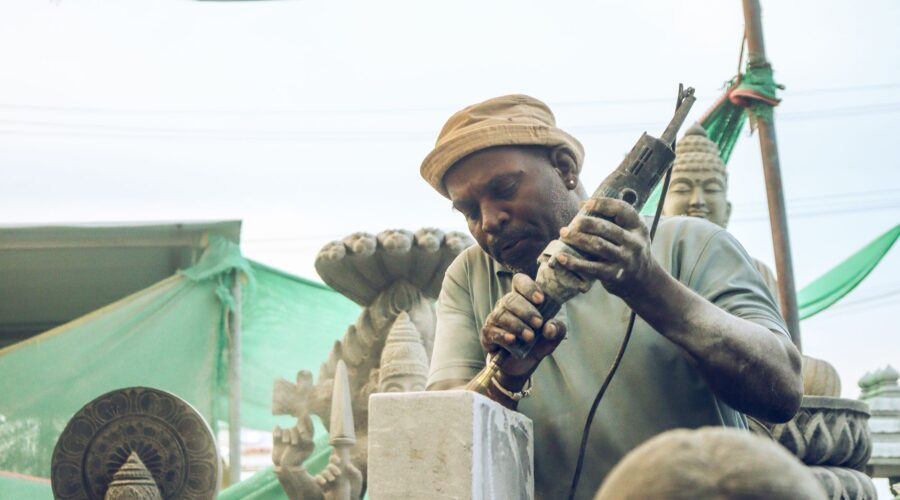
Sereia de Pedra: The Volcanic Stone Art of Santo Antão
Hidden within the rugged, mist-shrouded valleys of Santo Antão, the northernmost island of the Cape Verdean archipelago, lies a tradition that literally emerges from the earth itself. While the island is world-renowned for its dramatic hiking trails and verdant terraced agriculture, a smaller, quieter revolution has been taking place in the hands of local craftsmen. These are the artisans of the Sereia de Pedra (Stone Mermaid), masters who transform the island’s formidable volcanic basalt into delicate works of art.
The “Sereia de Pedra” movement is more than just a souvenir trade; it is a profound intersection of geology, Cape Verdean identity, and sustainable artistic expression. By breathing life into the cold, dark stones born from ancient eruptions, these artisans are telling the story of a people shaped by the sea and the soil.
The Origins: A Dialogue with Volcanic Earth
Santo Antão is an island of extremes. Its landscape is dominated by steep jagged peaks (tofos) and deep ravines (ribeiras). For centuries, the local population used volcanic stone for utility—building dry-stone walls (levadas) to direct water and constructing sturdy homes to withstand the Atlantic winds. However, the transition from masonry to fine art is a relatively recent phenomenon, catalyzed by a desire to preserve the island’s heritage through a medium that lasts forever.
The name “Sereia de Pedra” evokes the mythological mermaid, a symbol deeply rooted in Cape Verdean maritime culture. Just as the mermaid belongs to two worlds—the ocean and the land—the stone sculptures represent the duality of the islanders’ lives: the struggle against a harsh environment and the lyrical, poetic spirit of Morabeza (the legendary Cape Verdean hospitality).
The Material: Decoding the Basalt
Not all stones are created equal in the eyes of a Santo Antão sculptor. The artisans primarily work with two types of volcanic rock, each requiring a different level of mastery:
1. Basalt (Pedra de Basalto)
Dense, heavy, and incredibly hard, basalt is the core of the island’s geology. Working with basalt requires immense physical strength and patience. It is typically dark grey or black, and when polished, it takes on a sophisticated, obsidian-like sheen. Artisans often use basalt for larger, minimalist pieces that emphasize form and weight.
2. Tuff (Pedra Tosca)
This is a lighter, more porous rock formed from volcanic ash. It is softer and easier to carve, allowing for the intricate details found in the faces of the figures or the textures of traditional clothing. Tuff often possesses earthy tones of ochre, red, and burnt orange, reflecting the warm colors of the Santo Antão sunset.
Techniques: From Raw Block to Refined Soul
The process of creating a “Stone Mermaid” or a traditional bust is an exercise in endurance. Unlike modern industrial sculptors who might use pneumatic drills, the artisans of Santo Antão largely stick to traditional manual tools.
The process begins with the “hunt.” Artisans trek into the ribeiras to find stones that have been naturally smoothed by water or displaced by landslides. They look for a “hidden shape” within the rock—a curve that suggests a shoulder, or a flat plane that could become a face. This animistic approach ensures that the finished piece respects the natural geometry of the island.
Once back in the workshop (often a simple open-air terrace), the artisan uses hammers, chisels, and files to rough out the shape. The final stages involve meticulous sanding with increasingly fine grits of stone and water, followed by an application of natural oils or waxes to bring out the stone’s deep, hidden luster. The result is a piece that feels both ancient and contemporary.
Symbolism: The Stories Carved in Stone
The themes explored by the Sereia de Pedra artisans are deeply evocative of the Cape Verdean experience. While the “Mermaid” is a recurring motif representing the sea’s bounty and mystery, other common subjects include:
- The Cape Verdean Woman: Often depicted with a basket on her head (balai) or carrying a child, these sculptures honor the strength and resilience of the island’s matriarchs.
- The Musician: A tribute to the Morna and Coladeira, the sculptures often feature figures with guitars or violins, capturing the rhythmic soul of the nation.
- The Fisherman: Reflecting the island’s dependence on the Atlantic, these figures symbolize the bravery of those who navigate the treacherous channels between Santo Antão and São Vicente.
- Abstract Spirits: Some artisans lean into the supernatural, carving faces that seem to emerge from the rock, representing the “spirits of the mountain” that locals believe inhabit the high peaks.
Cultural and Economic Impact
For Santo Antão, the stone carving industry provides a vital alternative to traditional agriculture and large-scale tourism. It is a form of “slow tourism” that encourages visitors to venture into smaller villages like Fontainhas or Paul to witness the creative process firsthand.
Furthermore, these artisans are environmental stewards. By using discarded or naturally occurring stone, they create art with a near-zero carbon footprint. In a world of mass-produced plastic souvenirs, a hand-carved volcanic sculpture from Santo Antão stands as a testament to sustainable craftsmanship.
Where to Find the Artisans
If you are traveling to Santo Antão, finding these artisans is a journey in itself. While some galleries in Mindelo (on the neighboring island of São Vicente) carry their work, the best experience is found at the source:
Porto Novo
As the gateway to the island, Porto Novo houses several small cooperatives where you can see the initial stages of stone selection and rough carving.
The Ribeira Grande Valley
Deeper into the heart of the island, in the lush valleys of Ribeira Grande, you will find independent workshops nestled among banana trees and sugarcane plantations. Here, the carving happens in the shade of the mountains that provided the stone.
Preserving the Legacy
The challenge for the Sereia de Pedra artisans is the transmission of knowledge. Many of the master carvers are now older, and there is a concerted effort by local cultural associations to teach these techniques to the younger generation. Workshops are being organized to show the youth that their island’s “worthless” rocks are, in fact, vessels for art and economic independence.
When you hold a piece of Santo Antão stone art, you aren’t just holding a rock. You are holding a piece of a volcano, polished by the hands of a craftsman whose ancestors have looked at these same mountains for centuries. It is the ultimate embodiment of Cape Verde: rugged, beautiful, and enduring.
Practical Tips for Collectors
- Weight Matters: Remember that basalt is heavy. If you plan on buying a large piece, inquire about shipping services or ensure you have enough luggage allowance.
- Authenticity: Look for the artist’s signature or a certificate from a local cooperative to ensure you are supporting genuine local labor.
- Care: Volcanic stone is durable but can be porous. Keep your sculptures dusted and occasionally rub them with a tiny drop of mineral oil to maintain their deep color.
The Sereia de Pedra artisans have turned the literal foundations of their island into a poetic language. In their hands, Santo Antão doesn’t just stand tall against the Atlantic—it speaks.
Image: Pexels – GOWTHAM AGM