Sanjon in Porto Novo: Drums, Fire & Horse Races in Cape Verde
Every year in June, as the heat of the approaching African summer begins to settle over the archipelago, the town of Porto Novo on the island of Santo Antão undergoes a radical transformation. What is typically a quiet port town becomes the epicenter of Cape Verde’s most fervent and spectacular cultural manifestation: the festivities of São João Baptista, locally known as Sanjon.
Declared an Intangible Cultural Heritage of Cape Verde, Sanjon in Porto Novo is more than just a religious holiday; it is an explosion of syncretic identity where Catholic traditions, African rhythms, and rural folklore collide. Between the rhythmic thumping of the drums (tambores), the hypnotic dance of the “Coladeira,” and the dust-kicking adrenaline of the horse races, Sanjon provides a window into the soul of the Cape Verdean people.
The Origins: A Blend of Faith and Earth
While the feast day of Saint John the Baptist (June 24th) is celebrated across the entire archipelago, it is in Porto Novo that the celebration reaches its zenith. The origins are a complex tapestry of European colonial influence and the deep-seated agricultural traditions of Santo Antão’s inhabitants.
Historically, Sanjon was a celebration of the harvest and a plea for rain. In an arid landscape where water is gold, the rituals associated with fire and water took on immense spiritual significance. Over centuries, the formal liturgy of the Church merged with the “pagan” energy of the local population, resulting in a festival that is as wild as it is devout.
The Sound of Sanjon: Drums and the ‘Colá’
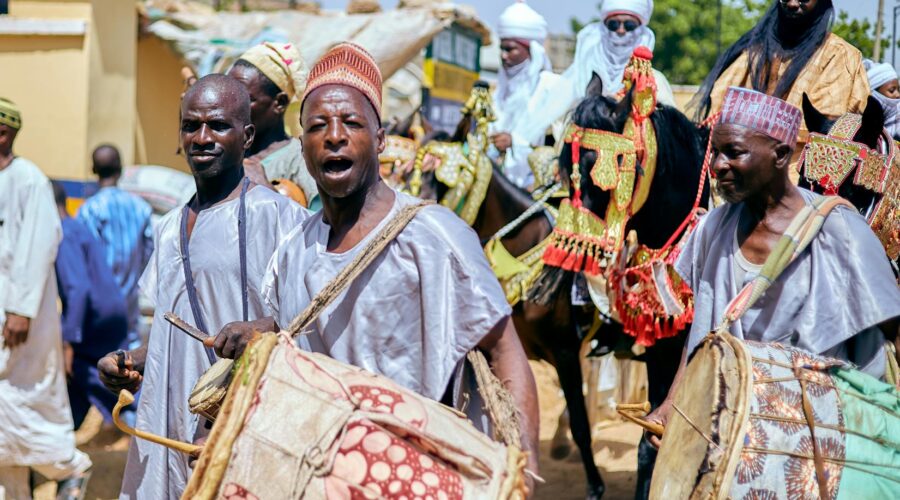
You do not see Sanjon before you hear it. The heartbeat of the festival is provided by the Tamboreiros (drummers). These men—and increasingly women—carry large, handmade drums slung over their shoulders, beating out a relentless, syncopated rhythm that can be heard for miles.
Accompanying the drums are the Coladeiras, women who sing traditional verses and perform the Colá dance. This dance is characterized by the “umbigada” (a rhythmic touching of navels), a gesture symbolizing fertility and communal bonding. As the drums beat, the crowd enters a near-trance state, moving in a massive, sweltering procession known as the “Pilão.” This specific ritual involves the symbolic grinding of corn in a large wooden mortar, further emphasizing the festival’s ties to the earth’s bounty.
The Pilgrimage: The Trek from Ribeira das Patas
One of the most authentic and grueling aspects of Sanjon is the overnight pilgrimage. Thousands of pilgrims (promesseiros) carry the small statue of Saint John on their shoulders, walking over 20 kilometers from the mountain valley of Ribeira das Patas down to the coastal town of Porto Novo.
The journey is a sea of humanity. People of all ages navigate the rocky paths, singing “Sanjon na Son Jon” to the beat of the drums. Many walk barefoot to fulfill “promessas” (vows) made to the Saint in exchange for health or family blessings. When the statue finally reaches the outskirts of Porto Novo at the “Ribeira da Igreja,” the atmosphere shifts from solemn endurance to pure jubilation.
Fire and Mystery: The Bonfires of Sanjon
Fire is a central element of the Sanjon festivities. On the eve of June 24th, the “Noite de São João,” the hillsides and streets of Porto Novo are illuminated by hundreds of bonfires (fogueiras). Traditionally, people jump over the fires—a ritual believed to purify the soul and bring good luck for the coming year.
There is an ancient belief that the smoke from these fires carries prayers to the heavens. In the rural outskirts, the wood used is often aromatic, filling the night air with a scent that defines the Sanjon experience for every Cape Verdean. It is a night of “morabeza” (hospitality), where doors are left open, and strangers are invited in to share “cachupa” and “grogue” (the local sugarcane spirit).
The Symbolic Horse Races: Dust, Glory, and Tradition
If the drums provide the heartbeat of Sanjon, the Horse Races (Corridas de Cavalos) provide the adrenaline. Held on the final days of the festival at the makeshift dirt tracks on the edge of town, these races are a major highlight for locals and tourists alike.
These are not your typical refined equestrian events. They are raw, dusty, and incredibly loud. Jockeys from across the islands—and particularly from neighboring São Vicente—bring their best horses to compete. For the people of Porto Novo, the horse is a symbol of prestige and the historical connection to the land. Winning a Sanjon race brings immense local fame.
The races are accompanied by the “Canizade,” a unique masquerade where performers dress in costumes made of dried banana leaves or colorful rags, wearing masks that represent animals or spirits. They weave through the crowds of the horse track, adding an element of the grotesque and the magical to the sporting event.
Traditional Flavors of the Festival
No exploration of Sanjon is complete without mentioning the culinary traditions. This is the time for “Comida de Terra” (food of the land). Large communal pots of Cachupa are prepared, but special emphasis is placed on:
- Dôce de Coco: A sweet coconut confection often shared among pilgrims.
- Tortas: Savory meat or fish pies.
- Grogue and Pontche: The potent local spirits that fuel the singing and dancing through the night.
Practical Information for Visitors
If you are planning to experience the Sanjon festivities in Porto Novo, here are a few things to keep in mind:
1. Timing and Travel
The main events occur between June 22nd and June 25th. To get there, you must take a ferry from the city of Mindelo on São Vicente island to Porto Novo. During Sanjon, ferries are packed, and it is essential to book your tickets in advance.
2. Accommodation
Porto Novo’s hotels and guesthouses sell out months in advance. Many visitors choose to stay in Mindelo and take the early morning ferry, or they camp out in the spirit of the festival. However, for the full experience, staying in town is highly recommended.
3. What to Wear
Expect dust, heat, and crowds. Wear comfortable shoes (especially if you intend to join the pilgrimage), a hat, and clothes you don’t mind getting dirty. The “Colá” can get quite energetic!
Conclusion: The Soul of Santo Antão
The Sanjon of Porto Novo is more than a party; it is a profound declaration of Cape Verdean resilience and joy. In a world that is rapidly modernizing, Sanjon remains an anchor to the past. It is a moment where the modern Cape Verdean citizen—perhaps living in the US or Europe—returns home to reconnect with the drums of their ancestors.
To witness the fire, hear the drums, and see the horses gallop through the dust of Porto Novo is to witness the “Cabo-verdianidade” (Cape Verdean-ness) in its purest, most unadulterated form. It is a sensory overload that leaves an indelible mark on anyone lucky enough to join the circle.
Image: Pexels – Aliyu jooney