Pano de Bicho: Decoding Cape Verde’s Ancient Textiles
In the quiet, sun-drenched workshops of Santiago and the volcanic slopes of Fogo, a tradition exists that predates the modern concept of the Cape Verdean nation. It is a tradition woven not just from cotton, but from identity, resistance, and ancient African cosmology. The Pano de Terra (Cloth of the Land), and specifically the enigmatic Pano de Bicho, represents one of the most sophisticated textile traditions in West Africa. For centuries, these narrow strips of hand-woven fabric served as currency, dowry, and social status, but hidden within their geometric precision lies a complex visual language known as the “Bicho” (Beast or Creature) motifs.
The Origins of Cape Verdean Weaving
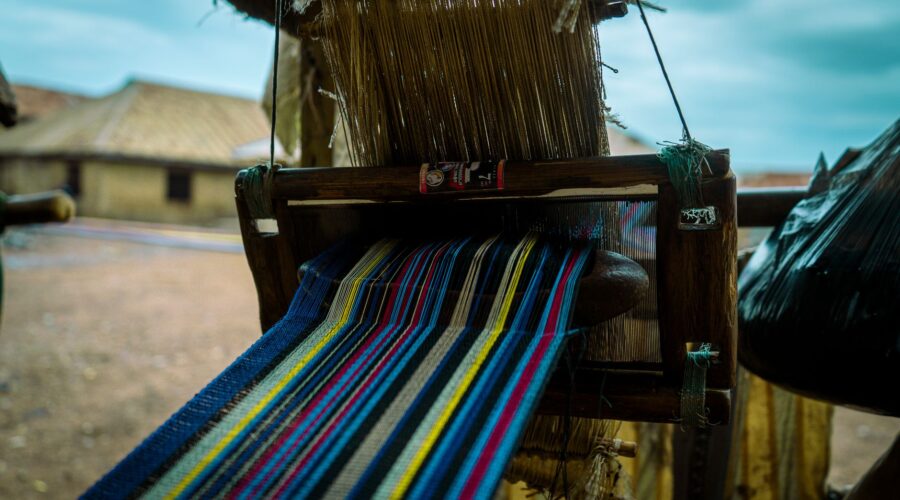
The history of the Pano de Terra is inextricably linked to the transatlantic slave trade and the early settlement of the islands in the 15th century. When the Portuguese arrived in the uninhabited archipelago, they brought with them enslaved weavers from the Upper Guinea Coast—primarily from the Jalofo (Wolof), Papel, and Mandinga ethnic groups. These artisans brought the technology of the narrow-strip loom, a horizontal loom that produces fabric in strips only 15 to 20 centimeters wide.
Santiago quickly became a hub for cotton cultivation and indigo production. By the 16th and 17th centuries, Cape Verdean textiles were so highly prized that they became a “money-cloth,” used as a standard of exchange for trading on the African mainland. However, as the weavers adapted to their new island home, the designs began to evolve. What emerged was a unique hybrid: West African technical mastery blended with a new, Luso-African aesthetic that favored geometric complexity and hidden symbolism.
Decoding the ‘Bicho’: More Than Meets the Eye
The term Pano de Bicho literally translates to “Cloth of the Beast” or “Cloth of the Animal.” To the untrained eye, these textiles appear to be masterworks of blue and white geometry. However, to the initiated, the intricate patterns—often stylized as diamonds, zig-zags, and interlocking grids—are zoomorphic representations.
The Zoomorphic Archetypes
Unlike the literal animal depictions found in European tapestries, the Bicho motifs are highly abstracted. They represent the essence of creatures that held spiritual or social significance in the West African traditions of the weavers’ ancestors:
- The Lizard (Lagarto): A frequent motif representing agility, transformation, and the bridge between the physical and spiritual worlds.
- The Spider (Aranha): Often linked to the West African folklore of Anansi, symbolizing wisdom, storytelling, and the intricate web of life.
- The Snake (Cobra): Symbolizing fertility, eternity, and the cyclical nature of time.
- The Scorpion: A protective motif, meant to ward off evil spirits or enemies.
These motifs are rarely woven as isolated images. Instead, they are repeated and mirrored, creating a rhythmic “pulse” across the fabric. This repetition is a key characteristic of African visual arts, where the “bicho” serves as a protective talisman for the wearer.
The Technical Mastery of Santiago and Fogo
The production of a Pano de Bicho is a labor-intensive process that demands months of work. While Santiago remains the primary center for weaving, the tradition in Fogo has historically been celebrated for its delicate indigo dyeing techniques.
The Role of Indigo
In the Cape Verdean tradition, the color blue is not merely an aesthetic choice; it is sacred. The use of Indigofera tinctoria (the indigo plant) allowed weavers to create varying shades of blue, from a pale sky hue to a midnight blue so dark it appears black. In the Pano de Bicho, the contrast between the white (undyed cotton) and the indigo creates a visual vibration. Historically, the deeper the indigo, the more valuable the cloth, as it represented the wealth and patience required for multiple dye baths.
The Weaver’s Geometry
The “Bicho” patterns are created using a supplementary warp technique. The weaver must count individual threads to “float” the pattern over the base fabric. This requires immense mathematical precision. On the island of Santiago, particularly in the interior regions like Santa Catarina, master weavers (known as tecelões) still guard these patterns as family secrets, passing them down through generations by memory rather than written diagrams.
Cultural Significance: From Birth to Burial
The Pano de Terra is deeply woven into the lifecycle of the Cape Verdean people. The Pano de Bicho, being the most ornate and expensive variety, was reserved for the most significant life events.
The Bride’s Dowry: Traditionally, a bride would not leave her home without several Panos de Terra. The Pano de Bicho would be the centerpiece, worn around the waist (the atado) over her wedding dress. It symbolized her family’s status and her transition into womanhood.
The Power of the Back: One of the most iconic uses of the pano is the carregal—the act of a mother carrying her child on her back, secured by a sturdy Pano de Terra. It is believed that the specific motifs of the Pano de Bicho protect the infant from the “evil eye” and spiritual harm.
The Final Journey: Even in death, the pano remains significant. It is common for the elderly to set aside their finest Pano de Bicho to be used as a shroud, ensuring they return to their ancestors dressed in the symbols of their heritage.
The Enigma of Resistance
Perhaps the most fascinating aspect of the Pano de Bicho is its role as a silent form of resistance. During the colonial era, Portuguese authorities often discouraged or outright banned the use of local textiles in favor of imported European cloth. By continuing to weave the Bicho motifs, Cape Verdeans were asserting their African roots and their distinct cultural identity.
The “enigma” lies in the duality of the cloth. To the Portuguese colonizer, it was a beautiful, exotic textile suitable for trade. To the enslaved and their descendants, it was a coded map of their ancestry, a way to keep the spirits of West Africa alive in the middle of the Atlantic Ocean.
The Future of Pano de Bicho
Today, the art of the Pano de Bicho faces challenges. The rise of industrial textiles and the migration of young people from rural areas to cities have threatened the survival of the craft. However, a recent resurgence in Cape Verdean pride has sparked a revival.
Designers in Praia and Mindelo are now incorporating Bicho motifs into modern fashion, and cooperatives in Santiago are training a new generation of weavers. Museums, such as the Museu da Tabanka, are working to document the specific meanings of different motifs before they are lost to time.
Conclusion: A Living Archive
The Pano de Bicho is more than just a piece of fabric; it is a living archive of Cape Verdean history. Every thread tells a story of survival, every indigo dye bath reflects the deep blue of the Atlantic, and every zoomorphic motif whispers the names of ancient African gods and guardians.
For the traveler visiting Santiago or Fogo, witnessing a weaver at a traditional loom is a journey back in time. To touch the heavy, textured surface of a Pano de Bicho is to touch the very soul of Cabo Verde—a soul that remains, despite centuries of change, inextricably linked to its African origins.
Image: Pexels – Silvanus Solomon