Operation Flying Launch: Cape Verde’s War on Trafficking
Floating in the central Atlantic, roughly 570 kilometers off the coast of West Africa, the archipelago of Cabo Verde (Cape Verde) has long been defined by its geography. Historically, its strategic position made it a vital stopover for 15th-century explorers, a hub for the transatlantic slave trade, and later, a critical refueling station for mid-Atlantic shipping routes. However, in the 21st century, this same “strategic location” presented a modern curse: the islands became a primary “reorder point” for international drug cartels moving cocaine from South America to the lucrative markets of Europe.
The turning point for the nation’s internal security and international reputation came in 2007 with the launch of Operacão Lancha Voadora (Operation Flying Launch). This wasn’t merely a police raid; it was a tactical shift that signaled Cape Verde’s evolution from a vulnerable transit point to a proactive guardian of the Atlantic corridor.
The Vulnerability of a “Mid-Atlantic Hub”
Cape Verde consists of ten volcanic islands and eight islets, scattered across a vast maritime territory. With a population of just under 500,000 and limited natural resources, the country’s economy is heavily service-oriented, relying on tourism and foreign investment. While its stability as a representative democracy—often cited as the most democratic nation in Africa—made it a “real success story” according to world leaders, its porous maritime borders were an easy target for sophisticated criminal syndicates.
By the mid-2000s, drug cartels from Colombia were increasingly using the “Highway 10” (the 10th parallel) to move multi-ton shipments of cocaine toward Europe, specifically targeting the Netherlands and Germany. Cape Verde, sitting nestled between the continents, was the perfect logistical waypoint. Smugglers utilized the rugged coastlines of islands like Santiago and São Vicente to stockpile drugs before hopping to the European mainland.
Launching the Operation: A Secret War
Recognizing that the country’s stability and burgeoning tourism industry were at risk, the Cape Verdean government coordinated a sophisticated response. Operation Flying Launch began in 2007 as a clandestine collaboration between the Cape Verdean Judicial Police and the Cape Verdean Armed Forces. For a nation that had seen little military action since its independence from Portugal in 1975, this was a significant pivot. The military’s mission underwent a fundamental change: shifting from traditional territorial defense to a specialized focus on counter-narcotics and maritime security.
The operation was shrouded in such secrecy that for the first two years, even higher-ranking officials outside the immediate task force were unaware of its scope. The intelligence-gathering phase focused on a powerful trafficking group that had integrated itself into the local economy, using legitimate businesses as fronts for their illicit activities.
The Tactical Shift: National Guard and Coast Guard Collaboration
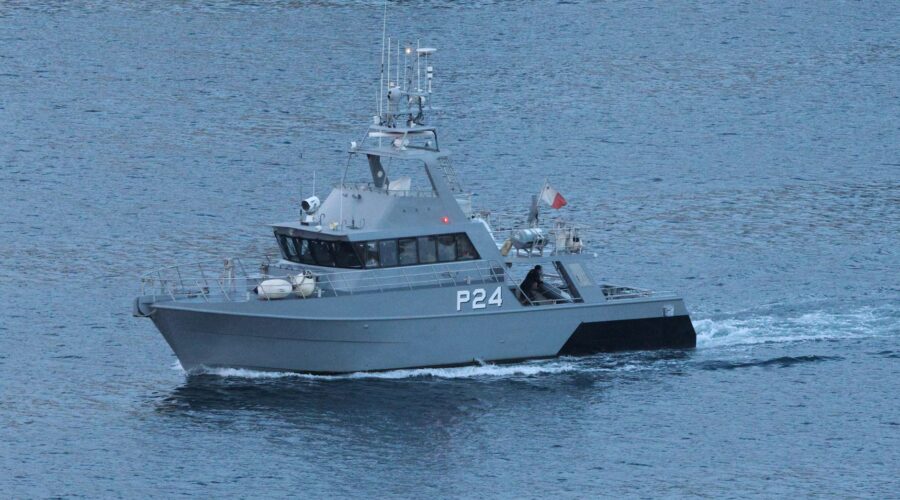
The operation underscored the importance of the Cape Verdean National Guard and Coast Guard. Because the country spends roughly 0.7% of its GDP on the military, resources had to be used with surgical precision. The Coast Guard, in particular, was modernized and trained to intercept high-speed vessels (the “Lanchas” from which the operation took its name) that cartels used to outrun standard patrol boats.
The Fall of the Network (2010)
The operation reached its crescendo in 2010. After three years of intelligence gathering—two of which were entirely undercover—the authorities moved in. The results were historic for the West African region. Multiple kingpins were arrested, and significant quantities of cocaine, high-end vehicles, and vast sums of laundered cash were seized.
What made Operation Flying Launch unique was its focus on the “financial infrastructure” of the traffickers. It wasn’t just about seizing the white powder; it was about dismantling the network that allowed traffickers to hide in plain sight. Major busts in the capital city of Praia and the commercial hub of Mindelo proved that the state had the capacity to take down well-funded international criminals.
Long-term Impact on Cape Verdean Policy
Operation Flying Launch was more than a single victory; it redefined Cape Verde’s role in international relations. Since the operation, Cape Verde has strengthened its “Special Partnership” with the European Union (established in 2007) and its cooperation with the United States and the United Nations.
Key outcomes of this tactical shift include:
- International Recognition: Cape Verde is now viewed as a “security provider” rather than a “security consumer.” Its success led to the establishment of the Maritime Analysis and Operations Centre – Narcotics (MAOC-N) in Lisbon, within which Cape Verde is a key partner.
- Legal Reform: Following the operation, the government tightened money laundering laws and improved judicial transparency, helping it maintain its high ranking in global democracy indices.
- Sustained Focus: The military has continued this mission. In subsequent years, the Cape Verdean police and military have made world-record seizures, such as the 2019 “Eser” bust where 9.5 tonnes of cocaine were found on a Panamanian-flagged vessel.
A Resilient Democracy
Today, Cape Verde remains a beacon of stability and development in Africa. While challenges persist—such as the tragic 2016 Monte Tchota incident within the military—the legacy of Operation Flying Launch remains a point of national pride. It showed that even a small island nation can confront global criminal giants through persistence, international cooperation, and a clear tactical vision.
As the country looks toward the future, focusing on renewable energy—having already reached 20% renewable capacity with a goal of 50% by 2030—and debt-for-nature swaps, it does so from a position of security. By securing its seas during the “Flying Launch” era, Cabo Verde ensured that its future would be dictated by its own people, not by the cartels of the Atlantic.
Fast Facts: Cape Verde’s Security Landscape
Official Language: Portuguese (National language: Cape Verdean Creole)
Capital: Praia (Santiago Island)
Key Security Agencies: Judicial Police, National Guard, and Coast Guard
Global Recognition: One of Africa’s most stable representative democracies.
Image: Pexels – Drinu Cutajar