October 17 History: Chopin, Al Capone, and Einstein’s Legacy
October 17th stands as a powerful crossroads of human history, marked by the fall of legendary outlaws, the triumph of scientific minds, and the melodies of timeless composers. Observed globally as the International Day for the Eradication of Poverty and World Day Against Pain, this date serves as a reminder of both human suffering and the relentless pursuit of progress.
Musical and Literary Giants
The world lost one of its most delicate musical voices on this day in 1849, when Polish composer and virtuoso pianist Frédéric Chopin passed away in Paris at the age of 39. His legacy of emotive nocturnes and polonaises continues to define the Romantic era.
In literature, the day celebrates the birth of American playwright Arthur Miller (1915), whose works like Death of a Salesman dismantled the American Dream. Decades later, in 1957, French philosopher and novelist Albert Camus—famed for The Stranger—was awarded the Nobel Prize in Literature. In 2007, the acclaimed Milan Kundera was honored with the Czech Republic’s National Literature Prize.
Justice and Science: Al Capone and Einstein
In 1931, the era of the celebrity gangster came to a crashing halt when Al Capone was sentenced to 11 years in prison. Ironically, the man who controlled Chicago through violence was brought down not by murder charges, but by tax evasion. Two years later, in 1933, the scientific world shifted its axis as Albert Einstein arrived in the United States, fleeing Nazi persecution in Germany to begin his tenure at Princeton.
Science saw further milestones on this date with the 1906 Nobel Prize shared by Santiago Ramón y Cajal for his work on the nervous system, and the 1988 Nobel Prize in Medicine awarded to James Black, Gertrude Elion, and George Hitchings for revolutionary drug developments.
Geopolitics and Revolutions
October 17th has often been a day of seismic shifts in global politics:
- 1973: The Arab-Israeli conflict triggered the first global oil crisis as producing countries slashed exports, leading to a massive energy embargo.
- 1979: Mother Teresa was awarded the Nobel Peace Prize for her work with the “poorest of the poor” in Calcutta.
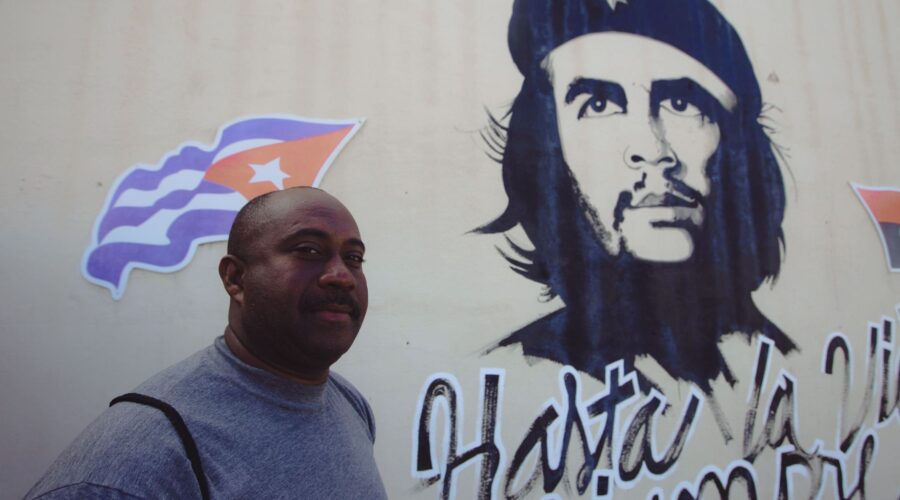
- 1997: The remains of Marxist revolutionary Che Guevara were finally laid to rest in Cuba, 30 years after his execution in Bolivia.
- 2019: The United Kingdom and the European Union reached a historic withdrawal agreement (Brexit), ending years of diplomatic deadlock.
Portuguese History and Culture
For Portugal, this date is a timeline of modernization and achievement. In 1909, the nation witnessed its first motorized airplane flight, piloted by Armand Zipfel in Lisbon. Decades of diplomatic effort culminated on this day in 1978, when official negotiations began for Portugal to join the European Economic Community (EEC).
More recently, in 2018, Portugal’s youth showed their sporting prowess as the women’s national futsal team secured gold at the Youth Olympic Games in Buenos Aires. In 2025, the nation mourned the loss of António Borges Coelho, a titan of Portuguese history and resistance against censorship.
Disasters and Triumphs
In 1989, a powerful 6.9 magnitude earthquake struck San Francisco during a World Series broadcast, killing 67 people and causing widespread destruction. On a more hopeful note, in 2014, the World Health Organization officially declared the end of the Ebola epidemic in Senegal, a major victory for global public health.
As the 291st day of the year, October 17th leaves us with the words of Albert Camus: “For many, war is the end of solitude. For me, it is infinite solitude.”
Image: Pexels – Mehmet Turgut Kirkgoz