Monte Trigo: Cape Verde’s 100% Solar-Powered Roadless Village
In a world defined by hyper-connectivity and the relentless roar of internal combustion engines, the village of Monte Trigo on the island of Santo Antão stands as a profound anomaly. Tucked beneath the shadows of volcanic peaks and framed by the crashing turquoise waves of the Atlantic, this small fishing community is the last village in Cape Verde unreachable by road. But its isolation is not its only claim to fame; Monte Trigo is a global pioneer in sustainability, being the first village in Africa to be powered 100% by solar energy.
The Geography of Isolation
Santo Antão is widely considered the most dramatic island in the Cabo Verde archipelago. Known for its jagged “craters” and lush tropical valleys, the island is a hiker’s paradise. However, most tourists stick to the verdant northeastern valleys like Paul or Ribeira Grande. Monte Trigo lies on the arid, volcanic western coast, a region so rugged that the modern world’s infrastructure simply stopped at its doorstep.
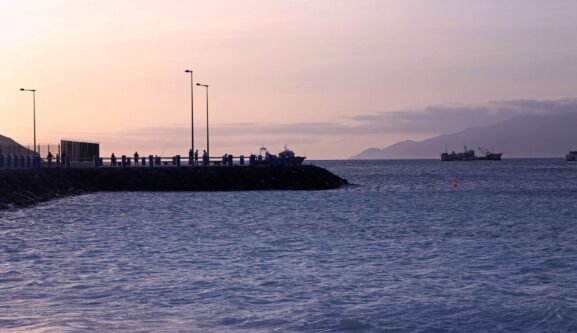
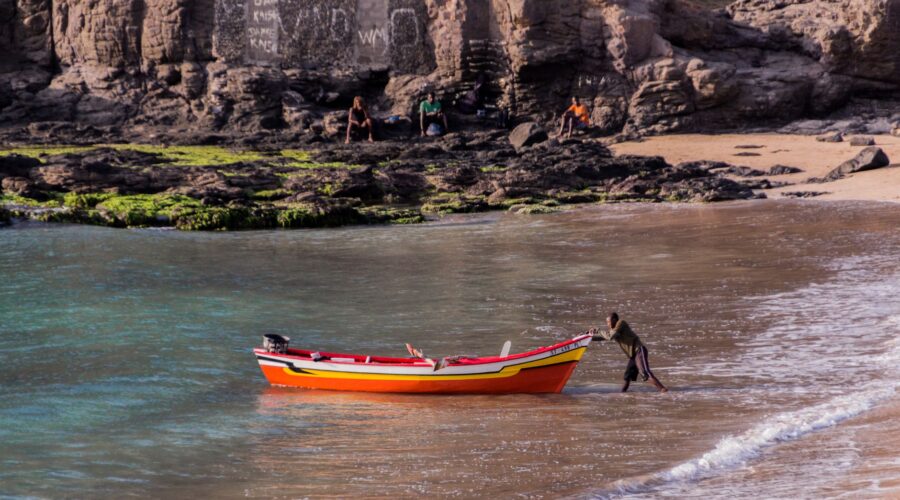
There are only two ways to reach Monte Trigo: a strenuous three-to-four-hour hike from the neighboring village of Tarrafal de Monte Trigo, or a precarious journey by “fundo,” the traditional local fishing boats. The boat ride, while scenic, depends entirely on the temperament of the Atlantic. When the sea is rough, Monte Trigo is effectively cut off from the rest of the world, reinforcing a sense of resilience that has defined its 300 inhabitants for generations.
The 100% Solar Revolution
For decades, Monte Trigo relied on a noisy, expensive, and polluting diesel generator that provided electricity for only a few hours each evening. Fuel had to be transported by boat in heavy barrels, a logistical nightmare that often left the village in darkness when the seas were too high for delivery.
In 2012, everything changed. Through a partnership between the Cape Verdean government, the European Union, and various NGOs, the “SESAM-ER” project was launched. A multi-kilowatt photovoltaic micro-grid was installed on the slopes above the village. Today, Monte Trigo is a shining example of renewable energy autonomy. The solar plant provides 24-hour electricity, powering everything from household lights and televisions to the village’s most critical asset: the ice machine.
The Ice Machine: A Community Lifeline
To the casual visitor, an ice machine might seem mundane. In Monte Trigo, it is the backbone of the economy. As a fishing village, the community’s livelihood depends on the catch of the day—tuna, grouper, and lobster. Before the solar grid, fishermen had to sell their catch immediately or watch it spoil. With consistent solar power, the community-run ice plant allows fishermen to preserve their fish, transport it to markets in Porto Novo or Mindelo, and command a fair price. It has transformed the village from subsistence living to a sustainable micro-economy.
The Experience: Visiting Monte Trigo
Visiting Monte Trigo is not for the “all-inclusive” resort crowd. It is a pilgrimage for those seeking silence, authenticity, and a glimpse into a slower way of life. The village consists of a cluster of colorful stone houses, a small school, a church, and a few “mercearias” (small shops).
The Hike from Tarrafal
Most travelers arrive via Tarrafal de Monte Trigo, a larger village that recently gained road access. The trek from Tarrafal to Monte Trigo is one of the most spectacular coastal hikes in West Africa. The trail winds along the base of Topo de Coroa, the island’s highest peak, hugging volcanic cliffs that plunge straight into the ocean. The path is arid and sun-drenched, offering a stark contrast to the green interior of the island, but the reward is the sight of Monte Trigo appearing like a mirage against the black sand beach.
Village Life and Morabeza
Upon arrival, visitors are greeted by the legendary Cape Verdean “Morabeza”—a unique brand of hospitality that is soulful and welcoming. There are no hotels here, only a few local guesthouses (pensões) that offer a bed and a warm meal. Life here follows the rhythm of the sun and the tides. In the afternoons, children play football on the black volcanic sands, while elders sit in the shade of the solar panels, watching the horizon for returning fishing boats.
Sustainability Beyond Solar
Monte Trigo’s commitment to the environment extends beyond its power source. Because there is no road, there are no cars. There is no air pollution, and noise pollution is limited to the sound of the wind and the waves. The isolation has acted as a natural preservative for the local culture. Traditional music, specifically the melancholic Morna and the upbeat Coladeira, flows through the open windows of homes in the evenings, powered by the very sun that shone during the day.
However, the village faces challenges. Water scarcity is a constant concern in the arid west of Santo Antão. The solar grid now helps power a small desalination unit, providing fresh water to a community that once relied solely on a distant mountain spring. This nexus of food, water, and energy—all managed locally—makes Monte Trigo a case study for climate resilience in island nations.
Practical Information for Travelers
If you are planning to visit this hidden gem, here are a few things to keep in mind:
- Getting There: Take the ferry from Mindelo (São Vicente) to Porto Novo (Santo Antão). From there, hire an “aluguer” (public collectivo) to Tarrafal de Monte Trigo. From Tarrafal, you can hike or hire a local boat.
- What to Pack: Sturdy hiking boots, high-SPF sunscreen, and plenty of water for the trek. There are no ATMs in Monte Trigo, so bring enough Cape Verdean Escudos (CVE) for your stay.
- Connectivity: While there is now electricity to charge phones, mobile signal can be spotty, and high-speed Wi-Fi is non-existent. Embrace the digital detox.
- Best Time to Visit: Between November and June, when the weather is cooler for hiking and the seas are generally calmer for boat travel.
Conclusion: A Blueprint for the Future
Monte Trigo is more than just a destination; it is a statement. It proves that even the most remote corners of the planet can thrive by embracing modern technology without sacrificing their soul. In the shadow of the volcanic cliffs of Santo Antão, the “Last Roadless Village” is not looking backward at what it lacks, but forward at what it has mastered: a harmonious balance between human necessity and the power of nature.
For the traveler, a visit to Monte Trigo is a reminder of what the world felt like before the rush of the 21st century—and a hopeful preview of a greener, quieter future.
Image: Pexels – Thomas Schwaak