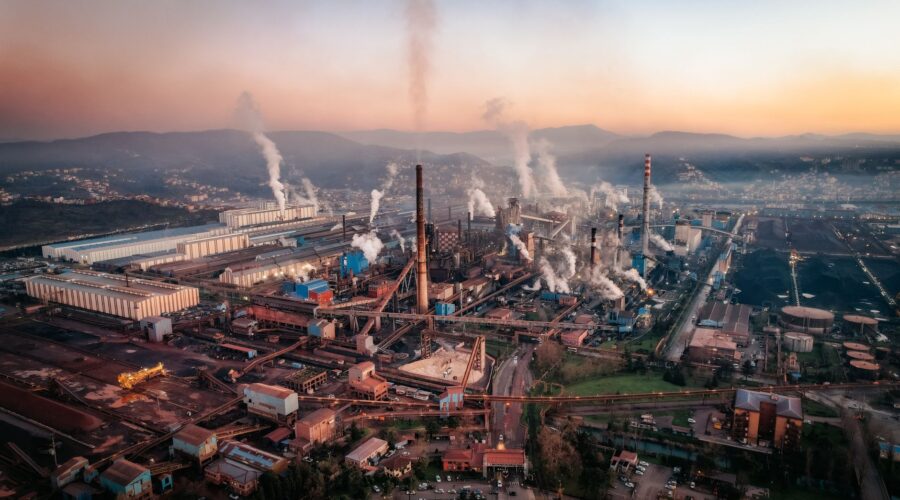
Global Crisis: 40% Exposed to Dangerous Ozone in 2026
Nearly 40% of the global population breathed dangerous levels of ozone pollution this year as extreme heat and industrial emissions created a toxic cocktail that ignored international borders. According to a new report by the Copernicus Atmosphere Monitoring Service (CAMS), pollution is no longer a localized issue but a global crisis traveling thousands of kilometers from its source.
A Lethal Reaction: Heat and Industry
The report highlights the rise of tropospheric ozone, often called “bad ozone.” Unlike the stratospheric ozone layer that protects Earth from radiation, tropospheric ozone forms near the ground when nitrogen oxides from road traffic and industrial activity react with intense sunlight and heat. In 2026, repeated heatwaves acted as a catalyst, turning urban pollution into a widespread health hazard.
The findings, released by the European Centre for Medium-Range Weather Forecasts (ECMWF), indicate that human-induced climate change is directly fueling this air quality crisis. “Atmospheric pollution knows no borders,” said Florian Pappenberger, Director-General of the ECMWF. “Smoke from wildfires, ozone, and dust can travel thousands of kilometers, affecting communities very far from their origin.”
Asia and North America Hardest Hit
The analysis of the first eight months of 2026 reveals a stark regional divide:
- Asia: The hardest-hit region, where 60% of the population was exposed to ozone levels far exceeding World Health Organization (WHO) safety guidelines.
- North America: More than two-thirds of the population breathed hazardous air, a situation exacerbated by massive wildfires in Canada and the western United States.
- Europe: Despite efforts to curb primary pollutants, more than half of the European population faced health-damaging ozone levels due to persistent heatwaves.
In contrast, Oceania, South America, and Africa recorded the lowest levels of ozone pollution so far this year.
Pollution Without Borders
A defining characteristic of 2026 has been the “transboundary” nature of pollution. CAMS researchers tracked Saharan dust traveling across the North Atlantic to the Caribbean, and Indonesian wildfire smoke—worsened by the El Niño phenomenon—blanketing Southeast Asia in a toxic haze.
The CAMS “Atmosphere Watch” analysis utilizes millions of data points from satellites, aircraft, and ground sensors to provide a comprehensive look at the global atmosphere. The results underscore a grim reality: air quality cannot be managed by local policy alone.
A Call for Global Action
As the UN climate summit, COP31, approaches, experts are using this data to pressure world leaders for coordinated action. The report emphasizes that climate change, air quality, and public health are inextricably linked. Without global cooperation to reduce both emissions and the rising temperatures that cook them into ozone, the air will continue to pose a significant risk to billions of people, regardless of where they live.
Image: Pexels – Batuhan Kocabaş