EU & Cape Verde: The Cotonou Agreement & Special Partnership
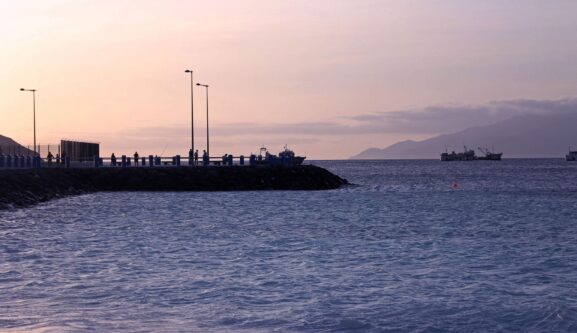
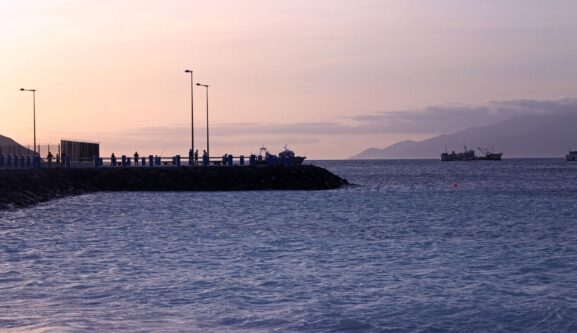
In the expansive waters of the central Atlantic, roughly 500 kilometers off the coast of West Africa, lies the Republic of Cabo Verde. This ten-island archipelago, a stable representative democracy and one of Africa’s most developed nations, occupies a unique geopolitical position. While geographically African and a foundational member of the African Union, Cabo Verde shares a profound historical, linguistic, and economic affinity with Europe—specifically the European Union (EU).
Central to this relationship is the Cotonou Agreement and the formalization of the EU-Cabo Verde Special Partnership. This arrangement is not merely a standard trade deal; it is a sophisticated diplomatic framework that distinguishes Cabo Verde from its neighbors and positions the archipelago as a bridge between two continents.
The Foundations: Why a Special Partnership?
The relationship between Cabo Verde and the EU is rooted in centuries of shared history. Discovered by Portuguese and Genoese navigators in the 15th century, Cabo Verde was the site of the first permanent European settlement in the tropics (Cidade Velha). Today, the official language remains Portuguese, and the nation is a pillar of the Lusophone Commonwealth (CPLP).
However, the modern “Special Partnership,” launched in 2007, was driven by contemporary realities. Unlike many of its continental neighbors, Cabo Verde lacks significant natural resources and possesses a service-oriented economy highly dependent on tourism and foreign investment. Recognizing its vulnerability as a Small Island Developing State (SIDS) and its exemplary record in governance, the EU granted Cabo Verde a status that goes beyond the standard Cotonou Agreement parameters.
A Currency Linked to the Euro
One of the most significant pillars of this partnership is monetary stability. The Cabo Verdean escudo (CVE) is pegged to the Euro. This fixed exchange rate provides a bedrock of economic predictability, facilitating trade and investment from the Eurozone, which remains Cabo Verde’s largest trading partner and source of tourists.
The Cotonou Agreement and Beyond
The Cotonou Agreement, signed in 2000, served as the overarching framework for relations between the EU and the African, Caribbean, and Pacific (ACP) Group of States. While dozens of nations fall under this umbrella, Cabo Verde’s “Special Partnership” status within this framework is unique in Africa. It focuses on six priority pillars:
- Good Governance: Reinforcing the democratic institutions that make Cabo Verde one of the most stable nations in the world.
- Security and Stability: Cooperation on maritime safety and the fight against organized crime.
- Technical and Regulatory Convergence: Aligning Cabo Verde’s legal and technical standards with those of the EU to facilitate easier market access.
- Regional Integration: Utilizing Cabo Verde’s position in the Macaronesia ecoregion.
- Knowledge-Based Society: Investing in education, research, and innovation.
- Poverty Alleviation and Development: Sustaining the country’s rise in the Human Development Index.
Security: A Gateway to the Atlantic
Given its strategic location across mid-Atlantic shipping lanes, Cabo Verde is a vital partner for European security. The archipelago has historically been a re-supply point for global routes, a role that continues today in the fight against illicit trafficking. The “Special Partnership” has allowed for deep cooperation between the Cabo Verdean Coast Guard and European agencies.
For example, Operation Flying Launch (Operacão Lancha Voadora) demonstrated the effectiveness of this security coordination, successfully dismantling international drug syndicates using the islands as a transit point between South America and Europe. By securing Cabo Verdean waters, the EU is effectively securing its own southern maritime border.
The Macaronesia Connection: A European Neighborhood?
An intriguing aspect of Cabo Verde’s status is its membership in Macaronesia. This ecoregion includes the Azores and Madeira (Portugal) and the Canary Islands (Spain). Because these other island chains are “Outermost Regions” of the EU, Cabo Verde effectively shares a biological and geographical “neighborhood” with the European Union.
This geographic proximity has led to frequent discussions about Cabo Verde’s future status. While it remains a proud member of the African Union, its political elite and its vast diaspora (which outnumbers the domestic population and resides largely in Portugal and the U.S.) have often floated the idea of “Special Member” status or even closer integration similar to that of European microstates.
Climate Change and Renewable Energy
As the eighth most endangered nation due to climate change-related flooding, Cabo Verde has used its EU partnership to lead the charge in green energy. The EU provides significant technical and financial assistance to help Cabo Verde reach its goal of 50% renewable energy by 2030. In a landmark 2023 deal, Portugal agreed to forgive €140 million of debt in exchange for Cabo Verde investing those funds into environmental and climate projects—a “debt-for-nature swap” that serves as a model for the region.
Practical Information for the International Community
For investors and travelers, the Special Partnership offers several advantages:
1. Stability and Safety
Cabo Verde is consistently ranked as one of the safest and most democratic countries in Africa. The EU partnership bolsters this by ensuring high standards of judicial and political transparency.
2. Visa Facilitation
In recent years, the EU and Cabo Verde have signed visa facilitation agreements, making it easier for Cabo Verdean citizens to travel to the Schengen Area and for European professionals to contribute to the archipelago’s development.
3. Investment Environment
With the escudo pegged to the Euro and a government committed to regulatory convergence with EU standards, Cabo Verde offers a lower-risk environment for foreign direct investment (FDI) compared to many emerging markets.
Conclusion: A Model for the Future
The Special Partnership between Cabo Verde and the EU represents a modern approach to diplomacy. It moves beyond the old “donor-recipient” dynamic into a collaborative relationship based on shared security, economic integration, and environmental stewardship. As the archipelago continues to develop its tourism sector and navigate the challenges of climate change, its special status within the legacy of the Cotonou Agreement remains its most potent tool for growth, proving that even a small island nation can play a massive role on the global stage.
Image: Pexels – Werner Pfennig