Espírito de Fidjinho: Cape Verde’s Sacred Newborn Rituals
In the quiet, breeze-swept hills of Santo Antão and the bustling neighborhoods of Praia, a centuries-old tapestry of belief continues to shape the first moments of life for Cape Verdean newborns. While modern neonatology has found its place in the archipelago, it exists alongside a deeply rooted spiritual framework. At the heart of this cultural intersection lies the enigmatic concept of the ‘Espírito de Fidjinho’ and the ritualistic ‘Primeiro Banho’ (First Bath)—a set of practices designed to shield the vulnerable from the “evil eye” and tether the new soul to the wisdom of the ancestors.
The Essence of ‘Fidjinho’: More Than Just a Child
To understand these rituals, one must first grasp the linguistic and spiritual weight of the word Fidjinho. A diminutive of filho (son/child) in Cape Verdean Creole (Kriolu), it carries a connotation of extreme preciousness and fragility. In Cape Verdean cosmology, a newborn is not yet fully “of this world.” They exist in a liminal space, still carrying the scent of the divine or the ancestral realm.
The Espírito de Fidjinho refers to the innate spiritual aura of the infant. It is believed that because a baby’s spirit is so “open” and pure, it acts as a magnet for both benevolent and malevolent forces. This belief system dictates that the child must be systematically “closed” or protected through a series of rituals to ensure they are not reclaimed by the spirits or harmed by the unconscious envy of the living.
The Ritual of the ‘Primeiro Banho’: A Sacred Alchemy
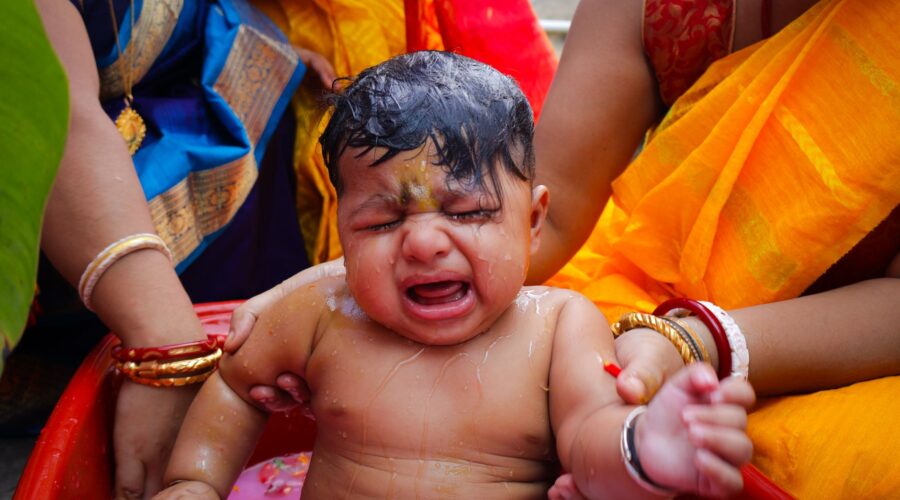
The Primeiro Banho is far more than a matter of hygiene; it is the child’s first major rite of passage. Traditionally performed by a madrinha (godmother) or a curandeira (traditional healer/midwife), the bath is a sensory experience intended to fortify the infant’s physical and spiritual body.
The Ingredients of Protection
The water used for the first bath is rarely just water. It is often infused with a cocktail of symbolic elements:
- Aromatic Herbs: Rue (arruda), rosemary, or local plants like losna are used to cleanse the aura and ward off negative energies.
- Silver and Gold: It is common to place a silver coin or a gold ring in the basin. This is thought to ensure future prosperity and to give the child “weight” in the world, preventing them from being easily “blown away” by spiritual winds.
- The Rosary: In a blend of Catholic and animist traditions, a rosary may be dipped in the water to invoke the protection of the Virgin Mary and the Saints.
The Act of ‘Strengthening’
During the bath, the elder performing the ritual often recites soft prayers or incantations. They may meticulously massage the baby’s limbs, “shaping” the soft bones and ensuring the child grows strong. The water is poured in a specific manner, often from the head downwards, symbolizing the washing away of any lingering shadows from the birth process. Once finished, the bathwater is not simply tossed out; it is traditionally disposed of in a “clean” place, such as under a fruit-bearing tree, to ensure the child’s life is fertile and productive.
Shielding the ‘Fidjinho’ from the Mau Olhado (Evil Eye)
In Cape Verdean culture, the greatest threat to a newborn is Mau Olhado or Quebranto. Interestingly, this is not always believed to come from a place of malice. Even “heavy” or overly enthusiastic admiration from a stranger can inadvertently sap the energy of a Fidjinho, causing them to fall ill, lose sleep, or cry inconsolably.
To combat this, the Espírito de Fidjinho is protected by several traditional markers:
The ‘Pano de Terra’
The Pano de Terra, a hand-woven traditional textile with intricate geometric patterns, is often used to wrap the baby. Beyond its warmth, the cloth serves as a cultural shield. The patterns themselves are sometimes believed to confuse negative spirits, acting as a labyrinth that prevents them from reaching the child.
Amulets and the ‘Figa’
Visitors to Cape Verde will often see newborns wearing a tiny black or red bracelet, often featuring a Figa (a small fist charm). This is a primary defense against the evil eye. Another common practice is the Sinal da Cruz (Sign of the Cross) made with a soot-blackened finger on the baby’s forehead or the soles of their feet, effectively “masking” the child from spiritual predators.
The Seven-Day Vigil: ‘Sétima Noite’
The protection of the Fidjinho reaches its crescendo on the Sétima Noite (Seventh Night). Historically, infant mortality was high, and it was believed that if a child survived the first seven days, their spirit had decided to stay in the physical world. On this night, family and neighbors gather for a celebration. While it is a joyous occasion with music and food, its origins are protective. The noise and the communal presence serve to keep “the shadows” away while the child’s spirit finally anchors itself to the family lineage.
Ancestral Blessings: Bridging the Gap
The rituals surrounding the Fidjinho are not merely defensive; they are celebratory links to the ancestors. In Cape Verde, a child is often named after a grandparent or a deceased relative. By invoking these names during the first bath or the seventh-night rituals, the family is asking the ancestors to act as the child’s primary guardians.
This “ancestral blessing” is what gives the Fidjinho their identity. It is a declaration that the child belongs to a specific community, a specific history, and a specific soil. Even for Cape Verdeans living in the diaspora—in Boston, Lisbon, or Paris—these rituals are often maintained, albeit in modified forms, to ensure the child remains connected to their Morabeza (the soul of Cape Verdean hospitality and identity).
The Modern Context: Tradition Meets Medicine
Today, Cape Verdean parents are increasingly likely to follow modern medical advice, ensuring vaccinations and hospital births. However, the Espírito de Fidjinho has not vanished. It is common for a mother to return from a sterile hospital environment and immediately perform a simplified version of the Primeiro Banho or pin a small protective ribbon to the baby’s crib.
This duality reflects the resilience of Cape Verdean culture. It suggests that while science can care for the body, ritual is required to care for the soul. The protection of the Fidjinho is a testament to the value placed on the next generation—not just as individuals, but as the continuing flame of a rich, creole heritage.
Conclusion: The Lasting Legacy of the First Bath
The rituals of the Espírito de Fidjinho and the Primeiro Banho offer a window into the Cape Verdean psyche—one that is deeply communal, spiritual, and protective. These practices remind us that every new life is a miracle that requires the support of the living, the wisdom of the herbs, and the blessings of those who came before.
For the visitor or the student of Atlantic cultures, understanding these beliefs is essential to understanding the “Mornas” and “Coladeiras” of life in the islands. It is a culture that recognizes the vulnerability of new beginnings and meets them with the strength of tradition, ensuring that every Fidjinho steps into the world wrapped in love, history, and a little bit of magic.
Image: Pexels – Mir Rajjak