Edmund Roberts: A 19th-Century American View of Cape Verde
In the early 1830s, the Atlantic Ocean was a vast theater of shifting geopolitical power and expanding maritime commerce. For the fledgling United States, establishing diplomatic and commercial ties with distant lands was a priority of the highest order. It was against this backdrop that Edmund Roberts, a merchant and diplomat from New Hampshire, set sail on a historic mission to the East. His first glimpse of the African coast was the volcanic archipelago of Cape Verde—a stop that would provide a fascinating 19th-century American perspective on a nation at a crossroads.
A Strategic Atlantic Hub
Cape Verde, or Cabo Verde as it was officially designated in 2013 to honor its Portuguese etymology, consists of ten volcanic islands located between 600 and 850 kilometers off the coast of West Africa. By the time Edmund Roberts arrived in 1832, the islands had already lived through several distinct eras of history. Discovered by Portuguese and Genoese navigators around 1456, the islands were uninhabited until Portuguese settlers founded Ribeira Grande (now Cidade Velha) in 1462, marking the first permanent European settlement in the tropics.
Roberts encountered an archipelago that was geologically ancient—dating back 40 to 50 million years—but economically strained. The islands’ strategic position had once made them a central pillar of the transatlantic slave trade during the 16th and 17th centuries. However, by the mid-19th century, the decline of this trade, coupled with persistent droughts and increased foreign competition, had plunged the islands into an economic crisis. Yet, their location remained invaluable for re-supplying ships traveling between Europe, the Americas, and the East.
The Diplomatic Lens: Roberts at Mindelo
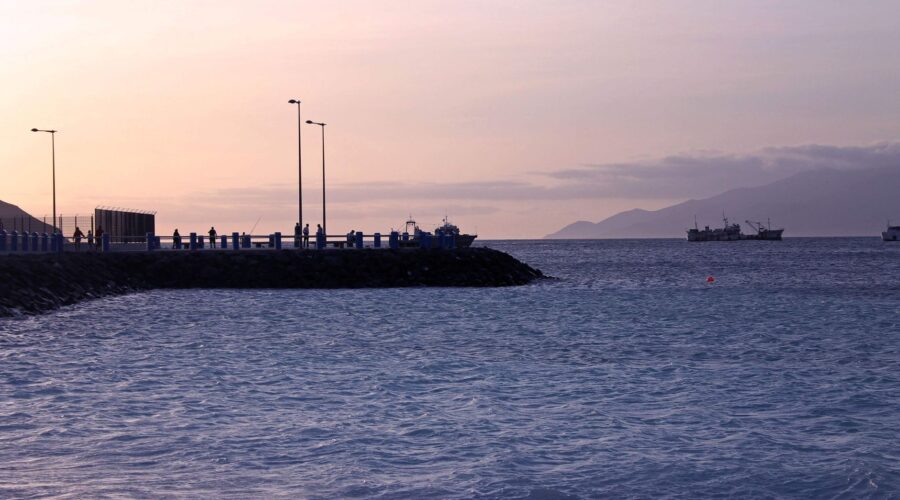
When Roberts anchored in 1832, he was part of a prestigious maritime tradition. That same year, Charles Darwin arrived aboard the HMS Beagle, making Cape Verde his first stop. For Roberts, the islands represented the gateway to the Atlantic shipping lanes. He focused his observations on the harbor of Mindelo on the island of São Vicente, which was rapidly becoming one of the most important commercial centers in the region due to its deep-water capabilities.
From an American perspective, Cape Verde was a land of stark contrasts. Roberts observed the rugged, volcanic terrain—a “horseshoe-shaped cluster” of islands formed from igneous rocks and pyroclastic debris. He would have seen the towering peak of Fogo, the region’s largest active volcano, and the extensive salt flats of Sal and Maio. These natural features were not just curiosities; they were indicators of the islands’ economic potential and their limitations.
A Society in Transition
The population Roberts encountered was a unique fusion of West African and Portuguese heritage, a demographic profile that remains central to Cape Verdean identity today. While Portuguese was the language of administration, the air was filled with Cape Verdean Creole (Crioulo), the national language born from the interaction of diverse cultures. Roberts witnessed a society that was resilient in the face of a harsh environment. With less than two percent of the land being arable, the survival of the inhabitants depended on maritime trade and the occasional heavy downpours of the August-to-October rainy season.
The 19th Century Crisis and American Interests
Roberts’ visit coincided with a period of “evaporating prosperity.” The early wealth driven by the trade of gold, ivory, and manufactured goods had faded. The mid-19th century was marked by what Roberts and his contemporaries viewed as a struggle against nature and colonial stagnation. The Portuguese authorities were often criticized for inadequate investment, a sentiment that would eventually fuel the nationalist movements of the 20th century led by figures like Amílcar Cabral.
For American diplomats, Cape Verde was a cautionary tale of colonial mismanagement but also a land of opportunity. The U.S. saw the islands as a vital link for the protection of American merchant vessels. The arid climate—milder than the African mainland due to the surrounding sea—and the absence of natural resources meant the islands had to survive on their wits and their location. Roberts’ reports helped frame the American understanding of the Sahelian semi-arid belt and the challenges of governing a territory so dependent on external shipping.
From Roberts to the Modern Era
If Edmund Roberts could see Cape Verde today, he would find a nation that has defied the grim projections of the 19th century. Since gaining independence in 1975, the Republic of Cabo Verde has transformed into one of Africa’s most stable and successful representative democracies. Ranking as a top democratic nation on the continent, it has shifted from a slave-trade hub to a service-oriented economy focused on tourism and foreign investment.
The Climate Challenge
Roberts might be surprised to learn that the islands he once visited are now at the “frontlines of the existential crisis” of climate change. As a leader in renewable energy in sub-Saharan Africa, Cape Verde aims to source 50% of its energy from renewables by 2030. The “debt-for-nature” swaps recently pioneered with Portugal reflect a sophisticated modern approach to the environmental challenges Roberts first documented in his journals.
Conclusion
The arrival of Edmund Roberts in 1832 was more than just a diplomatic footnote; it was a moment when the New World met one of the oldest European colonial outposts in the tropics. His perspective captured a nation in flux—caught between its dark history in the slave trade and its future as a vital maritime crossroads. Today, Cape Verde stands as a “real success story,” a testament to the resilience of a people who turned a remote volcanic archipelago into a beacon of democracy and sustainability in the Atlantic.
Quick Facts for the Modern Traveler
- Capital: Praia (located on the largest island, Santiago)
- Language: Portuguese (Official), Cape Verdean Creole (National)
- Geography: Part of the Macaronesia ecoregion, including the Azores and Canary Islands.
- Demographics: A sizeable diaspora exists, notably in the U.S. and Portugal, outnumbering the resident population of 530,000.
- Health Milestone: In 2024, Cape Verde was certified as malaria-free.
Image: Pexels – Ana Marta Jorge