
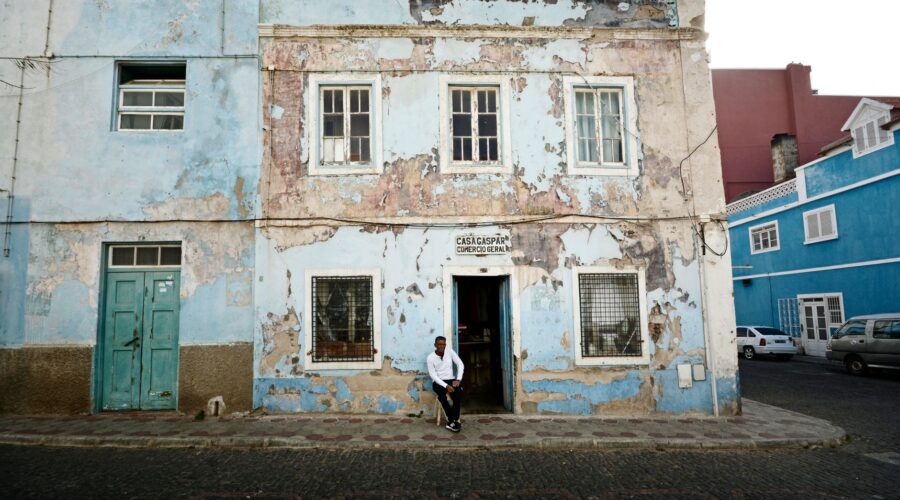
Claridade & Morna: Reclaiming Cape Verdean Identity
In the mid-1930s, the archipelago of Cape Verde was a colony adrift. Caught between the vast Atlantic Ocean and the rigid control of the Portuguese Estado Novo regime, the islands suffered from chronic droughts, famine, and a profound identity crisis. The educated elite were taught to look toward Lisbon for culture, language, and validation, effectively treating their own African roots and unique island traditions as “primitive” or non-existent.
However, in 1936, a group of young intellectuals in Mindelo, on the island of São Vicente, decided to change the narrative. This spark ignited the Claridade (Clarity) movement, a literary revolution that shifted the Cape Verdean gaze inward. At the heart of this cultural reclamation was a deep intellectual engagement with the Morna—the soulful, melancholic musical genre that would eventually become the islands’ national symbol. Through the “Mornas de Estreia” and the pages of their literary review, these thinkers didn’t just write poetry; they built a nation.
The Birth of Claridade: A Window to the Soul
The Claridade movement was founded by figures such as Baltasar Lopes da Silva, Manuel Lopes, and Jorge Barbosa. The publication of the first issue of the Claridade review in March 1936 marked a definitive “coming of age” for Cape Verdean literature. Before this, local writers mimicked European Parnassianism or Romanticism, writing about snow they had never seen and woods they had never walked through.
The “Claridosos,” as they were known, rejected this “literary colonialism.” They wanted to document the Cabo-verdianidade—the unique essence of being Cape Verdean. They focused on the “problem of the land” (the droughts and the arid landscape) and the “problem of the sea” (the longing for departure and the tragedy of emigration). To do this effectively, they turned to the most authentic expression of the people: the Morna.
The ‘Mornas de Estreia’: More Than Just Music
The term “Mornas de Estreia” (Debut Mornas) refers to a specific era of musical and lyrical evolution where the genre moved from simple folk tunes to sophisticated expressions of social and existential reality. While the Morna had existed since the 19th century—likely born on the island of Boavista and refined in Brava—it was the Claridade generation that elevated it to a scholarly subject of study and a pillar of identity.
For the intellectuals of Claridade, the Morna was the “mirror of the Cape Verdean soul.” They recognized that the music captured the inherent dualism of the islands: the Sodade (longing) for those who left, and the Querência (desire to stay) for those who remained. By analyzing and writing about the Mornas, intellectuals like Baltasar Lopes (who wrote under the pseudonym Osvaldo Alcântara) provided a theoretical framework for what the common person felt instinctively.
The Role of B. Léza and the Mindelo Connection
One cannot discuss the legacy of this era without mentioning Francisco Xavier da Cruz, better known as B. Léza. A contemporary of the Claridade writers, B. Léza revolutionized the Morna by introducing “passing chords” (influenced by Brazilian music), which gave the genre its signature weeping, sophisticated harmony.
The Claridade intellectuals embraced B. Léza’s innovations. His lyrics weren’t just songs; they were urban poems that captured the cosmopolitan yet isolated life of Mindelo’s port. The synergy between the poets of the review and the composers of the Mornas created a unified cultural front. They proved that Cape Verdean Creole (Kriolu) was a language capable of profound philosophical and emotional depth, challenging the colonial notion that it was merely a “corrupt” version of Portuguese.
Reclaiming Identity Through Regionalism
The Claridade movement was heavily influenced by the Brazilian Regionalist movement of the 1920s (such as the works of Jorge Amado and Gilberto Freyre). The Cape Verdean intellectuals saw a parallel between their struggle and Brazil’s effort to define itself apart from Portugal.
They began to document the customs, the food, the myths, and the oral traditions of the islands. This wasn’t just folklore; it was a political act of self-definition. By validating the Morna as a “classical” form of island expression, they were telling the colonial authorities that Cape Verde had a history and a culture that predated and existed independently of the administrative presence of Lisbon.
The Themes of Drought and Despair
While the Morna often deals with love and longing, the Claridade writers infused their work with the harsh realities of the “Island of the Sun.” The 1940s brought devastating famines to Cape Verde, and the literature of the time became a tool for social commentary. The “Mornas de Estreia” era saw the music move into themes of social justice, mourning for those lost to starvation, and the bitter-sweet hope of the “American dream” found via the whaling ships departing from the harbor.
The Legacy: From Claridade to Cesária Évora
The movement did more than just fill the pages of a short-lived review; it laid the groundwork for Cape Verdean independence (1975). By establishing a clear cultural identity, the Claridade generation provided the intellectual “spine” for the political activists who would follow, such as Amílcar Cabral.
In the decades that followed, the legacy of the Claridade and the Mornas de Estreia paved the way for the international recognition of Cape Verdean culture. When Cesária Évora took the Morna to the world’s greatest stages in the 1990s, she was standing on the shoulders of the intellectuals who, sixty years prior, had insisted that this music was a masterpiece of human expression.
Why the ‘Claridade’ Movement Matters Today
For the modern traveler or student of Lusophone culture, understanding Claridade is essential to understanding Cape Verde. It explains why a small ten-island nation has such an outsized cultural footprint. It explains the pride that Cape Verdeans take in their language and their music.
The “Mornas de Estreia” taught the world that Sodade is not just sadness—it is a sophisticated emotional state born of a specific geography and history. The intellectuals of the 1930s successfully reclaimed their identity by refusing to be “Portuguese of the Tropics,” choosing instead to be, simply and authentically, Cape Verdean.
Key Takeaways for Cultural Travelers:
- Mindelo, São Vicente: Visit the “Café Royal” or the “Casa da Memória” to feel the echoes of the intellectual debates that shaped the movement.
- The Literary Review: Look for reprints of Claridade in local bookshops; even the cover art is a testament to the era’s aesthetic.
- Listen: To understand the “Mornas de Estreia” legacy, listen to the early compositions of B. Léza and the poetry of Jorge Barbosa.
In the end, the story of Claridade is a story of triumph over invisibility. It is a reminder that even in the most isolated corners of the world, literature and music have the power to liberate a people and define a nation’s soul.
Image: Pexels – damien Saillet