Cape Verde’s Blue Volcanic Cable: A Mid-Atlantic Data Hub
Rising from the depths of the Atlantic Ocean, the archipelago of Cape Verde (Cabo Verde) has long been defined by its isolation and its role as a maritime crossroads. However, in the 21st century, the nation is redefining its geography. No longer just a stopover for ships and aircraft, Cape Verde is positioning itself as a critical digital bridge between Africa, Europe, and the Americas. At the heart of this transformation is the “Blue Volcanic Cable” ecosystem—a sophisticated network of submarine fiber optics that is turning this volcanic chain into a strategic mid-Atlantic data hub.
The Mid-Atlantic Digital Crossroads
Cape Verde’s strategic location is its greatest natural resource. Situated approximately 570 kilometers off the coast of West Africa, it sits at the intersection of major global shipping lanes and, more importantly, undersea data routes. For decades, the country relied on the Atlantis-2 cable, but the explosion of the global digital economy necessitated a massive infrastructure upgrade.
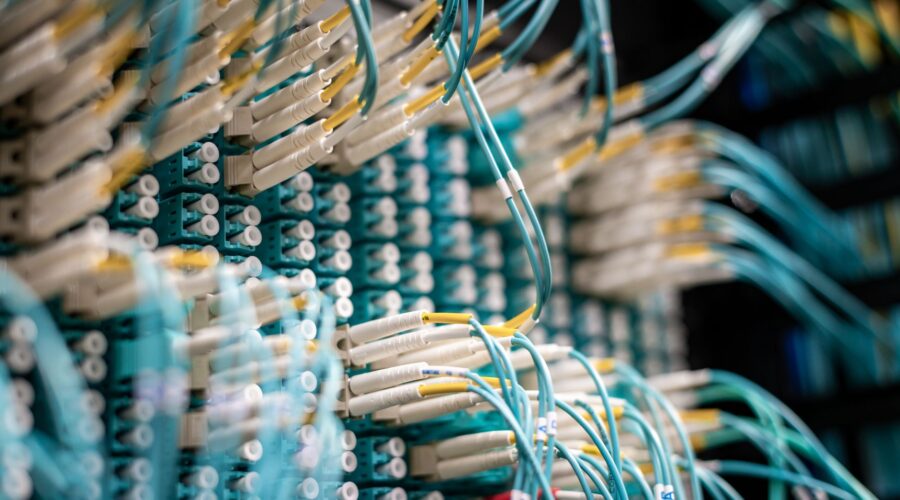
Today, Cape Verde is connected to several high-capacity international submarine cable systems, including WACS (West Africa Cable System) and EllaLink. The latter is a game-changer; it is the first high-capacity fiber optic cable to directly link Europe (Portugal) to South America (Brazil), with a critical landing station in Praia, Cape Verde’s capital. This connection allows for low-latency data transmission that bypasses the traditional, more congested routes through North America.
EllaLink and the EllaLink GeoLab
The arrival of the EllaLink system in 2021 marked a turning point for the archipelago. By providing a direct data highway to both Fortaleza and Sines, Cape Verde effectively became a digital “safe haven” in the middle of the ocean. But the impact goes beyond simple internet speed.
The “Blue” aspect of these cables isn’t just a marketing term; it refers to the integration of scientific research. The EllaLink GeoLab initiative uses distributed acoustic sensing (DAS) technology within the fiber optic cables to monitor the ocean floor. For a volcanic archipelago like Cape Verde, this provides invaluable real-time data on seismic activity and maritime conditions, merging telecommunications infrastructure with environmental safety and earth sciences.
EllaLink’s Impact on Connectivity
- Reduced Latency: Direct routes to Europe and South America significantly reduce the “ping” for businesses and gamers alike.
- Redundancy: With multiple cables (WACS, EllaLink, and upcoming projects), Cape Verde ensures that if one line is damaged, the nation stays online.
- Capacity: The modern infrastructure supports the massive bandwidth required for cloud computing and AI development.
The “Digital Hub” Strategy: Cabo Verde Digital
The government of Cape Verde, led by the Prime Minister’s vision of a “Cyber Islands” project, is not content with just hosting cables. They are building an entire ecosystem to support a digital economy. This strategy, branded as Cabo Verde Digital, aims to diversify the economy away from its heavy reliance on tourism (which accounts for roughly 25% of GDP).
Central to this is the Cabo Verde Technology Park, with hubs in Praia and Mindelo. These state-of-the-art facilities include Tier III data centers designed to host international companies looking for a neutral, stable, and well-connected location to store data. By offering tax incentives and a stable democratic environment, Cape Verde is courting tech startups and multinational corporations to use the islands as a regional base for West African operations.
Why Cape Verde? Stability in a Turbulent Region
In the world of submarine cables and data centers, physical security and political stability are just as important as fiber optic capacity. West Africa has faced periods of political volatility, but Cape Verde remains a beacon of democratic stability. It consistently ranks high on indices for press freedom, ease of doing business, and low corruption.
For international investors, Cape Verde offers a “European-standard” legal framework in a strategic African location. This makes it an ideal “landing zone” for data that needs to be distributed across the Economic Community of West African States (ECOWAS), a market of over 400 million people.
Economic Transformation and Social Impact
The transition to a data hub is already trickling down to the local population. Improved connectivity has facilitated the rise of remote work and the “Digital Nomad” visa program, which Cape Verde launched during the pandemic. Professionals from around the world are now moving to the islands of Sal and São Vicente, bringing their expertise and foreign currency, while relying on the robust fiber optic infrastructure to stay connected to global offices.
Furthermore, the government is investing in “digital literacy” to ensure that the youth—who make up a large portion of the population—can participate in the new economy. From coding bootcamps to university programs focused on cybersecurity, the goal is to create a workforce that can maintain the very cables and servers that now crisscross their seabed.
Challenges on the Horizon
Despite the progress, challenges remain. The cost of domestic internet in Cape Verde, while decreasing, is still relatively high for the average citizen compared to global standards. Additionally, maintaining sophisticated undersea infrastructure requires constant investment and protection from threats like commercial fishing trawlers or underwater landslides in the volcanic terrain.
Moreover, Cape Verde faces stiff competition from other regional players like Senegal and Nigeria, who are also racing to become the dominant digital gateways for West Africa. Cape Verde’s edge lies in its unique position as an Atlantic “mid-point” and its unmatched political stability.
Conclusion: The Future is Fiber
The “Blue Volcanic Cable” is more than just glass and light; it is a lifeline for the future. By weaving itself into the fabric of the global internet, Cape Verde is successfully shrinking the vast distances of the Atlantic. The islands are no longer isolated outposts, but central nodes in a global network.
As the world moves toward 5G, the Internet of Things (IoT), and increased AI integration, the demand for low-latency, secure data routes will only grow. Cape Verde, with its volcanic peaks reaching toward the sky and its fiber optic cables reaching across the ocean floor, is perfectly positioned to be the digital heart of the Mid-Atlantic.
Quick Facts: Cape Verde’s Digital Infrastructure
- Major Cables: WACS, Atlantis-2, EllaLink, and the upcoming Amílcar Cabral cable.
- Strategic Advantage: Direct link between Europe and South America with the lowest latency in the region.
- Data Security: Tier III Data Centers in Praia and Mindelo.
- Economic Goal: To have the digital economy contribute 25% of GDP by 2030.
Image: Pexels – Brett Sayles