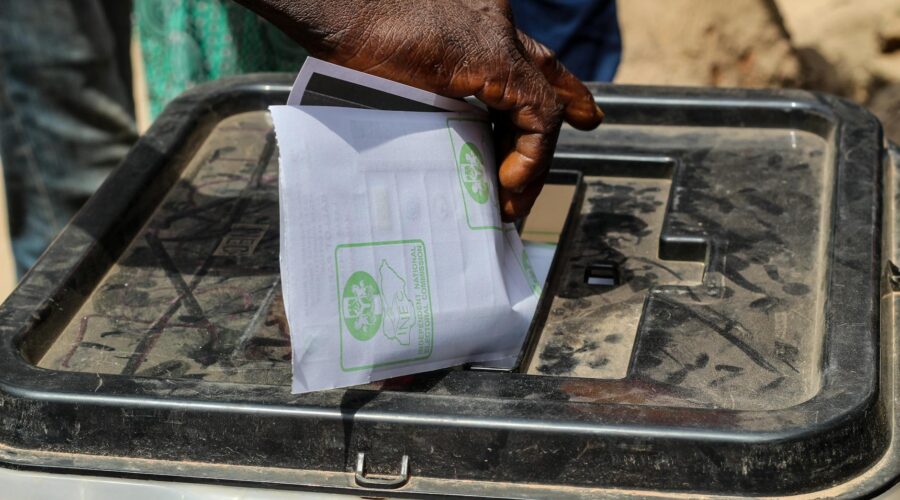
Cape Verde Elections: Parties Make Final Push for Seats
PRAIA, Cape Verde — Political parties in Cape Verde are entering the final hours of a high-stakes campaign ahead of Sunday’s legislative elections, with leaders making their last appeals for support before the midnight deadline on Friday.
The island nation will observe a “day of reflection” on Saturday, during which all campaigning is prohibited, before polling stations open across the archipelago and the diaspora on Sunday morning. At stake are 72 seats in the National Assembly and the direction of one of Africa’s most stable democracies.
The Battle of the Titans
Prime Minister Ulisses Correia e Silva, leader of the Movement for Democracy (MpD), is seeking a historic third consecutive term. Anchoring his campaign on his administration’s crisis management, Silva highlighted the government’s response to severe drought and the COVID-19 pandemic. “We chose to put people first during difficult times,” Silva stated in a social media address. “Now, the path is to continue forward with responsibility and hard work.”
Challenging the status quo is the main opposition party, the African Party for the Independence of Cape Verde (PAICV), led by Francisco Carvalho. Carvalho, who also serves as the Mayor of Praia, has centered his platform on the need for renewal. “After years of promises and abandonment, Cape Verde has the opportunity to choose a new path,” Carvalho said, pledging increased opportunities for the youth and more balanced development across the various islands.
Changing the Political Landscape
While the MpD and PAICV have alternated power with absolute majorities since 1991, the Independent and Democratic Cape Verdean Union (UCID) is fighting to break the two-party duopoly. Positioning itself as a potential “kingmaker,” UCID hopes to deny the major parties a majority, forcing a coalition government. Alberto Mello, UCID’s lead candidate for the Santiago Sul district, emphasized a grassroots approach, ending the campaign with community cleaning activities in the capital.
Two smaller parties, the Popular Party (PP) and the People, Work and Solidarity party (PTS), are also vying for their first-ever seats in parliament, contesting roughly half of the electoral districts.
By the Numbers: A Growing Electorate
The National Elections Commission (CNE) confirmed a diverse field of 556 candidates, with significant progress in gender representation. Under the nation’s parity law, women now make up 47.1% of all candidates. The ballot also reflects a generational shift, with 40% of candidates under the age of 40.
Approximately 416,300 citizens are registered to vote, a 6% increase from the 2021 elections. This growth is particularly sharp among the diaspora, which now accounts for more than one-sixth of the total electorate. Election officials are closely watching turnout figures; abstention rates hit 42% in 2021 during the height of the pandemic, and parties are working hard to ensure voters return to the polls this Sunday.
Voting will take place between 08:00 and 18:00 local time, as the country decides whether to stay the course or embrace a new political era.
Image: Pexels – Fatima Yusuf