Canja de Apoio: The Healing Ritual of Cape Verdean Soup
In the heart of a Cape Verdean home, the kitchen is more than a place of sustenance; it is a sanctuary of restoration. While the world may know Cape Verde for its soulful morna music or its hearty national dish, cachupa, there is one culinary ritual that speaks more deeply to the islanders’ communal soul: the Canja de Galinha. But in Cabo Verde, this isn’t just a bowl of chicken soup. It is the cornerstone of the ‘Canja de Apoio’ (Support Soup) tradition—a complex social ritual that bridges the gap between physical healing and emotional solidarity.
From the rugged mountains of Santo Antão to the vibrant streets of Praia, the preparation and consumption of Canja serve as a vital language of care during life’s most vulnerable transitions: the arrival of new life and the departure of a loved one. To understand Canja is to understand the Cape Verdean philosophy of morabeza—the legendary hospitality and social warmth that defines the archipelago.
The Anatomy of Healing: What Makes a Cape Verdean Canja?
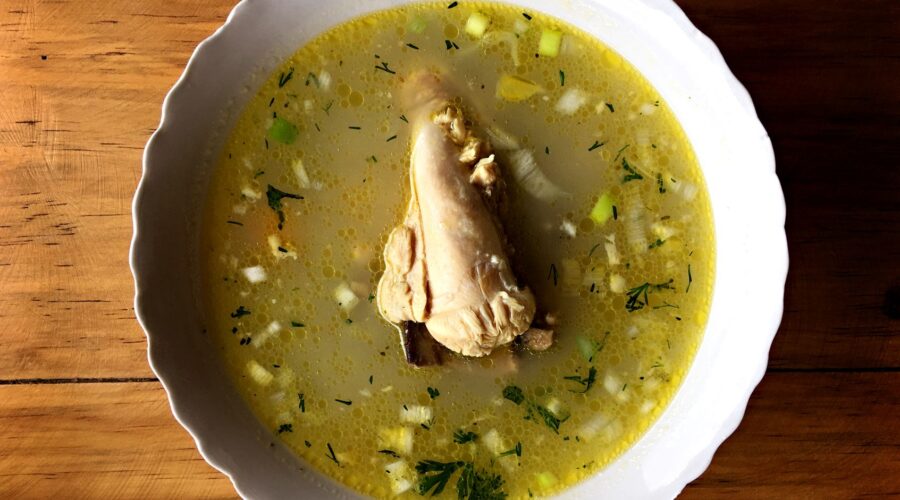
Unlike the thick, noodle-heavy chicken soups found in the United States or the medicinal broths of Asia, Cape Verdean Canja is distinct in its simplicity and texture. It is a rice-based soup, cooked until the grains are soft and the broth is rich with the collagen and fat of a “home-raised” chicken (galinha de terra).
The ingredients are humble—chicken, rice, onions, garlic, and perhaps a hint of bay leaf or piri-piri. However, the secret lies in the bird itself. For a true ritual Canja, a commercial broiler will not do. The tradition demands a free-range hen, prized for its tougher meat and more flavorful, nutrient-dense fat. This golden fat is culturally significant; it is seen as the “medicine” that coats the stomach and restores “warmth” to a body that has been weakened by trauma or labor.
Canja de Apoio in Postpartum: The ‘Resguardo’ Ritual
In Cape Verdean culture, the period following childbirth is known as the resguardo (the protection). For forty days, the new mother is expected to rest, recover, and bond with her infant. During this time, the “Canja de Apoio” becomes her primary source of nutrition.
Restoring the ‘Calor’ (Heat)
Traditional Cape Verdean medicine follows a hot-cold equilibrium. Birth is viewed as a process that leaves the mother’s body “open” and “cold.” Canja, served steaming hot and enriched with the oils of the chicken, is believed to close the body and restore internal heat. It is thought to stimulate milk production (lactogenic properties) and provide the protein necessary to repair tissue.
A Social Shield
The “Apoio” (support) aspect refers to the network of women—mothers, aunts, and neighbors—who descend upon the home to cook the soup. By taking over the kitchen, the community enforces the mother’s rest. When visitors come to see the new baby, they are often served a small bowl of Canja. This communal eating signifies that the child is not just born to a couple, but to a community that is now “nourished” by the news.
The Soup of Solace: Canja in Mourning Rites
While the birth Canja is celebratory, the mourning Canja is a somber necessity. In Cape Verde, funeral rites are deeply communal and often span several days. When a death occurs, the family is considered too consumed by grief to perform the basic tasks of survival, such as cooking.
Feeding the Grief
As soon as news of a death spreads, neighbors arrive with live chickens and sacks of rice. The “Canja de Apoio” is prepared in massive pots to feed the mourners who gather for the wake (velório). In this context, the soup serves a practical purpose: it is easy to swallow for those whose throats are constricted by grief, and it provides sustained energy for those sitting through the night in vigil.
The Symbolism of the ‘Seventh Day’
The ritual reaches its peak during the Sétimo Dia (Seventh Day) mass. After the religious service, the community returns to the family home. Serving Canja here acts as a transition point. It acknowledges the collective pain but also signals the beginning of the family’s reintegration into the rhythm of daily life. To accept a bowl of soup from a grieving widow is an act of shared burden-bearing.
The Gendered Geography of the Soup Pot
The Canja de Apoio is an inherently matriarchal tradition. While the men may provide the chicken or handle the logistical arrangements of a funeral or a baptism, it is the women who hold the “power of the ladle.” The kitchen becomes a space where ancestral knowledge is passed down—how to clean the bird, how much rice to add so the broth remains light, and how to serve the most nutritious parts of the meat to those who need it most.
In the diaspora—from the fox-hole neighborhoods of Lisbon to the Cape Verdean enclaves in Pawtucket and Brockton—this tradition remains a vital link to the islands. Even when Cape Verdeans move abroad, the first thing a neighbor brings to a grieving house or a new mother is a Tupperware container of warm Canja. It is a portable piece of the homeland, a liquid embrace that says, “You are not alone.”
Why Canja Persists in the Modern Era
In an age of instant meals and modern hospitals, the persistence of the Canja de Apoio might seem nostalgic. However, its survival is rooted in its efficacy as a social lubricant. Modern medicine can provide the calories, but it cannot provide the apoio.
The ritual serves three critical functions for the modern Cape Verdean:
- Identity Affirmation: It reinforces what it means to be Cape Verdean—a person who belongs to a collective.
- Stress Reduction: By removing the burden of food preparation, the ritual lowers the cortisol levels of those in crisis.
- Economic Mutualism: It is a form of informal insurance. You cook for your neighbor today, knowing they will cook for you tomorrow.
Conclusion: More Than a Meal
The Canja de Apoio is a testament to the resilience of Cape Verdean culture. It is a tradition that recognizes that humans do not just need vitamins and minerals to survive; we need to feel seen, held, and fed by our tribe. Whether it is the first meal a mother eats after the labor of birth or the only meal a grieving son can stomach after a loss, the golden broth of the Canja remains the ultimate symbol of Cape Verdean love.
The next time you find yourself in a Cape Verdean home and a bowl of rice-heavy chicken soup is placed before you, know that you are not just being offered food. You are being invited into a centuries-old circle of support, a ritual of healing that proves, in the face of life’s greatest challenges, the simplest ingredients are often the most powerful.
Image: Pexels – DΛVΞ GΛRCIΛ