Banco de Socorro: Cape Verde’s Traditional Micro-Credit System
In the vibrant markets of Praia and the quiet mountain villages of Santo Antão, a silent but powerful economic engine hums beneath the surface of Cape Verdean society. While the archipelago’s modern banking sector continues to expand, the backbone of many households remains an age-old, informal financial system known as Banco de Socorro (literally “Help Bank”) or Djunta-Mon (Joining Hands).
For generations, Cape Verdean women have bypassed the bureaucratic hurdles of traditional banks to build their own micro-credit circles. These informal savings pools are not just about money; they are a testament to the resilience, social cohesion, and entrepreneurial spirit of the “Mulher Caboverdiana.” Understanding how the Banco de Socorro operates offers a window into the unique social fabric of this Atlantic nation.
What is the Banco de Socorro?
The Banco de Socorro is a form of Rotating Savings and Credit Association (ROSCA). In its simplest form, a group of trusted individuals—usually women from the same neighborhood, market stall area, or extended family—agrees to contribute a fixed amount of money into a common pot at regular intervals (daily, weekly, or monthly).
At each interval, the total sum collected is given to one member of the group. This continues until every member has received the “payout,” at which point the cycle typically repeats. There are no interest rates, no credit checks, and no collateral required other than one’s reputation and “palavra de honra” (word of honor).
The Mechanics of Trust
Unlike a commercial loan, the Banco de Socorro is built entirely on social capital. Because the members are often friends or colleagues, the pressure to pay on time is immense. To fail to pay is not just a financial lapse; it is a betrayal of the community. This high level of social accountability results in surprisingly low default rates, often outperforming the repayment statistics of formal microfinance institutions.
The Cultural Heart of Cabo Verde: Solidarity and ‘Djunta-Mon’
The concept of the Banco de Socorro is deeply rooted in the Cape Verdean philosophy of Djunta-Mon. In a country with a history of drought, isolation, and limited resources, survival has always depended on collective effort. Whether it was building a neighbor’s house or harvesting crops, Cape Verdeans have always “joined hands.”
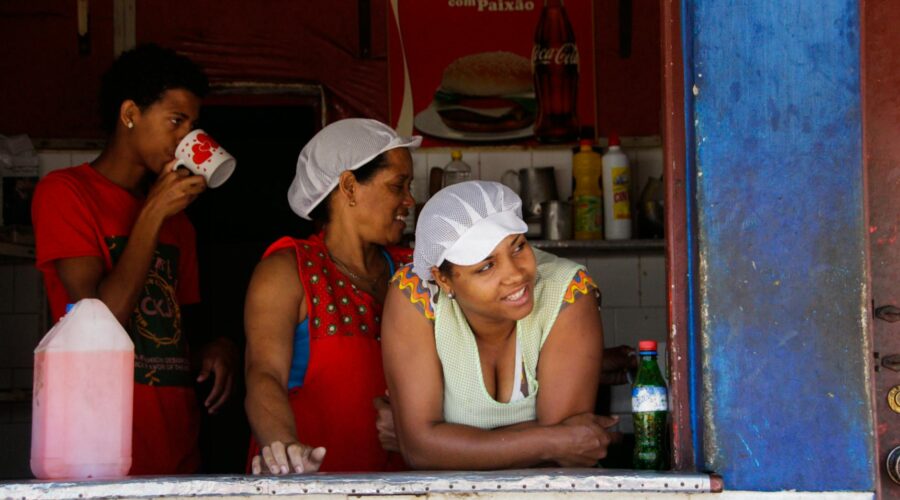
Historically, women have been the primary managers of these circles. In Cape Verdean culture, the woman is often the Dona de Casa (head of household) and the Rabidante (informal trader). While men often migrated abroad for work, the women stayed to manage the domestic economy. The Banco de Socorro became their tool for financial independence, allowing them to fund everything from school fees and medical emergencies to the startup costs of a small business.
Why Women Choose Informal Savings Over Formal Banks
One might wonder why, in an era of mobile banking and international finance, these informal circles remain so popular in Cape Verde. Several factors contribute to their ongoing relevance:
1. Accessibility and Speed
Opening a bank account in Cape Verde can involve paperwork, ID requirements, and sometimes maintenance fees that are prohibitive for those in the informal economy. In a Banco de Socorro, the only requirement is being known and trusted by the group. When a member’s “turn” comes, they receive a lump sum immediately, without the weeks of processing time required for a small business loan.
2. Forced Savings
For many Cape Verdean women, the Banco de Socorro acts as a “disciplined savings” mechanism. It is easier to set aside a small daily amount when you know your neighbors are counting on you, rather than trying to save that same money in a drawer at home where it might be spent on immediate, non-essential needs.
3. The Social Component
Meetings to collect contributions often double as social gatherings. It is a time for women to share news, offer emotional support, and network. These circles serve as a safety net—the “Socorro” (help) in the name refers to the fact that if a member suffers a sudden tragedy, the group will often vote to move that person to the front of the line for the next payout.
The Impact on the Local Economy
The economic impact of the Banco de Socorro is significant, though often invisible in official GDP statistics. Much of the vibrant informal trade seen in the markets of Assomada or Mindelo is funded by these circles.
A Rabidante might use her payout to travel to Dakar or Fortaleza to buy clothes and household goods to resell in Cape Verde. Another woman might use the funds to buy a professional sewing machine or to pay the deposit on a small storefront. By providing a source of interest-free capital, the Banco de Socorro fuels micro-entrepreneurship and poverty Alleviation across the islands.
Modern Challenges and the Future of the Tradition
Despite its resilience, the Banco de Socorro faces challenges in the 21st century. Rapid urbanization and the loosening of traditional community ties in cities like Praia can sometimes weaken the trust that these circles rely on. Additionally, the rise of digital payment platforms and micro-credit apps offers new competition.
However, many experts believe the tradition will evolve rather than disappear. We are already seeing “hybrid” models where members use bank transfers or mobile money to make their contributions, while maintaining the informal, trust-based structure of the group.
The Lessons for Global Microfinance
International development organizations have long looked at Cape Verde’s informal circles as a model for sustainable micro-credit. The success of the Banco de Socorro proves that financial inclusion is not just about technology or lowering interest rates—it is about understanding the social bonds that make people feel responsible for one another.
Practical Information for Visitors and Researchers
If you are visiting Cape Verde, you won’t see “Banco de Socorro” signs on buildings. It is a private, community-based practice. However, if you spend time in local markets, you will notice women neatly recording entries in small notebooks or handing over bundles of Escudos (the local currency). This is the heartbeat of the local economy in action.
For those interested in Cape Verdean culture, the Banco de Socorro is a reminder that the country’s greatest asset is not its beautiful beaches or its famous Morna music—it is the unwavering solidarity of its people. The next time you buy a piece of fruit or a handmade craft in a Cape Verdean market, there is a good chance that the business behind it was built, one Escudo at a time, through a “Help Bank.”
Conclusion
The Banco de Socorro is more than a financial tool; it is a cultural monument. It represents the agency of women who, faced with systemic barriers, created their own systems of growth and security. In the face of globalization, these informal micro-credit circles remain a powerful symbol of Cape Verdean identity—a testament to the fact that when a community joins hands, everyone rises together.
Image: Pexels – Thomas Schwaak