Badiu Blacksmiths: Ancestral Iron Forging in Santiago
In the rugged, sun-drenched interior of Santiago, the largest island in the Cape Verdean archipelago, a rhythmic metallic clang echoes through the valleys of Santa Catarina and Picos. This sound is the heartbeat of a fading but defiant tradition: the art of the Badiu blacksmith. For centuries, these master craftsmen have transformed scrap metal into the essential tools of survival, blending West African metallurgical heritage with the necessities of Atlantic island life.
To understand the Badiu blacksmith is to understand the soul of Santiago. The term “Badiu” historically refers to the inhabitants of the island’s interior—descendants of enslaved Africans who escaped the coastal colonial centers to form independent agricultural communities in the mountains. In these isolated highlands, self-reliance was not a choice but a necessity, and the blacksmith became the architect of that independence.
The Ancestral Origins: From West Africa to the Atlantic
The roots of iron forging in Cape Verde are deeply embedded in the soil of the African continent. When the Portuguese settled the uninhabited islands in the 15th century, they brought enslaved people from the Upper Guinea Coast—regions modernly known as Senegal, Guinea-Bissau, and Guinea-Conakry. These regions were home to renowned blacksmith castes, such as the Numu or Mande smiths, who held high social and spiritual status.
In the interior of Santiago, these ancestral techniques were adapted. Unlike European blacksmithing of the era, which relied on large industrial bellows and specialized coal, the Badiu smiths specialized in “creative recycling” long before the term existed. They integrated West African forge designs—often ground-level hearths—with European tool shapes, creating a unique syncretism that allowed the Badiu culture to flourish despite the scarcity of raw iron ore on the islands.
The Forge: A Space of Alchemy and Community
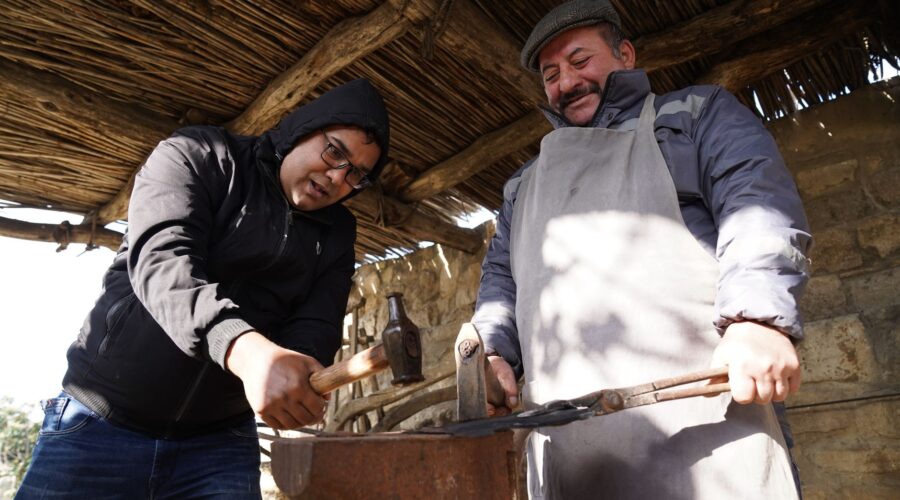
A traditional Badiu oficina (workshop) is often a modest structure made of stone or mud brick, tucked away from the main road. At its center lies the hearth, fueled by charcoal made from local acacia wood. The most striking element of the traditional setup is the manual bellows, often operated by an apprentice or a family member, providing a steady stream of oxygen to reach the white-hot temperatures required to soften steel.
The process is grueling. Working in intense heat, the smith uses a heavy sledgehammer to beat glowing metal against an anvil—which is often an repurposed piece of industrial machinery or a heavy block of iron found at the shipyards of Praia. There is a specific language to the forge: the “singing” of the hammer on the anvil tells the smith about the temperature and quality of the metal without the need for modern thermometers.
The Symbolic Tools of the Badiu
For the Badiu farmer, a tool is more than a piece of equipment; it is an extension of the arm and a symbol of dignity. Two tools, in particular, define the Badiu blacksmith’s repertoire:
- The Enxada (Hoe): In the steep, rocky slopes of Santiago, the heavy-duty hoe is the primary weapon against the dry earth. Badiu blacksmiths forge these to be significantly heavier and more durable than mass-produced versions, specifically balanced to handle the volcanic soil of the interior.
- The Cutelo (Machete): The cutelo is the quintessential Badiu tool. Used for everything from harvesting sugarcane to clearing brush and daily kitchen tasks, a custom-forged cutelo is a prized possession. The “Badiu style” machete often features a specific curvature and handle weight that reflects the owner’s height and grip.
The Symbolism of Iron in Santiago Culture
In the interior of Santiago, iron is more than a material; it carries weight in the social and spiritual fabric of the community. Historically, the blacksmith was a figure of mystery. The ability to “tame” fire and transform hard stone-like metal into sharp blades was seen as a form of alchemy. While much of the overt spiritualism associated with West African smithing was filtered through several centuries of Catholicism, a deep respect for the smith remains.
The tools forged in these workshops are central to the Batuku and Funaná—the traditional music genres of Santiago. The ferrinho, a notched metal bar played with a knife, is often crafted by these same blacksmiths. This instrument provides the driving, metallic rhythm of Funaná, a music style that was once suppressed by colonial authorities for being “too African” and rebellious. In this context, the blacksmith is not just a tool-maker, but a creator of the rhythms of resistance.
Challenges to a Living Heritage
Today, the Badiu blacksmiths face an existential threat. The influx of cheap, factory-made tools from China and Brazil has flooded the markets in towns like Assomada and Tarrafal. These mass-produced items are often brittle and lack the soul and specific “swing” of a hand-forged Badiu tool, yet their low price is tempting for impoverished farmers.
Furthermore, the younger generation is increasingly migrating to the capital, Praia, or abroad to Europe and the United States. The apprenticeship, which requires years of physical labor and a deep understanding of metallurgy, is becoming less attractive to a generation seeking digital-age opportunities. Many workshops in the interior are now operated by men in their 60s and 70s, raising fears that their specialized knowledge of tempering and folding metal will die with them.
Preservation and the Future
Despite these challenges, there is a growing movement within Cape Verde to recognize the Badiu blacksmiths as “Living Human Treasures.” Cultural organizations and the Ministry of Culture have begun documenting their techniques as part of the country’s intangible cultural heritage. There is also a niche but growing interest from the tourism sector, as travelers seek authentic experiences in the Santiago highlands.
In the village of Picos, some smiths are finding new life by pivoting to artistic metalwork, creating sculptures and decorative gates that utilize traditional forging techniques for a new market. However, for the true Badiu smith, the greatest pride remains seeing a farmer walk into the shop with a dull, decades-old hoe and walking out with a blade that has been beaten, tempered, and reborn—ready to strike the earth for another generation.
Practical Information for Visitors
If you wish to witness these ancestral techniques firsthand, a trip to the interior of Santiago is essential.
- Where to go: The region of Santa Catarina (specifically around Assomada) and São Salvador do Mundo (Picos) are the best places to find active workshops.
- Market Days: Visit the Assomada market on Wednesdays or Saturdays. You will see the blacksmiths or their families selling hand-forged tools, easily distinguishable from factory imports by their weight and hammer marks.
- Etiquette: If you visit a workshop, always ask for permission before taking photos. Many smiths are proud to demonstrate their craft, but remember that this is a place of labor, not a museum. Buying a small piece of metalwork or a ferrinho is a great way to support the craft.
The Badiu blacksmiths are more than mere laborers; they are the keepers of a fire that has burned for centuries. Their work stands as a testament to the resilience of the Cape Verdean spirit—a spirit that takes the scraps of the world and forges them into something strong, sharp, and enduring.
Image: Pexels – Tahir Xəlfəquliyev