
Azores Bids for Portugal’s National Underwater Museum
Boasting a maritime history unlike any other in Portugal, the Azores archipelago is making a powerful bid to become the home of the National Museum of Nautical and Underwater Archaeology. A group of citizens, backed by more than 3,000 signatures and a unanimous vote from the regional parliament, is calling on the national government to recognize the islands as the rightful custodians of this heritage.
A “Popular Base” for a National Institution
The movement is spearheaded by archaeologist José Luís Neto, whose petition has united residents across all islands. In May, the Regional Assembly of the Azores showed total solidarity with the cause, with every political party signing a joint resolution recommending that the central government establish the museum in the archipelago.
Despite the institutional support, Neto emphasizes that the project belongs to the people. “Beyond institutional bodies, it needs to belong to the inhabitants; otherwise, it will never be truly national,” Neto told Lusa News Agency. He believes that placing a national museum outside mainland Portugal for the first time would force a healthy transformation in how the country perceives its own unity and geography.
The Crossroads of the Atlantic
The bid is rooted in the Azores’ unique historical position. Since the 15th century, the archipelago has served as a mandatory port of call for maritime navigation. Due to the “Volta do Mar”—the wind patterns and the Gulf Stream that dictated sailing routes—ships returning to Europe from the Americas and Asia were funneled through Azorean waters.
“Leaving Europe, sailors could stop in Madeira, the Canary Islands, or Cape Verde. But on the return journey, there was no choice,” Neto explained. “Either you passed through the Azores or you didn’t pass at all.”
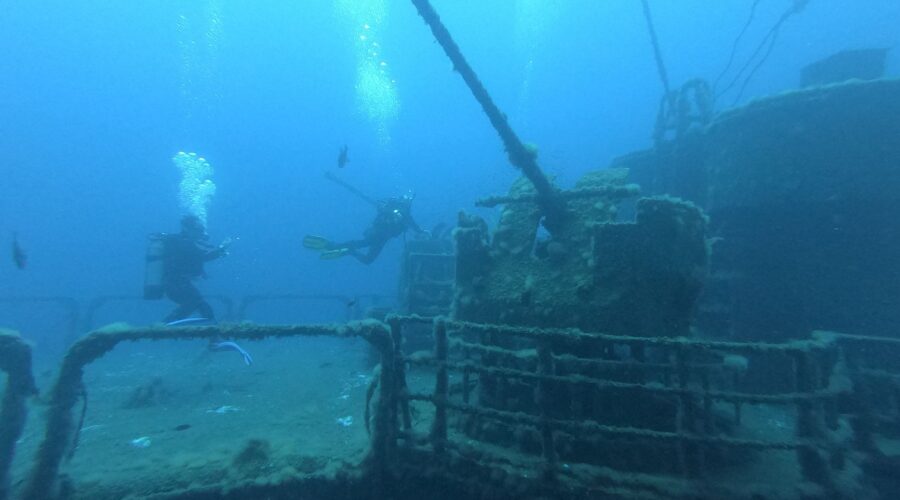
This geographic bottleneck resulted in an extraordinary concentration of maritime history. In just four locations—Ponta Delgada, Angra do Heroísmo, Horta, and Flores—there are more than 100 documented shipwrecks. From the grand armadas of colonial empires to humble fishing vessels, Neto argues that “there is practically no corner of the world that does not have a piece of its history here.”
International Recognition and Future Vision
The Azores already hold prestigious accolades for their preservation efforts. In 2019, UNESCO recognized the archipelago as the first region in the world for “Best Practices for Underwater Cultural Heritage,” and in 2020, the European Union awarded it the “European Heritage Label” for underwater archaeology.
Neto believes the museum should be inaugurated by 2027 to coincide with the 600th anniversary of the discovery of the Azores. He sees the project as a vital investment in a region that often suffers from cultural and social neglect compared to the mainland.
“A museum of this nature will empower the Azores for a future that is defined by the sea,” Neto concluded, urging the state to show a “strong sign of commitment” to the archipelago’s cultural potential.
Image: Pexels – Ruben Galante