The 1960 PAIGC HQ Shift: Cape Verde’s Path to Freedom
The history of West African liberation is often told through the lens of battlefield victories, but the strategic maneuvers that took place in the diplomatic and logistical shadows were equally decisive. For Cape Verde (Cabo Verde) and Guinea-Bissau, the year 1960 marked a definitive turning point. It was the year the African Party for the Independence of Guinea and Cape Verde (PAIGC) shifted its headquarters to Conakry, Guinea. This move was not merely a change of address; it was the birth of an external mobilization strategy that would eventually dismantle Portuguese colonial rule in the Atlantic.
The Seeds of Dissent: From Clandestine Roots to Global Ambition
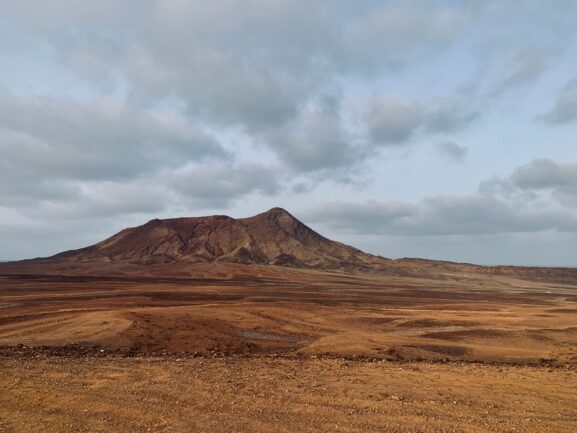
In the mid-20th century, Cape Verde was officially an “overseas province” of Portugal, a status change made in 1951 to dilute growing nationalist sentiments. However, the reality on the ground was one of neglect. The archipelago, a volcanic cluster of ten islands including Santiago, São Vicente, and Sal, suffered from persistent droughts and a lack of sustainable investment from Lisbon. The local population, a vibrant mix of West African and Portuguese ancestry, grew increasingly dissatisfied with the lack of autonomy.
In 1956, Amílcar Cabral, a Cape Verdean agricultural engineer, founded the PAIGC in Bissau. The original intent was to seek independence through nonviolent protest and political negotiation. However, the Portuguese response was brutal. Following the Pijiguiti Massacre in 1959—where Portuguese forces fired on striking dockworkers—the PAIGC leadership realized that peaceful reform was impossible. To survive and fight, they needed a sanctuary outside the reach of the PIDE (Portugal’s secret police).
The 1960 Shift: Why Conakry?
The decision to move the PAIGC headquarters to Conakry in 1960 was a masterstroke of geopolitical positioning. Guinea (Conakry) had recently gained independence from France in 1958 under the leadership of Ahmed Sékou Touré, who was a staunch supporter of pan-Africanism. By establishing a base in Conakry, Cabral and his comrades secured several critical advantages:
1. Diplomatic Legitimacy
Conakry allowed the PAIGC to function as a government-in-exile. It provided a platform for Cabral to lobby the United Nations and the Organization of African Unity (OAU). From here, the struggle for Cape Verdean independence was no longer seen as a “local riot” but as a legitimate international movement for self-determination.
2. Military Preparation
While the war would eventually break out on the mainland of Portuguese Guinea in 1963, the 1960 move allowed the PAIGC to begin training its cadres. Conakry served as the logistical hub where recruits from both Guinea-Bissau and the Cape Verdean diaspora could receive political education and military training.
3. The Cape Verdean Connection
Mobilizing for Cape Verde presented a unique challenge. Unlike the dense jungles of the mainland, the Cape Verdean islands—separated by 570 kilometers of Atlantic water—were difficult to reach for a guerrilla army. The Conakry headquarters became the nerve center for the “external mobilization” of the Cape Verdean diaspora. Cabral knew that the fight for the islands would be won through political pressure and the exhaustion of the Portuguese state, rather than a direct naval invasion.
Amílcar Cabral: The Architect of Mobilization
At the heart of the Conakry headquarters was Amílcar Cabral. His vision was unique among revolutionary leaders; he insisted that the liberation of Guinea-Bissau and Cape Verde was inseparable. He famously argued that the two territories were “two bodies with one heart.”
From Conakry, Cabral orchestrated a sophisticated propaganda campaign. He leveraged the Cape Verdean diaspora in Portugal, Senegal, and the United States, turning the archipelago’s historical trend of emigration into a revolutionary tool. By 1961, the PAIGC had officially transitioned to an armed rebellion, and the Conakry base was vital for coordinating the sabotage and guerrilla tactics that would eventually pin down 35,000 Portuguese troops.
The Road to 1975
The external mobilization initiated in 1960 paid long-term dividends. Although Cabral was tragically assassinated in Conakry in 1973, his groundwork was unshakable. The Carnation Revolution in Portugal in April 1974 finally broke the colonial will. Because the PAIGC had spent over a decade building a robust political structure from their Conakry base, they were ready to step into the power vacuum.
In December 1974, an agreement was signed for a transitional government. On July 5, 1975, Cape Verde finally achieved its de jure independence. The transition from a clandestine group in Bissau to a sophisticated political machine in Conakry had come full circle.
Legacy of the Conakry Era
Today, the Republic of Cabo Verde is recognized as one of Africa’s most stable and successful democracies. It ranks highly on global democracy indices and has successfully transitioned from a colonial supply station to a service-oriented economy focusing on tourism and renewable energy. The country even became the third African nation to be declared malaria-free in 2024.
However, the roots of this modern success story lie in the strategic shift of 1960. The move to Conakry was the moment the PAIGC stopped being a local protest movement and started being a nation-builder. It remains a powerful case study in how external mobilization and diplomatic strategy can overcome the geographical and military hurdles of an island struggle for freedom.
Fast Facts: The PAIGC and Cape Verdean Independence
- Founded: 1956 by Amílcar Cabral.
- HQ Shift: Moved to Conakry in 1960 to escape Portuguese repression.
- The Conflict: Pitted 10,000 PAIGC soldiers against 35,000 Portuguese troops.
- Independence: Achieved on July 5, 1975.
- Current Status: Cape Verde is now a stable representative democracy and a member of the African Union.
Image: Pexels – damien Saillet