Rum & Fabric: The 16th-Century Economy of Cape Verde
In the mid-15th century, the ten volcanic islands that form the archipelago of Cape Verde (Cabo Verde) sat silent and uninhabited in the eastern Atlantic. Discovered by Genoese and Portuguese navigators around 1456, these islands—located 600 to 850 kilometers west of the African coast—were destined to become more than just a remote outpost. Within a century, they evolved into the central nervous system of the burgeoning Atlantic economy. The 16th century, in particular, marked an era where the strategic position of the archipelago fueled a complex and lucrative trade network driven by two primary commodities: rum and fabric.
A Strategic Hub in the Tropics
The settlement of Santiago in 1462 and the founding of Ribeira Grande (now Cidade Velha) established the first permanent European settlement in the tropics. However, the islands’ rugged volcanic terrain and arid climate meant they lacked the traditional natural resources that usually drove colonial expansion. Instead, Cape Verde’s “wealth” was its geography. Situated at the crossroads of shipping routes between Europe, Africa, and the Americas, the islands became a vital entrepôt.
By the 1500s, the archipelago had become a staging ground for the transatlantic slave trade. But this trade was not merely a movement of people; it was an exchange of manufactured goods. To facilitate the acquisition of ivory, gold, and enslaved people from the West African coast, the Portuguese required “currency” that held value in African markets. This necessity birthed the specialized production of rum and unique textiles within the islands.
The Fabric of Power: Cape Verdean Panos
Perhaps the most fascinating economic driver of early Cape Verde was its textile industry. While the islands grew cotton and indigo, it was the craftsmanship of the “Panos de Terra” (country cloths) that transformed these raw materials into a powerful economic engine. These fabrics were not just clothing; they were a highly standardized form of currency used along the Upper Guinea Coast.
Manufacturing and Design
Using West African weaving techniques integrated with Portuguese looms, Cape Verdean weavers produced strips of cloth that featured intricate geometric patterns. The use of locally grown indigo provided a deep, rich blue that was highly prized. Because these fabrics were durable and possessed a distinct cultural aesthetic, they became essential for Portuguese traders. If a merchant wanted to trade for gold or ivory in the markets of the African mainland, carrying high-quality Cape Verdean cloth was often more effective than carrying European bullion.
The Monopoly of the “Pano”
The textile trade became so central to the Cape Verdean economy that the Portuguese Crown attempted to regulate it strictly. The production of these fabrics supported a growing class of settlers and free Africans on the islands, creating a unique social hierarchy centered around the weaving houses of Santiago and Fogo. The “Pano” remained a dominant trade good for nearly two centuries, cementing the islands’ role as a manufacturing hub, not just a transit point.
The Spirit of Trade: Rum and Sugarcane
Parallel to the textile industry was the rise of sugarcane. While islands like Madeira and later the Caribbean became famous for sugar exports, Cape Verde found a different niche for its cane: the production of “Grogue,” a potent local rum.
In the 16th century, rum served multiple purposes. It was a preservative for long sea voyages, a commodity for trade on the African coast, and a source of significant tax revenue for the colonial administration. The valleys of islands like Santo Antão and Santiago, where orographically induced precipitation allowed for lush vegetation, were carved into terraces for sugarcane. The distillation of rum provided a high-value, low-volume product that was easy to transport across the choppy Atlantic waters.
The Economic Triangle: Rum, Cloth, and Slaves
The synergy between rum and fabric created a self-sustaining economic loop. Cape Verdean merchants would take the rum and cloth produced on the islands to the West African coast (the “Rios de Guiné”). There, these items were traded for enslaved Africans, who were then brought back to the islands. Some were kept to work the very cotton and sugar plantations that fueled the trade, while many others were “re-exported” to the Americas.
This “Cape Verdean cycle” drove rapid economic growth. The prosperity was so visible that it attracted international attention—not all of it welcome. The wealth of Ribeira Grande made it a prime target for privateers. Sir Francis Drake famously sacked the city twice in 1585, highlighting that the “Green Cape” was now a jewel in the crown of the Atlantic trade, worth the risk of a transoceanic raid.
Cultural Legacy and Economic Decline
The success of the 16th-century trade laid the foundation for the modern Cape Verdean identity. The interaction between Portuguese settlers and West African populations created a vibrant, Creole culture. This is most evident in the Cape Verdean Creole language (Crioulo), which emerged as a trade language during this era and is still spoken by the vast majority of the population today.
However, the boom did not last forever. By the 19th century, several factors led to a decline:
- Increased Competition: Larger Caribbean plantations began producing sugar and rum at a scale Cape Verde couldn’t match.
- Abolition: The gradual decline and eventual end of the transatlantic slave trade removed the primary market for the islands’ “trade currency.”
- Environmental Challenges: Persistent droughts and the limited arable land (less than 2%) made large-scale agriculture unsustainable.
Conclusion: From Trade Hub to Modern Democracy
The 16th-century trade of rum and fabric was more than just a period of commercial success; it was the crucible in which the nation of Cape Verde was formed. It transformed an uninhabited volcanic archipelago into a sophisticated commercial center.
Today, Cape Verde has moved far beyond the colonial trade routes of the 1500s. Since its independence in 1975, it has become one of Africa’s most stable democracies, with a service-oriented economy focused on tourism and renewable energy. Yet, the echoes of the 16th century remain—in the taste of a glass of local grogue, in the intricate patterns of the panos sold in Mindelo’s markets, and in the resilient spirit of a people who turned a remote “Green Cape” into the heart of the Atlantic world.
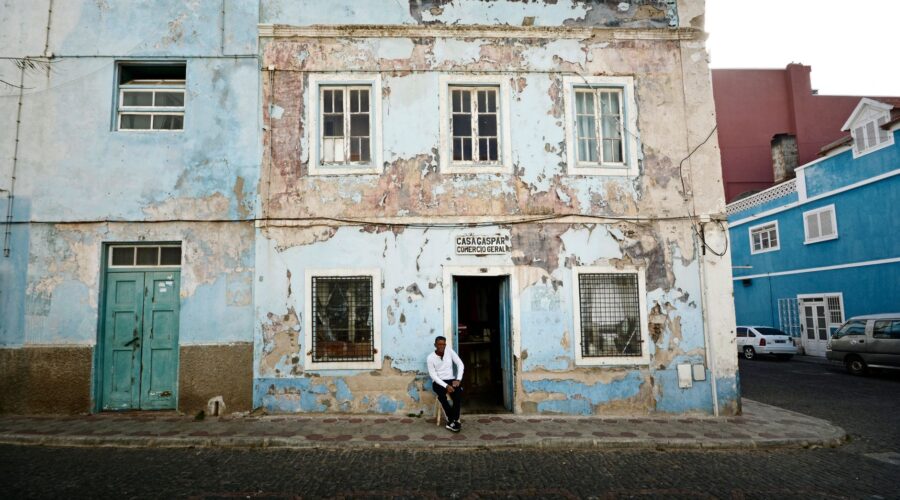
Image: Pexels – damien Saillet