Cape Verde’s Tech Leap: The Atlantic’s New Digital Pearl
Across the ten volcanic islands that comprise the Republic of Cabo Verde, a quiet revolution is taking place. While the nation has long been celebrated for its stable democracy and vibrant music scene, it is now positioning itself as a primary contender for a new title: West Africa’s leading digital hub. As the global economy increasingly shifts toward a remote-work and data-driven landscape, Cape Verde’s aggressive efforts to improve digital infrastructure and internet access are transforming the archipelago into a “Digital Pearl” of the Atlantic.
The Vision: A Mid-Atlantic Digital Hub
Cape Verde’s geographic location—situated between Africa, Europe, and the Americas—has historically made it a strategic maritime crossroads. Today, the government is leveraging this same geography to become a critical link in the global fiber-optic network. The national strategy, encapsulated in the “Digital Cabo Verde” project, aims to diversify the economy away from a heavy reliance on tourism, which currently accounts for about 25% of the GDP.
By investing in telecommunications, the government seeks to create a service-based economy that can provide high-quality jobs for its young, increasingly tech-savvy population. The goal is simple yet ambitious: to make internet access a universal right and to use technology to bridge the physical gaps between the islands.
Submarine Cables: The Backbone of Connectivity
The foundation of Cape Verde’s digital transformation lies deep beneath the ocean waves. For years, the country relied on the WACS (West Africa Cable System). However, to ensure redundancy and increase capacity, the government and the national telecommunications provider, Cabo Verde Telecom (CVT), have made significant strides in recent years.
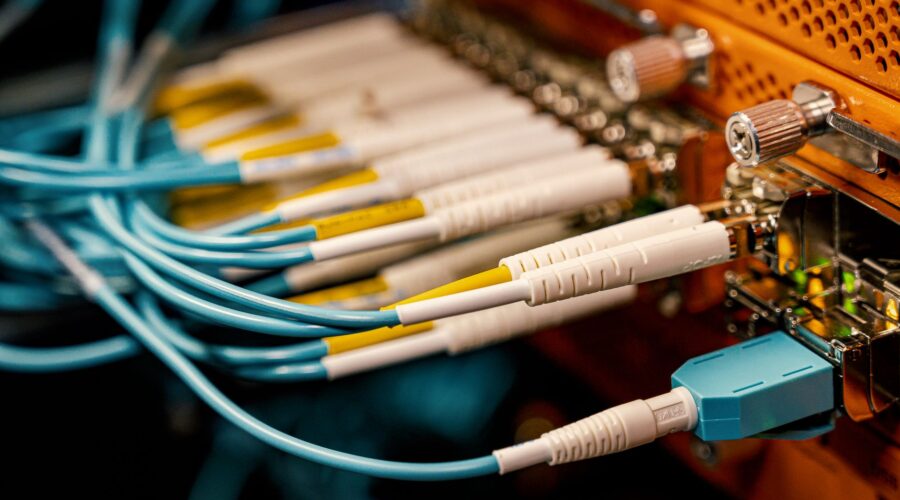
A major milestone was the 2023 landing of the Equiano cable, a Google-funded project that connects Portugal to South Africa. By tapping into this high-capacity infrastructure, Cape Verde has dramatically increased its bandwidth potential. This was complemented by the EllaLink cable, which provides a direct high-speed data link between Europe and Latin America, with a branching unit in Praia. These investments have slashed latency and provided the robust speeds necessary for international tech firms to consider the islands as a viable base of operations.
The EllaLink and the “Digital Port” Concept
With the integration of these new submarine cables, the government has launched the “Cabo Verde Digital” brand. The centerpiece of this initiative is the Data Center in Praia and the Business and Technology Park currently under development in the capital and on the island of São Vicente. These facilities are designed to host data for regional startups, government agencies, and international corporations, functioning as a “digital port” that mirrors the country’s physical shipping ports.
Bridging the Digital Divide: Internal Connectivity
Improving international links is only half the battle; the other half is ensuring that the 550,000 residents across the nine inhabited islands can actually use the service. The “Lighthouse” project and other government-led initiatives have focused on expanding the fiber-optic backbone within the islands. Currently, Cape Verde boasts one of the highest internet penetration rates in Africa, with over 80% of the population having access to the web.
The government has also rolled out a widespread network of free Wi-Fi hotspots, known as “Praças Digitais” (Digital Squares). These are located in public parks, schools, and community centers, ensuring that even those in lower-income brackets can participate in the digital economy. In education, the WebLab project has placed air-conditioned containers equipped with computers and high-speed internet in schools across the country, teaching children coding and robotics from a young age.
5G Rollout and the Future of Mobile Connectivity
In 2023 and 2024, the push for 5G has taken center stage. The two main telecom operators, CV Telecom (Alou) and Unitel T+, have been conducting pilot programs to bring 5G to the main urban centers of Praia and Mindelo. The transition to 5G is expected to revolutionize local sectors like telemedicine—crucial for an archipelago where specialized doctors may be on a different island than the patient—and smart agriculture, where sensors can help manage scarce water resources.
The Remote Working Revolution: The Nomad Visa
Cape Verde was quick to recognize the “Digital Nomad” trend that accelerated during the COVID-19 pandemic. By launching the Remote Working Cabo Verde program, the government introduced a temporary work visa for telecommuters. The success of this program is directly tied to the digital infrastructure improvements. For a remote worker from Berlin or New York, the appeal of Sal or Boa Vista islands is only viable if the internet is stable enough for Zoom calls and large file transfers. Today, these islands offer co-working spaces with speeds that rival many European cities.
Challenges on the Horizon
Despite the significant progress, hurdles remain. The high cost of electricity, which is still largely dependent on imported fossil fuels, makes operating large data centers expensive. Furthermore, while the backbone infrastructure is strong, the “last mile” connectivity in remote mountainous areas of Santo Antão or Fogo can still be inconsistent.
There is also the challenge of digital literacy. While the younger generation is quick to adapt, older citizens and those in traditional industries like fishing need further support to integrate digital tools into their livelihoods. Cybersecurity is another growing concern; as the country becomes more connected, it becomes a more prominent target for cyber threats, necessitating new laws and a dedicated national cybersecurity center.
Key Facts at a Glance:
- Internet Penetration: Over 80%, one of the highest in the ECOWAS region.
- Major Submarine Cables: WACS, EllaLink, and Equiano.
- Tech Hubs: Major Technology Parks in Praia (Santiago) and Mindelo (São Vicente).
- Innovation: The “Digital Nomad Visa” allows foreigners to live and work in the country for up to six months (renewable).
Conclusion
Cape Verde’s journey toward becoming a digital nation is a testament to what small island developing states can achieve with clear vision and strategic investment. By transforming its mid-Atlantic location from a geographical barrier into a digital advantage, the country is creating a resilient, forward-looking economy. As fiber-optic cables continue to weave through the Atlantic seabed and 5G towers rise across the volcanic peaks, Cape Verde is proving that in the digital age, size and isolation are no longer obstacles to progress.
For investors, remote workers, and the Cape Verdean people, the message is clear: the archipelago is no longer just a place to escape the world—it is a place to connect with it.
Image: Pexels – Brett Sayles