Cape Verde Islands Dry Forests: Biodiversity & Conservation
Deep in the eastern Atlantic Ocean, approximately 570 kilometers off the coast of West Africa, lies a rugged volcanic archipelago that defies the typical imagery of the tropics. While the name “Cabo Verde” translates to “Green Cape,” the islands are home to one of the most unique and threatened ecosystems on the planet: the Cape Verde Islands Dry Forests ecoregion.
As part of Macaronesia—a group of North Atlantic archipelagos that includes the Azores, Madeira, and the Canary Islands—Cape Verde possesses a distinct biological fingerprint. Formed by volcanic activity 40 to 50 million years ago, these islands have served as an evolutionary laboratory. Here, the struggle between arid Atlantic winds and moisture-trapping peaks has created a specialized flora found nowhere else on Earth.
A Landscape Sculpted by Fire and Wind
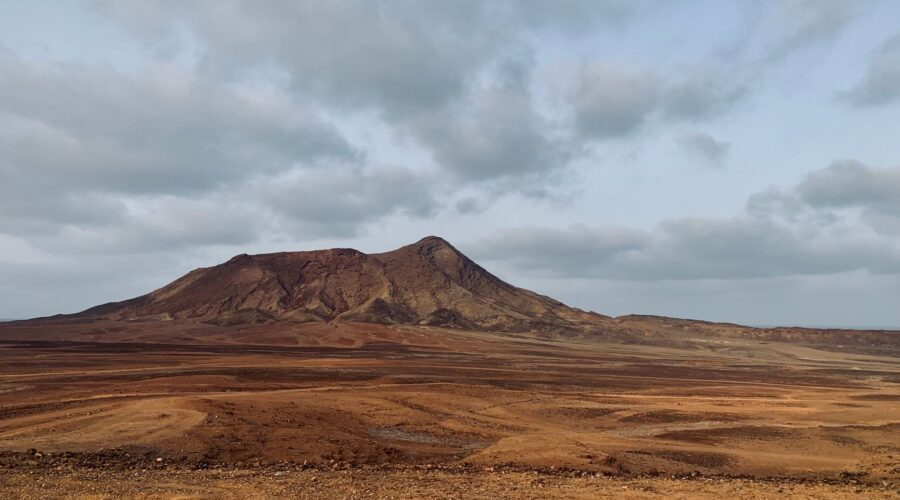
The Cape Verde archipelago consists of ten islands and eight islets, divided into the windward Barlavento and leeward Sotavento groups. Geologically, the islands are a “soda-alkaline” province, characterized by igneous rocks and dramatic volcanic structures. The tallest peak, Pico do Fogo, remains active today, reminding us that these islands are living, breathing geological entities.
The ecoregion’s climate is defined by its position within the Sahelian semi-arid belt. While the low-lying islands like Sal and Boa Vista are dominated by sandy deserts and salt flats, the higher-altitude islands—Santiago, Santo Antão, São Nicolau, and Fogo—create their own weather. These towering mountains intercept humid air, causing condensation that fuels “cloud forests” and dry monsoon forests. It is within these microclimates that the islands’ most precious biodiversity resides.
The Flora: Macaronesian Survivors
The dry forest ecoregion of Cape Verde is characterized by its high level of endemism. Because the islands remained uninhabited until the 15th century, plants evolved in isolation for millions of years. Today, the archipelago is a sanctuary for Macaronesian flora that has adapted to survive extreme droughts and volcanic soil.
The Dragon Tree (Dracaena draco)
Perhaps the most iconic resident is the Dragon Tree. With its umbrella-shaped canopy and “dragon’s blood” resin, it is a relic of the ancient subtropical forests that once covered much of the Mediterranean basin. In Cape Verde, these trees cling to rocky cliffs, serving as a flagship species for conservation efforts.
Altitude-Specific Biodiversity
The ecoregion is vertically stratified into four ecological zones:
- Arid Zone (Coastal): Dominated by salt-tolerant plants and shrubs that can survive with less than 100mm of annual rainfall.
- Semi-arid Zone: Home to native acacias and drought-resistant scrubland.
- Sub-humid and Humid Zones: Found on mountain slopes where rainfall exceeds 1,000mm. This is where the true “dry forests” and remnants of laurel forests exist, featuring endemic species like the Cape Verde Marmulano (Sideroxylon marginatum).
Endemic Fauna: Life in the Dry Forest
The dry forests provide a critical habitat for a variety of endemic animals. The isolation of the islands has resulted in unique evolutionary paths for several species:
- Birds: The Iago sparrow (Passer iagoensis) and the Cape Verde warbler (Acrocephalus brevipennis) are forest-dependent species that rely on the remaining native vegetation for nesting.
- Reptiles: The islands host numerous endemic geckos and skinks. These reptiles play a vital role in the ecosystem as both predators of insects and prey for birds of prey like the Alexander’s swift.
Conservation Challenges: A History of Human Impact
The arrival of Portuguese settlers in 1462 marked the beginning of a profound ecological shift. The introduction of livestock—particularly goats—and the clearing of land for sugarcane and banana plantations led to widespread deforestation. Over centuries, the loss of vegetation accelerated soil erosion, a problem exacerbated by the islands’ steep topography and irregular, heavy downpours.
Today, less than 2% of Cape Verde’s land is considered arable. The “Cape Verde hurricanes”—intense storms that form near the archipelago—often strip the land of its precious topsoil if the forest cover is insufficient. Furthermore, climate change poses an existential threat; Cape Verde is ranked among the most endangered nations due to rising sea levels and shifting rainfall patterns.
The Green Future: Debt-for-Nature and Renewable Energy
Despite these challenges, Cape Verde has emerged as a global leader in environmental diplomacy and sustainability. The government has recognized that the preservation of its dry forests is not just a matter of biology, but of national survival.
Innovative Conservation Finance
In a landmark 2023 agreement, Portugal signed a “debt-for-nature” swap with Cape Verde. This deal forgives €140 million of debt in exchange for the country investing that capital into environmental and climate projects. This funding is crucial for reforestation efforts, which aim to restore the native dry forests and stabilize the soil on islands like Santiago and Santo Antão.
Renewable Energy Leadership
Cape Verde is also a pioneer in renewable energy within sub-Saharan Africa. Currently, 20% of the nation’s energy is derived from renewable sources (wind and solar), with a target of 50% by 2030. By reducing its reliance on imported fossil fuels, the country is mitigating its own carbon footprint and setting an example for other island nations.
Conclusion: Protecting a Macaronesian Jewel
The Cape Verde Islands Dry Forests ecoregion is a testament to the resilience of nature. From the dragon trees perched on mist-shrouded cliffs to the endemic birds flitting through the acacias, this ecosystem is an irreplaceable part of the world’s natural heritage. As Cape Verde continues to develop its tourism-oriented economy, the protection of its unique biodiversity will be the cornerstone of its success. For the traveler and the scientist alike, these “Green Capes” offer a rare glimpse into an evolutionary journey that is still unfolding amidst the vast Atlantic blue.
Image: Pexels – Bibi Kiekens