The Moniz Bread Legacy: Santo Antão’s Highland Secret
High above the jagged volcanic peaks of Santo Antão, the northernmost inhabited island of Cape Verde, the clouds often settle into the valleys like a thick woolen blanket. Here, in the remote highlands of Planalto Leste and the rugged terraced slopes of Cova, the air is thin, crisp, and carries a scent that defines the soul of the island: the earthy, smoky aroma of wood-fired bread.
Among the tight-knit communities of these highlands, one name resonates with particular reverence: Moniz. For generations, the Moniz family and the wider community that shares their baking traditions have preserved a culinary legacy that is far more than just a food source. The ‘Moniz’ bread—and the communal wood-fired ovens that produce it—represents a lifeline of heritage, a marvel of sourdough chemistry, and a testament to the resilience of Cape Verdean mountain culture.
The Origins of a Highland Staple
Bread is a cornerstone of the Cape Verdean diet, a legacy of Portuguese colonial influence blended with West African resourcefulness. However, the bread of the Santo Antão highlands is distinct from the airy rolls found in the bakeries of Mindelo or Praia. In the isolation of the mountains, ingredients were historically scarce, and the environment was harsh.
The Moniz legacy began as a practical necessity. With no electricity and limited access to commercial yeast, the families of the highlands perfected the art of the massa mãe (mother dough). This natural leavening process, passed down from grandmothers to daughters, uses wild yeast captured from the mountain air. The result is a dense, nutritious loaf that stays fresh for days—a vital trait for farmers who might spend an entire day tending to stone-walled terraces far from home.
The Secret of the Moniz Recipe
While the “Moniz” style of bread is now a recognized regional specialty, its “secret” lies less in hidden ingredients and more in the meticulous process and the quality of local elements. The recipe typically involves a blend of wheat flour, water, sea salt from the flats of Sal or Maio, and the crucial fermented starter.
What sets the highland bread apart is the addition of local sweet potato or squash in some variations, which provides a subtle sweetness and a moist crumb. The dough is kneaded by hand for extended periods—a physically demanding task that requires significant strength. The long fermentation process allows the flavors to develop, resulting in a slightly tangy profile that mirrors the complexity of a fine European sourdough, yet remains uniquely Cape Verdean.
The Communal Ovens: The Heart of the Village
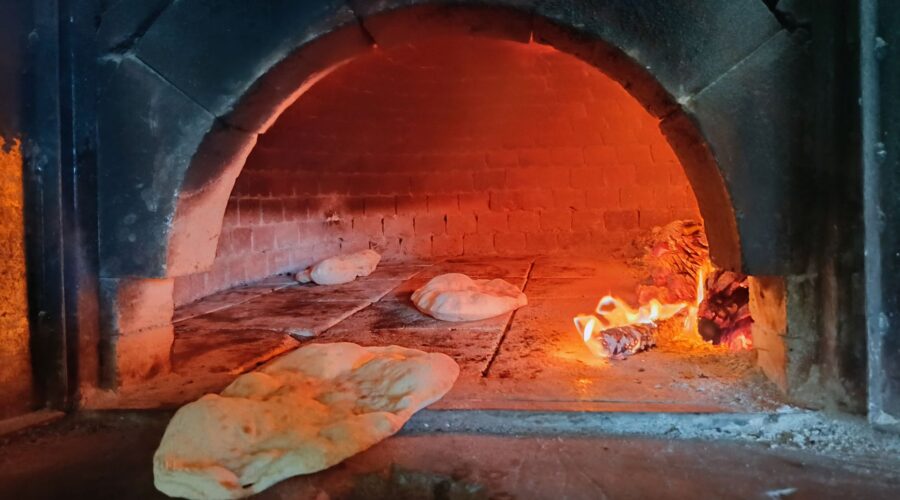
Perhaps the most striking aspect of the Moniz bread legacy is the forno de lenha (wood-fired oven). In the highlands of Santo Antão, these ovens are rarely private luxuries. Instead, they are communal anchors located in the center of small settlements like Águas das Caldeiras or Espongeiro.
These massive, dome-shaped structures are built from local volcanic stone and lined with a specific type of clay that retains heat for hours. The process of firing the oven is a communal event. It begins with the collection of invasive acacia wood or dried mountain scrub. Once the fire has roared for hours and the stones glow with stored energy, the embers are swept out, and the floor of the oven is cleaned with a damp cloth attached to a long pole.
A Social Ritual
Baking day is the heartbeat of the village social calendar. Families bring their prepared dough—often marked with unique scores or symbols to identify their loaves—to the communal oven. As the bread bakes in the receding heat, the area around the oven becomes a space for djobe (chatting), sharing news, and strengthening the bonds of the morabeza—the famed Cape Verdean spirit of hospitality and community.
The first loaves to come out are often broken and shared immediately, eaten hot with a smear of local goat cheese (queijo de cabra) or a drizzle of mel de cana (sugarcane molasses) produced in the valleys below.
Sustainable Gastronomy and Tourism
In recent years, the Moniz bread legacy has caught the attention of international food critics and sustainable tourism advocates. As Santo Antão becomes a premier destination for trekking, hikers are increasingly seeking out these authentic culinary experiences.
The “Bread Route” is becoming an unofficial pilgrimage for visitors. Stopping at a local mountain home to witness the kneading process or sitting by a communal oven at dawn offers a glimpse into a way of life that has remained largely unchanged for a century. For the local community, this interest provides a vital economic boost, ensuring that the younger generation sees value in maintaining these labor-intensive traditions.
Preserving the Legacy in a Changing World
Despite its popularity, the Moniz bread legacy faces challenges. The physical toll of mountain farming and traditional baking means many young people are migrating to the cities or abroad. Furthermore, the availability of cheap, mass-produced bread in local shops threatens the dominance of the artisanal loaf.
However, there is a growing movement in Cape Verde to protect these “Geographical Indications.” Efforts are underway to document the specific techniques of the Santo Antão highland bakers, ensuring that the name “Moniz” continues to represent quality and tradition. Culinary workshops and community-led cooperatives are also helping to standardize the quality while keeping the “soul” of the bread intact.
How to Experience the Moniz Legacy
For those traveling to Cape Verde, experiencing the bread of Santo Antão is a must. Here are a few tips for the culinary traveler:
- Visit the Highlands: Take a collective taxi (aluguer) from Porto Novo to Planalto Leste. The air is cooler, and the scenery is breathtaking.
- Follow the Smoke: In the early mornings, look for the thin trails of wood smoke rising from the stone huts—this is a sure sign that an oven is being fired.
- Pair it Locally: Always eat the bread with local Santo Antão coffee, which is grown in the shade of the Cova crater. The acidity of the coffee perfectly complements the smokiness of the bread.
- Respect the Process: Remember that these are communal spaces. Always ask permission before taking photos and consider purchasing a few extra loaves to support the local bakers.
Conclusion
The Moniz bread of Santo Antão is more than just flour and water. It is a story of survival, a vessel for communal history, and a delicious manifestation of the island’s rugged beauty. In every bite of the dense, smoky crust, one can taste the volcanic soil, the mountain mist, and the enduring strength of the Cape Verdean people. As long as the wood-fired ovens continue to glow in the highlands, the legacy of the Moniz family and their neighbors will remain a warm, nourishing light in the heart of the Atlantic.
Image: Pexels – Yesimcf 🇹🇷