Porta Aberta: The Ethics of the Open Door in Cape Verde
In the high, mist-draped valleys of Santo Antão and the scorched, volcanic slopes of Fogo, a curious architectural detail often strikes the first-time visitor. In many rural Cape Verdean villages, the front door of a home is not merely a piece of wood on hinges; it is a permanent invitation. Even when the inhabitants are working in the terraced fields (poilões) or fetching water from a distant spring, the door remains ajar, or at the very least, unlocked.
This practice, known colloquially as Porta Aberta (Open Door), is more than a byproduct of low crime rates. it is a foundational social ethic that defines the Cape Verdean soul. To understand the Porta Aberta philosophy is to decode the very DNA of Morabeza—the archipelago’s famous spirit of hospitality—and to see how architecture reflects a profound communal trust that has survived centuries of isolation and hardship.
The Architecture of Trust: More Than Just a Threshold
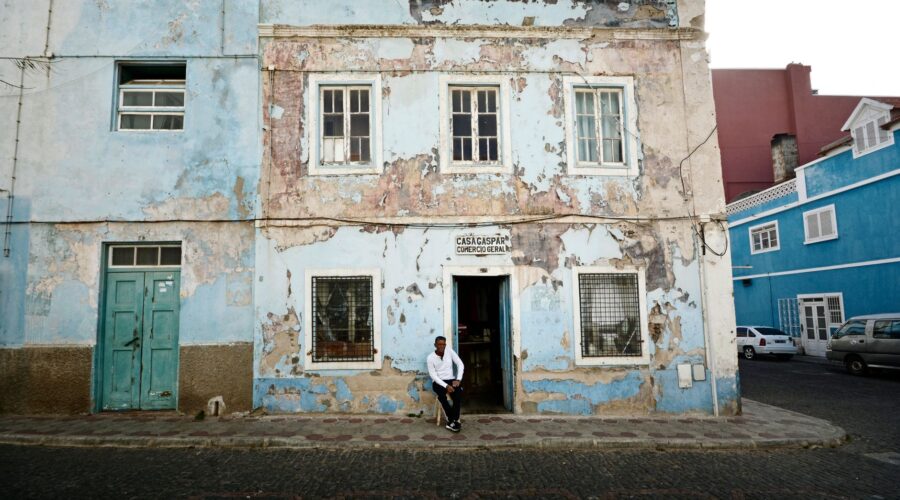
In rural Cape Verdean architecture, particularly in the traditional stone houses known as casas de pedra, the door serves as the primary interface between the private and the public sphere. Unlike modern urban dwellings in Praia or Mindelo, where reinforced steel doors and intercoms are becoming the norm, the rural home is designed to be permeable.
The physical structure of these homes often supports the Porta Aberta lifestyle. Many traditional houses feature a “half-door” (door divided horizontally), where the bottom half stays closed to keep out wandering goats or chickens, while the top half remains wide open. This allows for the constant exchange of air, light, and—most importantly—social greetings. In these villages, a closed door is often a sign of illness, mourning, or deep privacy; an open door signifies that the household is part of the living, breathing fabric of the community.
The Social Contract of the Unlocked Door
The ethics of the Porta Aberta are rooted in a social contract that predates modern policing. In the isolated interior of islands like São Nicolau or Brava, survival was historically dependent on mutual aid. If a neighbor ran out of salt, coffee, or embers to start a fire, the open door allowed them to enter and borrow what was needed, with the silent understanding that the favor would be returned.
This philosophy fosters a unique sense of collective security. When everyone’s door is open, everyone is effectively watching over everyone else’s property. The “bystander effect” is non-existent here; a stranger entering an open door in a small village is immediately noticed, not with suspicion, but with a curiosity that demands engagement. You are not “breaking in” if the culture dictates that the space is shared; however, you are expected to announce yourself with a rhythmic “Ó de casa!” (Anyone home?) before crossing the threshold.
Morabeza and the Moral Imperative of Hospitality
To discuss the Porta Aberta without mentioning Morabeza would be to ignore the heart of the matter. Often described as the “Cape Verdean way of life,” Morabeza is a blend of gentleness, hospitality, and openness. The open door is the physical manifestation of this trait. It suggests that the home is not a fortress built to exclude the world, but a sanctuary meant to be shared.
For a traveler, this can be a transformative experience. It is not uncommon for a hiker lost in the mountains of Santo Antão to be beckoned through an open door for a cup of café de terra or a plate of cachupa. The host rarely asks for anything in return; the act of opening the door and sharing the table is a reaffirmation of their own humanity and their connection to the wider world.
The Impact of Emigration and the ‘Absent’ Door
Cape Verde is a nation of migrants, with more citizens living abroad than on the ten islands themselves. This demographic reality has added a bittersweet layer to the Porta Aberta philosophy. Many of the most beautiful traditional homes in rural villages are owned by Cape Verdeans living in Pawtucket, Lisbon, or Rotterdam.
These “remittance houses” often stand with their doors locked for eleven months of the year, waiting for the owner’s summer return. This has created a tension in the traditional landscape. An abandoned house with a locked door is a silent puncture in the communal safety net. Conversely, some migrants leave their keys with a local “guardian” who keeps the Porta Aberta tradition alive, airing out the house and allowing neighbors to use the courtyard for community gatherings, ensuring the home remains a living part of the village despite the owner’s absence.
Challenges to the Philosophy: Modernity and Urbanization
As Cape Verde continues to modernize, the Porta Aberta philosophy faces challenges. In the rapidly growing urban centers of Santiago and São Vicente, the pressures of the modern world—inequality, anonymity, and a rise in petty crime—have led to a “closing” of the door. The transition from the rural aldeia (village) to the urban bairro (neighborhood) often results in the installation of bars on windows and multiple locks on doors.
Sociologists in Cape Verde point to this as a significant cultural shift. When the door closes, the Morabeza often retreats into the private interior, and the sense of communal responsibility can weaken. However, even in these urban settings, the spirit of the open door survives in the way people interact in the streets and plazas. The “door” may be physically locked, but the social “opening” remains a core value.
Why the ‘Porta Aberta’ Matters for Tourism
For the growing tourism industry in Cape Verde, the Porta Aberta philosophy is a major draw, even if visitors don’t know it by name. It is the reason why Cape Verde feels safer and more welcoming than many other tropical destinations. When visitors stay in rural “Turismo Rural” guesthouses, they are often invited to participate in this ethic—learning that trust is a two-way street.
Understanding this philosophy helps tourists navigate local etiquette. It teaches that a greeting is mandatory, that a smile is a key, and that the boundaries between “mine” and “ours” are more fluid in the shade of a Cape Verdean acacia tree than they are in the concrete jungles of Europe or America.
Conclusion: The Door as a Lesson in Humanity
The Porta Aberta of rural Cape Verde is a silent teacher. It reminds us that security does not come from higher walls or stronger locks, but from the strength of the relationships between the people who live within those walls. It is a philosophy that prioritizes human connection over the protection of property, and kindness over suspicion.
As the world becomes increasingly fragmented, the small stone houses of the Cape Verdean interior offer a powerful counter-narrative. A door that is always open is a heart that is always ready to receive. In the quiet valleys of the ten islands, the philosophy of the Porta Aberta continues to stand as a testament to the enduring power of trust in an uncertain world.
Image: Pexels – damien Saillet