The Lobster Economy: Cape Verde’s Sustainable Seafood Trade
In the sapphire waters surrounding the ten volcanic islands of Cape Verde, a quiet economic engine hums beneath the waves. While tourism often takes the spotlight in discussions about the archipelago’s growth, the “Lobster Economy” remains a vital lifeline for thousands of families and a cornerstone of the nation’s export profile. The Cape Verdean spiny lobster (Panulirus regius and Panulirus echinatus) is more than just a luxury delicacy; it is a symbol of marine heritage and a testament to the country’s commitment to sustainable artisanal fishing.
The Crown Jewel of Cape Verdean Waters
Cape Verde’s geographical position in the mid-Atlantic provides a unique confluence of currents that foster rich biodiversity. Among the most prized residents of these rocky reefs are the spiny lobsters. Unlike the clawed American lobster, the Cape Verdean varieties are known for their vibrant shells, long antennae, and exceptionally sweet, firm meat. The Green Spiny Lobster (Panulirus regius) and the Brown Spiny Lobster (Panulirus echinatus) are the primary species driving the local market.
For the “Lobsteiros”—the specialized lobster fishers of islands like Sal, Boa Vista, and São Vicente—these crustaceans represent a high-value commodity. Because lobsters inhabit the crevices of volcanic rock formations, catching them requires a level of precision and local knowledge that large-scale industrial trawlers simply cannot replicate.
Artisanal Trapping: A Lesson in Sustainability
One of the most remarkable aspects of the Cape Verdean lobster industry is its reliance on artisanal methods. In an era of industrial overfishing, Cape Verde has largely maintained a traditional approach that prioritizes the health of the ecosystem.
The “Covo” Method
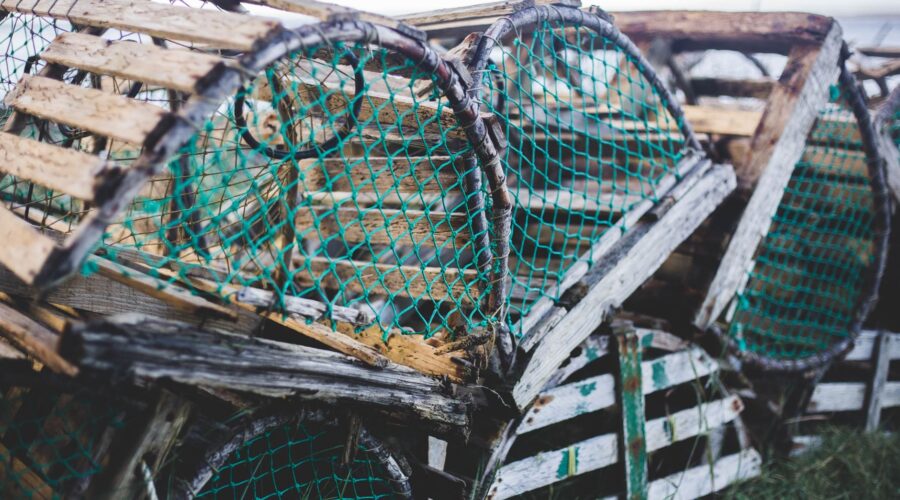
The primary tool for the Cape Verdean lobster fisher is the covo, a traditional trap or pot. These traps are usually constructed from locally sourced wood or wire mesh and are designed to be lowered into specific rocky areas where lobsters are known to forage. The traps are baited with small fish (often mackerel or scad) and left overnight.
The beauty of the covo method lies in its selectivity. Unlike nets that can result in significant bycatch, traps allow fishers to release undersized lobsters or “berried” females (females carrying eggs) back into the ocean unharmed. This method ensures that the reproductive cycle of the population remains intact.
Free-Diving and Hand-Picking
In shallower waters, many fishers still practice the ancient art of free-diving. Equipped with nothing more than fins, a mask, and a pair of sturdy gloves, divers plunge into the Atlantic to hand-pick lobsters from underwater caves. This is perhaps the most sustainable form of fishing in existence, as the fisher can visually inspect the lobster before capture, ensuring it meets legal size requirements.
Regulations and the “Closed Season”
The Cape Verdean government, through the Ministry of Maritime Economy, has implemented strict regulations to prevent the collapse of lobster stocks. The most critical of these is the defeso, or closed season. Typically running from May to October, this period coincides with the lobsters’ peak spawning season. During these months, the capture, transport, and sale of lobster are strictly prohibited.
Furthermore, there are strict “Minimum Landing Sizes” (MLS). Any lobster caught that does not meet the specified length must be returned to the water. These measures are enforced through port inspections and have been instrumental in keeping the Cape Verdean lobster population stable while neighboring regions have seen theirs dwindle.
From Volcanic Rocks to Global Tables: The Export Market
While a significant portion of the lobster catch is consumed locally by the booming tourism sector—landing on the plates of diners in Santa Maria or Sal Rei—the lobster is also a major export product. The “Cape Verde” brand is increasingly synonymous with high-quality, sustainably caught seafood.
The Logistics of Luxury
Exporting live or frozen lobster from a remote archipelago presents significant logistical challenges. To maintain the premium quality demanded by international markets in Europe (particularly Portugal, Spain, and France) and Asia, Cape Verde has invested in specialized processing facilities. Once landed, lobsters are kept in tanks with circulating seawater to de-stress before being packed for air freight. The speed of the supply chain is vital; a lobster caught off the coast of Maio can be served in a high-end restaurant in Lisbon within 48 hours.
Economic Impact
The lobster trade provides a crucial source of foreign currency for Cape Verde. Because lobster is a high-value-to-weight product, it is one of the few exports that can offset the high costs of air transport from the islands. For local communities, the “Lobster Economy” supports not just the fishers, but also boat builders, trap makers, and processing plant workers.
Challenges Facing the Industry
Despite its success, the Cape Verdean lobster industry faces modern pressures. Climate change is a primary concern, as rising sea temperatures can alter the migratory patterns and reproductive success of the spiny lobster. Additionally, while artisanal methods are the norm, there is the persistent threat of illegal, unreported, and unregulated (IUU) fishing by foreign vessels in Cape Verde’s vast Exclusive Economic Zone (EEZ).
There is also the delicate balance of domestic versus international supply. As tourism grows, the demand for lobster within the islands increases, sometimes driving prices out of reach for local residents and creating a tension between the export market and local food security.
The Future: Blue Economy and Certification
Cape Verde is currently positioning itself as a leader in the “Blue Economy”—a sustainable development model that seeks to balance economic growth with the health of the oceans. There is a growing movement toward obtaining international sustainability certifications, such as the Marine Stewardship Council (MSC) label, for Cape Verdean lobster. Such a certification would not only protect the environment but would also allow Cape Verdean fishers to command even higher prices in the global “eco-conscious” market.
Conclusion
The Cape Verdean spiny lobster is a testament to the richness of the Atlantic and the resilience of the islands’ people. By marrying ancient artisanal traditions with modern conservation science, Cape Verde has created a “Lobster Economy” that serves as a global model for sustainability. For the traveler enjoying a grilled lobster tail by the beach, or the gourmet diner in Europe, the taste is not just one of luxury, but of a carefully managed heritage that ensures the ocean will continue to provide for generations to come.
Image: Pexels – Erik Mclean