Smart Salt: Cape Verde’s High-Tech Salt Flat Revolution
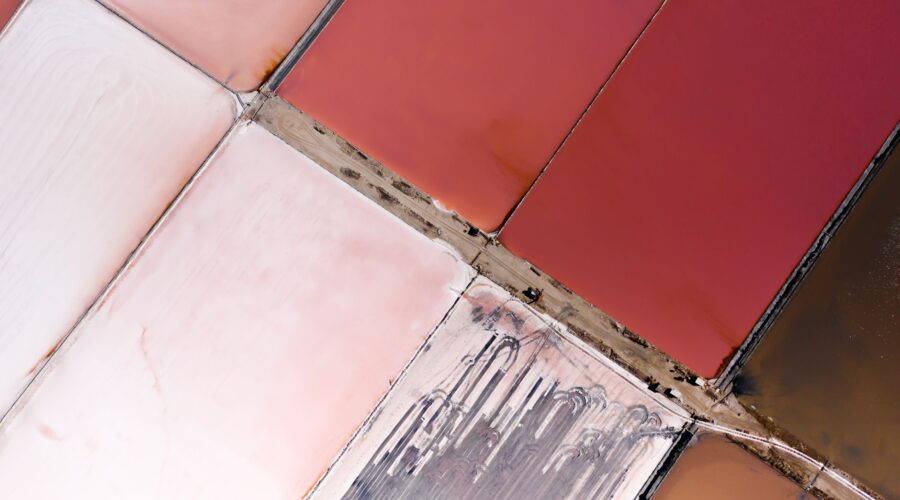
For centuries, the landscape of the Cape Verdean islands of Sal and Maio has been defined by vast, shimmering white expanses. These are the salinas—salt flats that once formed the backbone of the archipelago’s colonial economy, giving the island of Sal its very name. However, as the global economy shifted, these historic sites fell into a state of traditional, low-yield production or total dormancy.
Today, a high-tech revolution is breathing new life into these ancient terrains. Through a groundbreaking initiative often referred to as ‘Smart Salt,’ Cape Verde is leveraging cutting-edge technologies—specifically Satellite Internet of Things (IoT) and Digital Twin modeling—to modernize salt production. This fusion of heritage and industry 4.0 is not just about increasing export volumes; it is a blueprint for how small island developing states (SIDS) can use deep tech to achieve climate resilience and economic diversification.
The Historical Significance of Cape Verdean Salt
To understand the leap into Satellite IoT, one must first understand the weight of history. In the 18th and 19th centuries, the salt pans of Pedra de Lume on Sal and the Porto Inglês pans on Maio were vital hubs for international maritime trade. Ships crossing the Atlantic would stop to gather salt for preserving meat and fish.
However, by the late 20th century, Cape Verdean salt struggled to compete with large-scale industrial mining in mainland Africa and South America. The production methods remained largely manual, vulnerable to weather fluctuations, and disconnected from modern supply chains. The ‘Smart Salt’ initiative seeks to bridge this gap, turning these natural assets into “intelligent” production zones.
What is ‘Smart Salt’? The Role of Satellite IoT
The core challenge for the salt flats of Maio and Sal is their remote nature. Traditional cellular connectivity (4G or 5G) can be spotty in the middle of a salt crust or along rugged coastal stretches. This is where Satellite IoT comes into play.
Real-Time Environmental Monitoring
By deploying sensors across the salinas, producers can now monitor critical variables in real-time. These sensors measure water salinity levels, evaporation rates, pH levels, and crystal thickness. Because these sensors are connected via satellite constellations (such as those provided by partners like Astrocast or similar Low Earth Orbit providers), the data is transmitted constantly, regardless of local terrestrial network availability.
Precision Harvesting
Traditionally, salt harvesters relied on visual cues and ancestral knowledge to decide when the salt was ready for extraction. While effective, this method is prone to human error. IoT sensors provide precise data points that signal the exact moment the sodium chloride has reached optimal purity. This ensures a higher grade of “Fleur de Sel” (Flower of Salt), which fetches a premium price on the international gourmet market.
Digital Twins: A Virtual Mirror of the Salt Flats
Perhaps the most futuristic aspect of this modernization is the creation of ‘Digital Twins.’ A Digital Twin is a virtual representation of a physical object or process, updated with real-time data.
For the salt pans of Maio, a Digital Twin allows engineers and environmentalists to run simulations. They can ask “what if” questions:
- What happens to production if sea levels rise by 10 centimeters?
- How will an unusual period of heavy rainfall (a growing concern due to climate change) affect the brine concentration?
- Can we optimize the flow of seawater into the pans to reduce energy consumption?
This virtual modeling helps the Cape Verdean government and private investors minimize risk. It transforms the salt flats from a static natural resource into a dynamic, data-driven industrial ecosystem.
Sustainability and the Blue Economy
Cape Verde is a global leader in the “Blue Economy”—a sustainable development model that seeks to harness ocean resources while preserving ecosystem health. The ‘Smart Salt’ initiative fits perfectly into this framework for several reasons.
Minimal Environmental Footprint
Unlike heavy industrial mining, solar salt production is inherently green. It uses the sun and wind to evaporate seawater. By using IoT to optimize this process, Cape Verde is producing a valuable export with near-zero carbon emissions. The integration of satellite tech allows for this to happen without laying miles of disruptive fiber optic cables across sensitive coastal environments.
Economic Diversification for Maio
While Sal has long been the tourism capital of Cape Verde, Maio has remained more secluded. The modernization of the Maio salt pans provides the island with a sustainable industrial pillar. It creates high-tech jobs for young Cape Verdeans in data analysis and sensor maintenance, stemming the tide of migration to the more developed islands or abroad.
Challenges and the Road Ahead
Transitioning from manual labor to Satellite IoT is not without hurdles. The initial cost of satellite airtime and specialized hardware is high. Furthermore, there is the need for “tech-transfer”—ensuring that the local population in Porto Inglês and Pedra de Lume is trained to interact with these new systems.
However, the Cape Verdean government, under its “Digital Strategic Plan,” has been proactive in seeking international partnerships. By positioning the islands as a “Digital Hub” for Africa, they are attracting tech firms interested in testing IoT solutions in extreme maritime environments. The salt flats are, in essence, becoming a laboratory for the future of island technology.
Conclusion: A Salty Future for a Digital Age
The ‘Smart Salt’ initiative is a testament to Cape Verde’s resilience and forward-thinking nature. By marrying the ancient tradition of solar evaporation with the cutting-edge capabilities of Satellite IoT and Digital Twins, the archipelago is doing more than just selling salt.
It is proving that history does not have to be a museum piece. In the white pans of Sal and Maio, the past is being coded into the future, ensuring that the “white gold” of Cape Verde remains a source of prosperity for generations to come. For the international traveler or investor, these islands now represent a unique intersection of raw natural beauty and sophisticated technological innovation.
Practical Information for Visitors
If you are interested in seeing this transition firsthand, both Sal and Maio are accessible via domestic flights from the capital, Praia.
- Sal: Visit the Pedra de Lume crater, where you can float in the medicinal salt waters while seeing the remnants of old cable cars alongside new monitoring equipment.
- Maio: Explore the expansive Salinas of Porto Inglês, which are currently the focus of intense ecological and industrial revitalization efforts.
Image: Pexels – Mikhail Nilov